Moat Dredging in Mid Suffolk
Restoring access, water movement and safety at a private moat in Worlingworth, Suffolk
Project Overview
RM Ponds was appointed to carry out moat dredging and associated improvement works at a private property in Worlingworth, mid Suffolk. The project involved clearing overgrown access routes, dewatering the moat, removing accumulated silt and vegetation, improving circulation between moat sections, and installing new bridge safety rails.
The Challenge
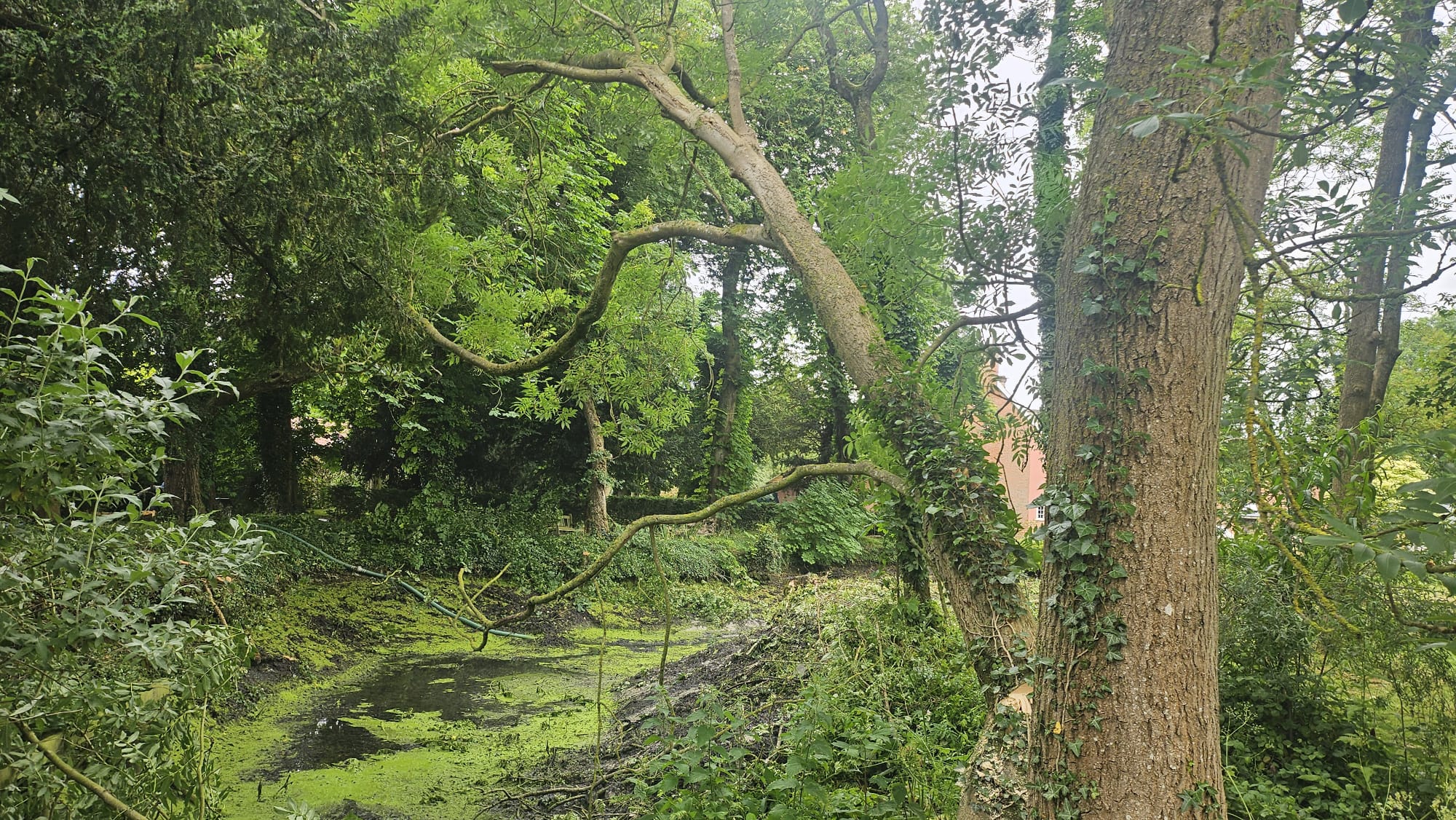
The site presented a number of practical challenges. The area around the moat was heavily restricted by trees, scrub and limited access, making it difficult to bring plant and equipment safely into position. The moat itself contained silt, reeds and debris that needed to be removed efficiently, while the spoil had to be contained responsibly elsewhere on the property.
Our Approach
The team began by making the working area accessible. Trees were faced back, canopies lifted and selected trees felled to allow safe movement of machinery. Larger trunks were cut into manageable lengths, while smaller branches and scrub were burned on site in a controlled bonfire.
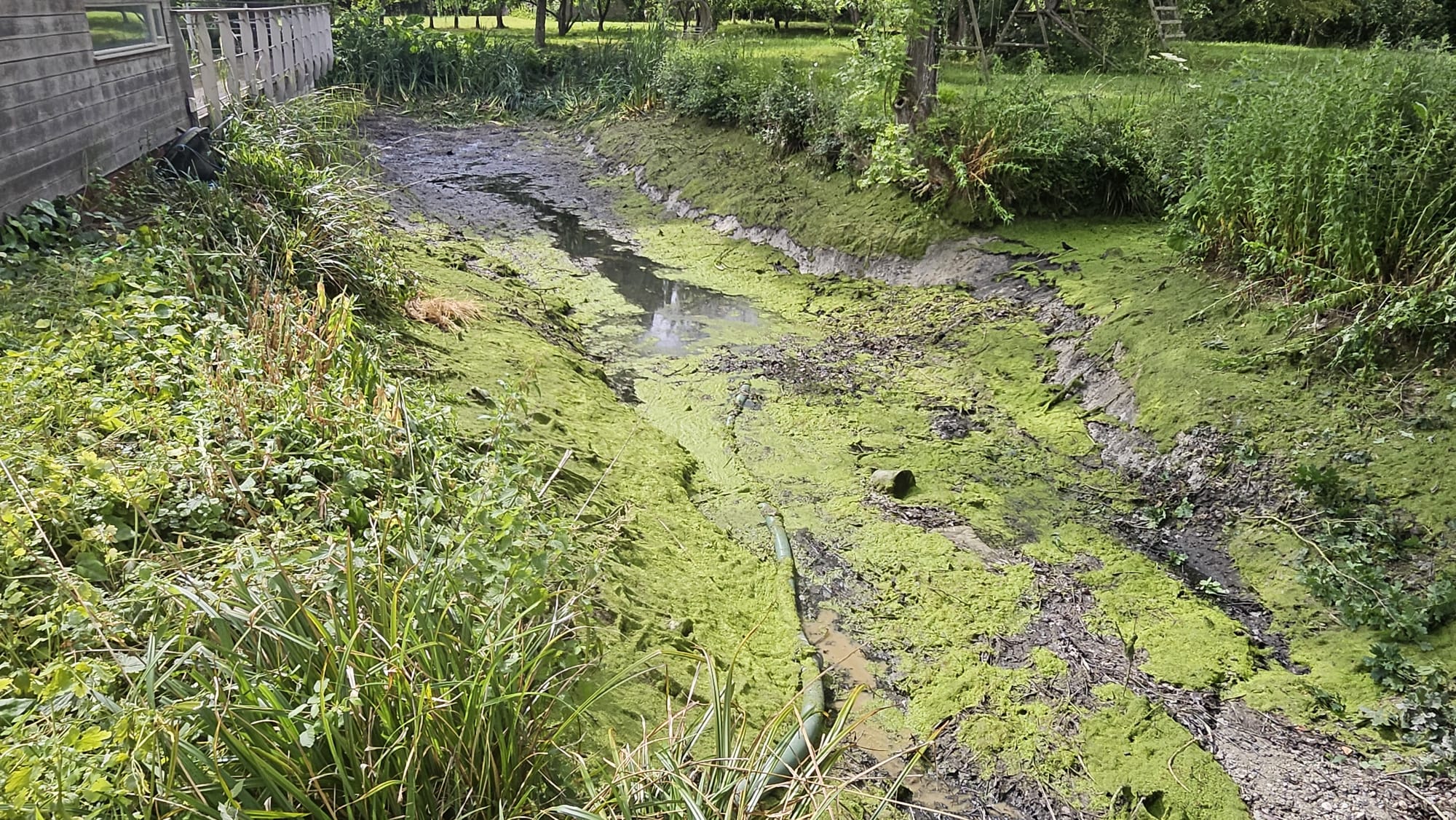
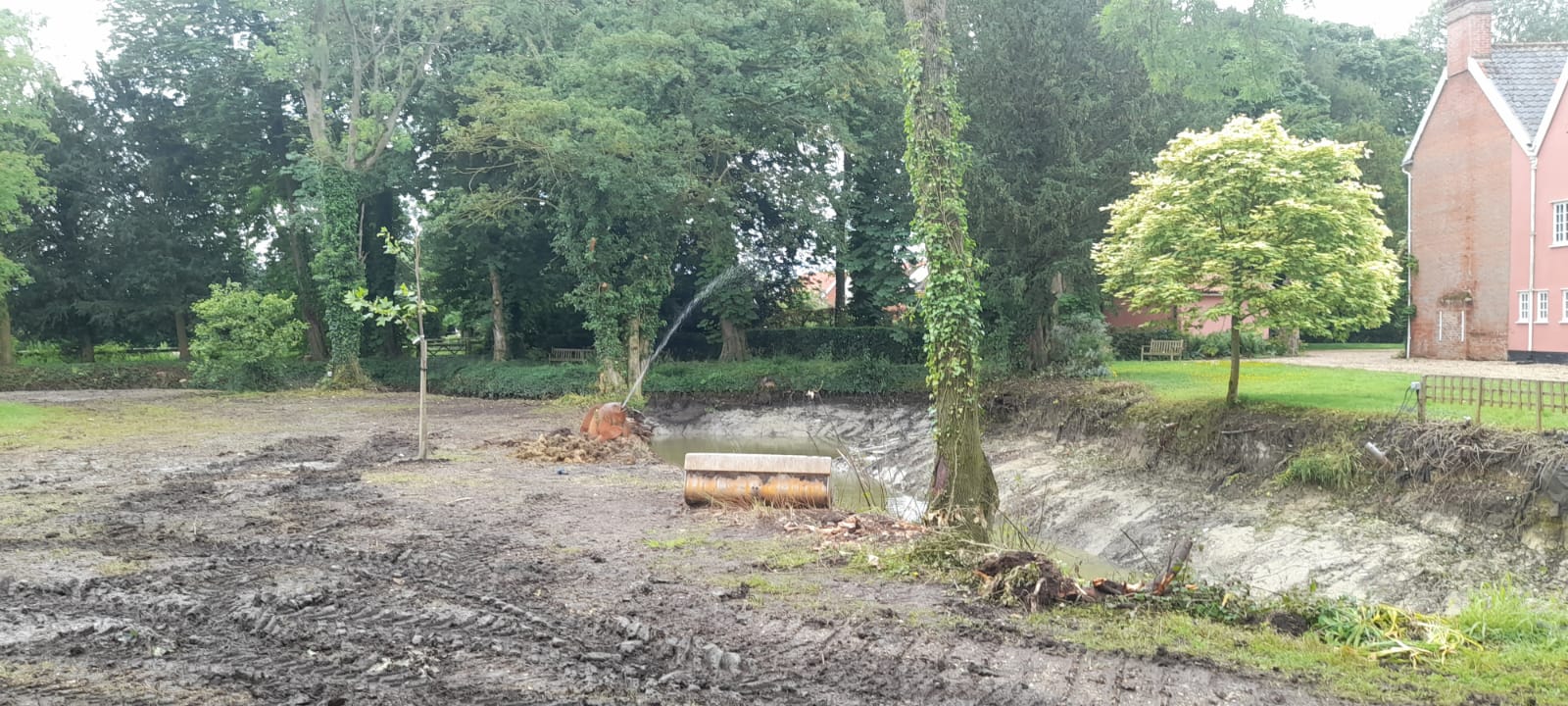
Two 9-tonne dumpers, two excavators and a 4-inch towable pump were transported to site. After allowing the pump to settle, the team began pumping down the moat so dredging could take place safely and effectively.
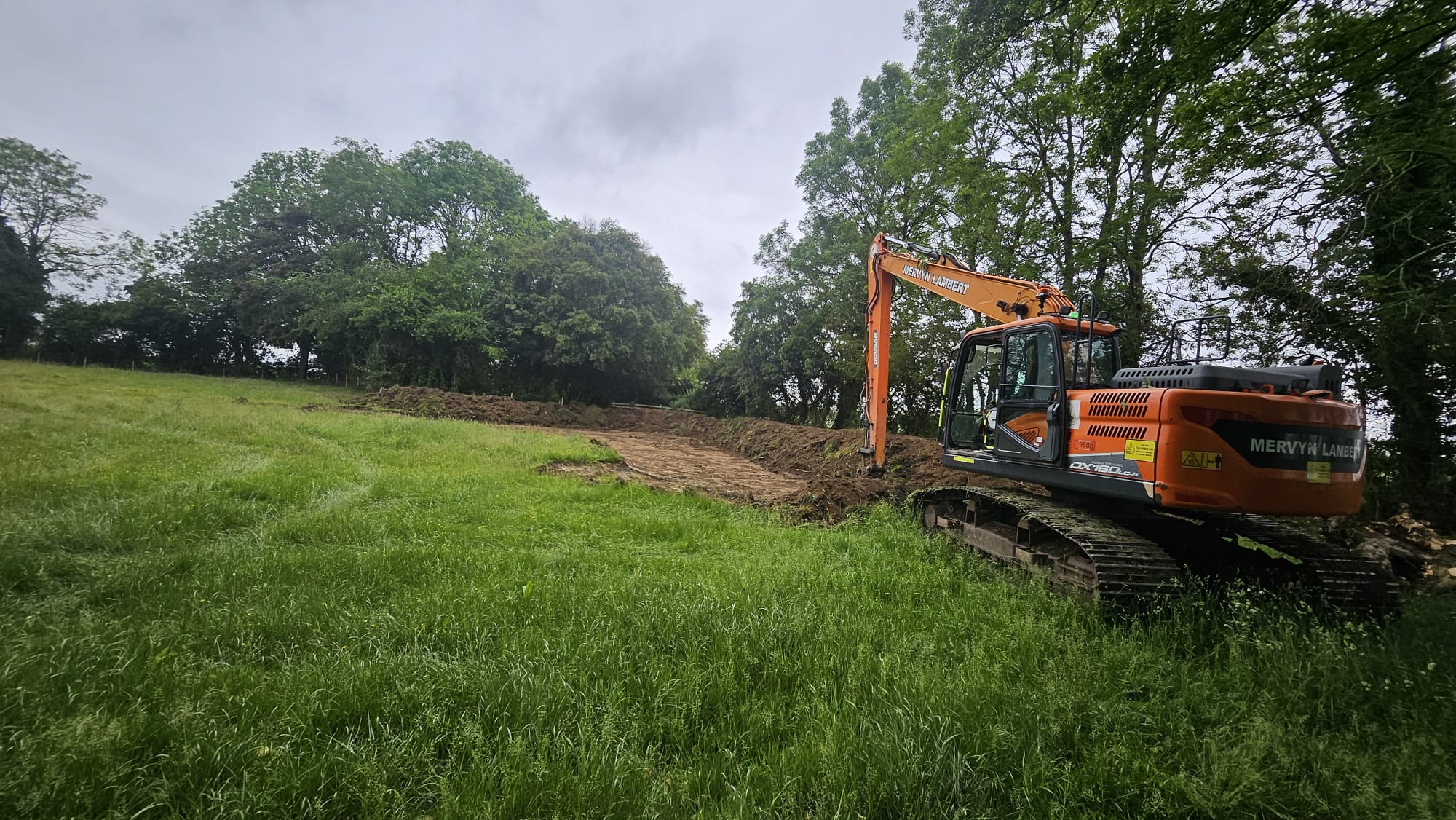
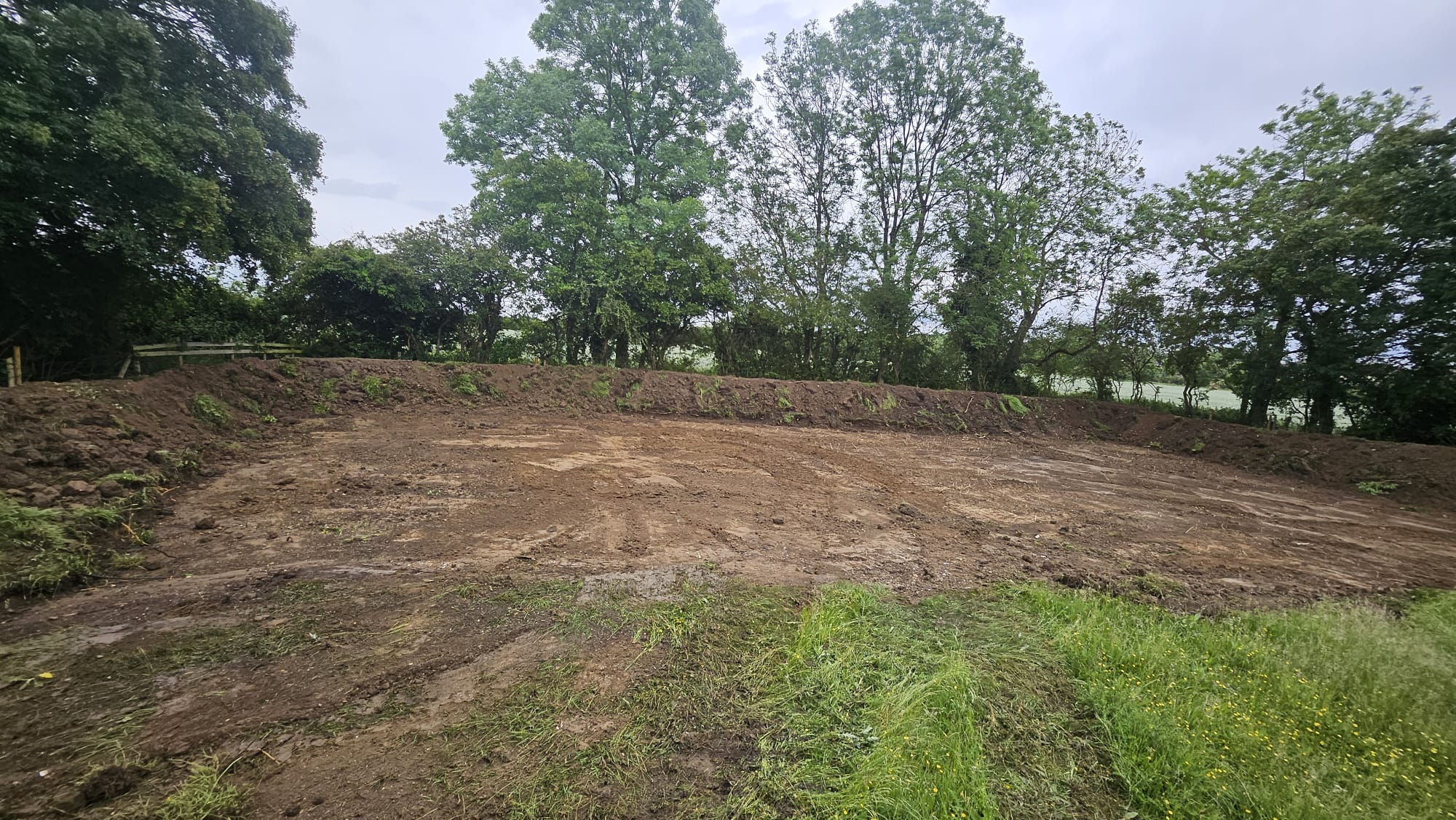
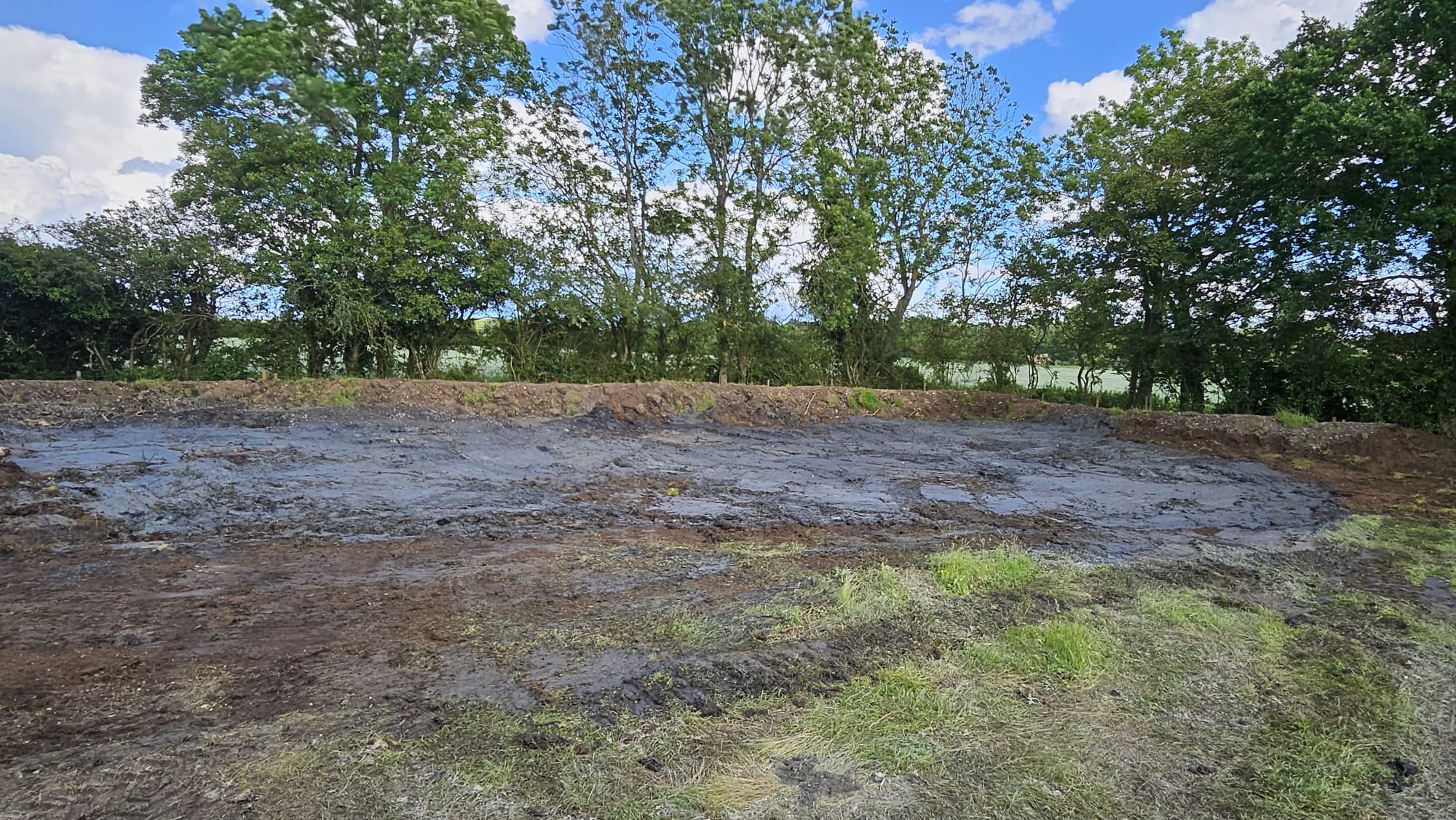
While the moat was being lowered, one excavator was tracked to the client’s far paddock, where a bunded containment area was created. Topsoil was stripped and stockpiled, then subsoil from the paddock was used to form a secure bund designed to receive the dredged silt, reeds and debris.
Dredging Works
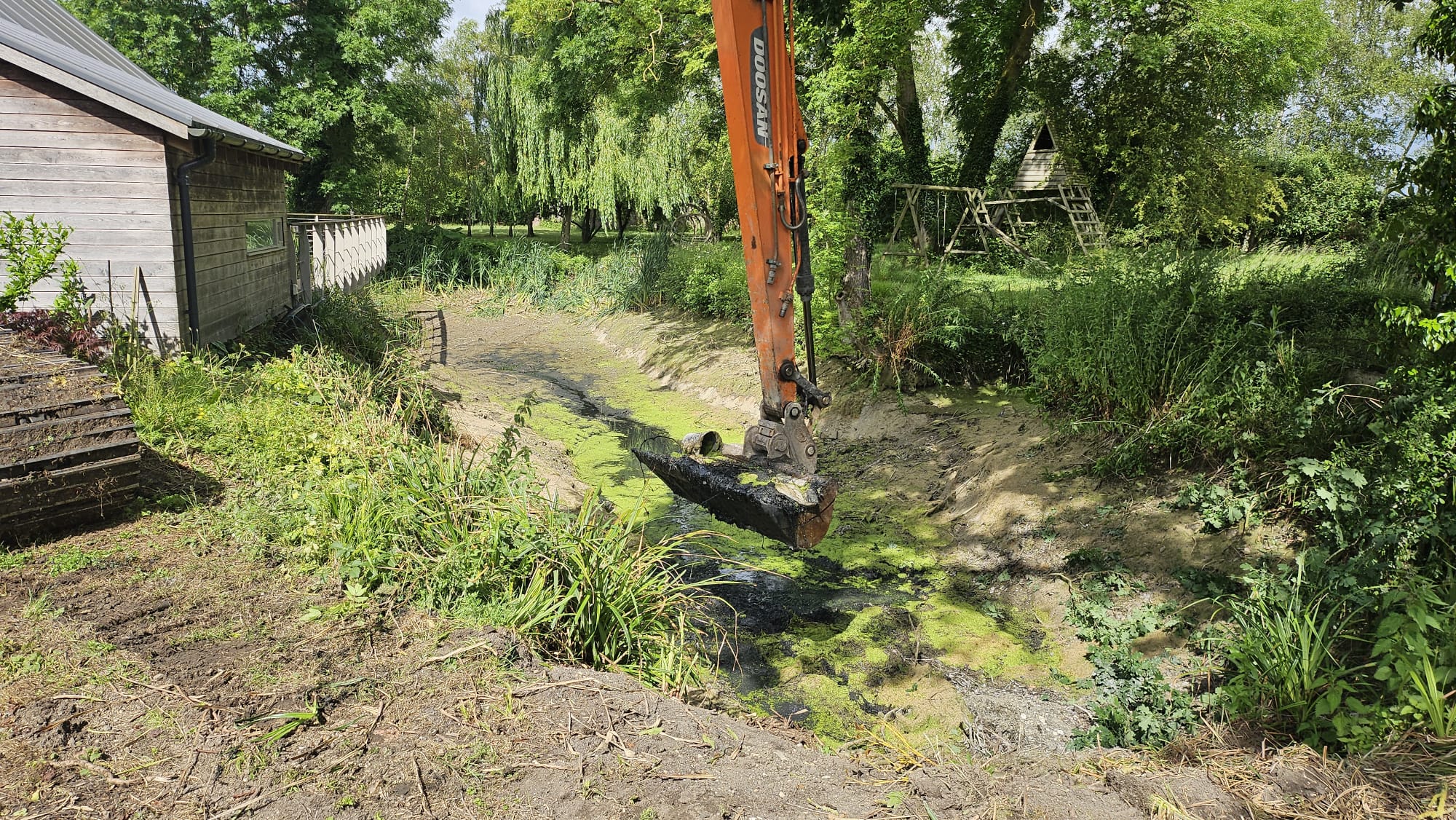
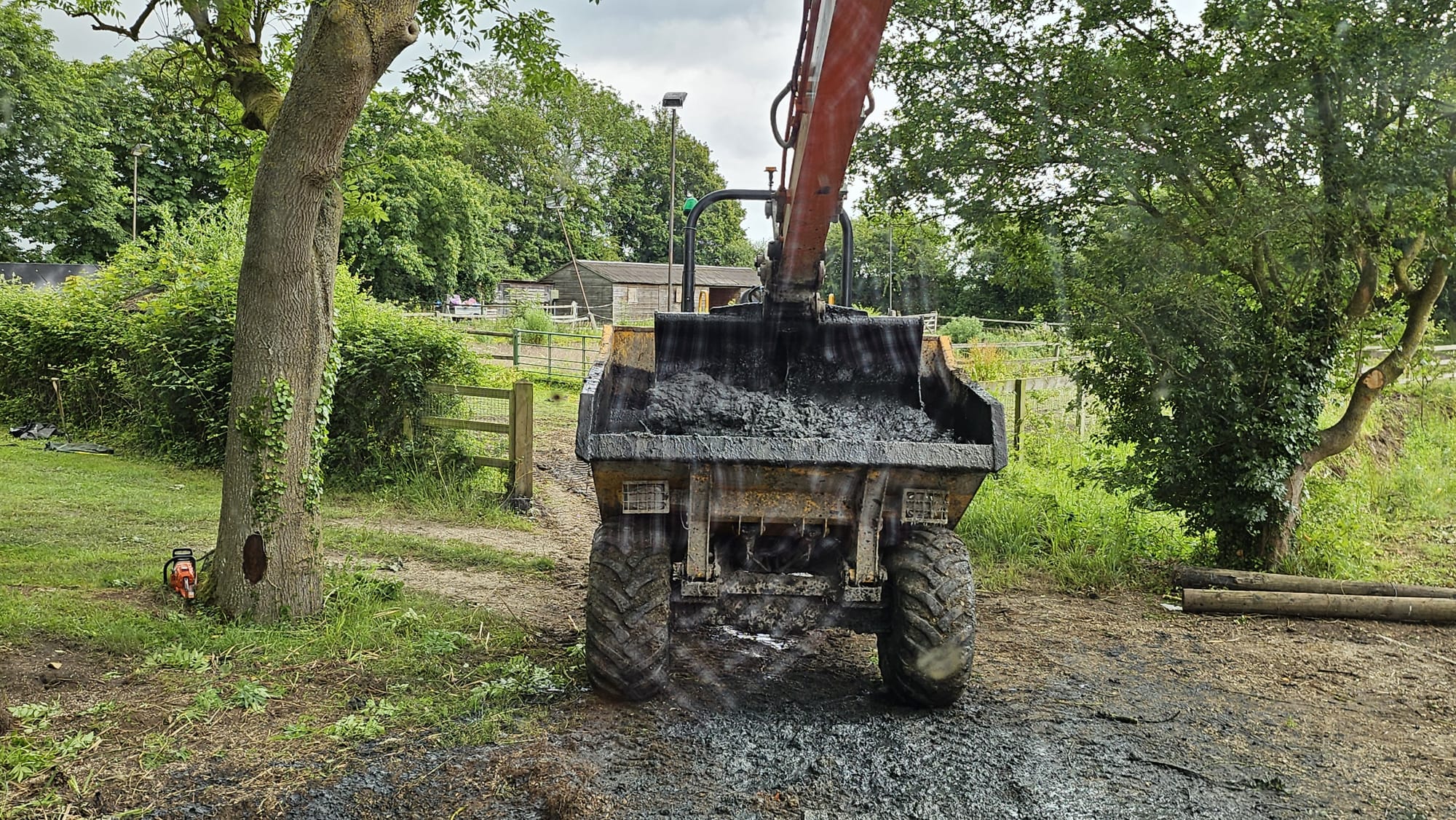
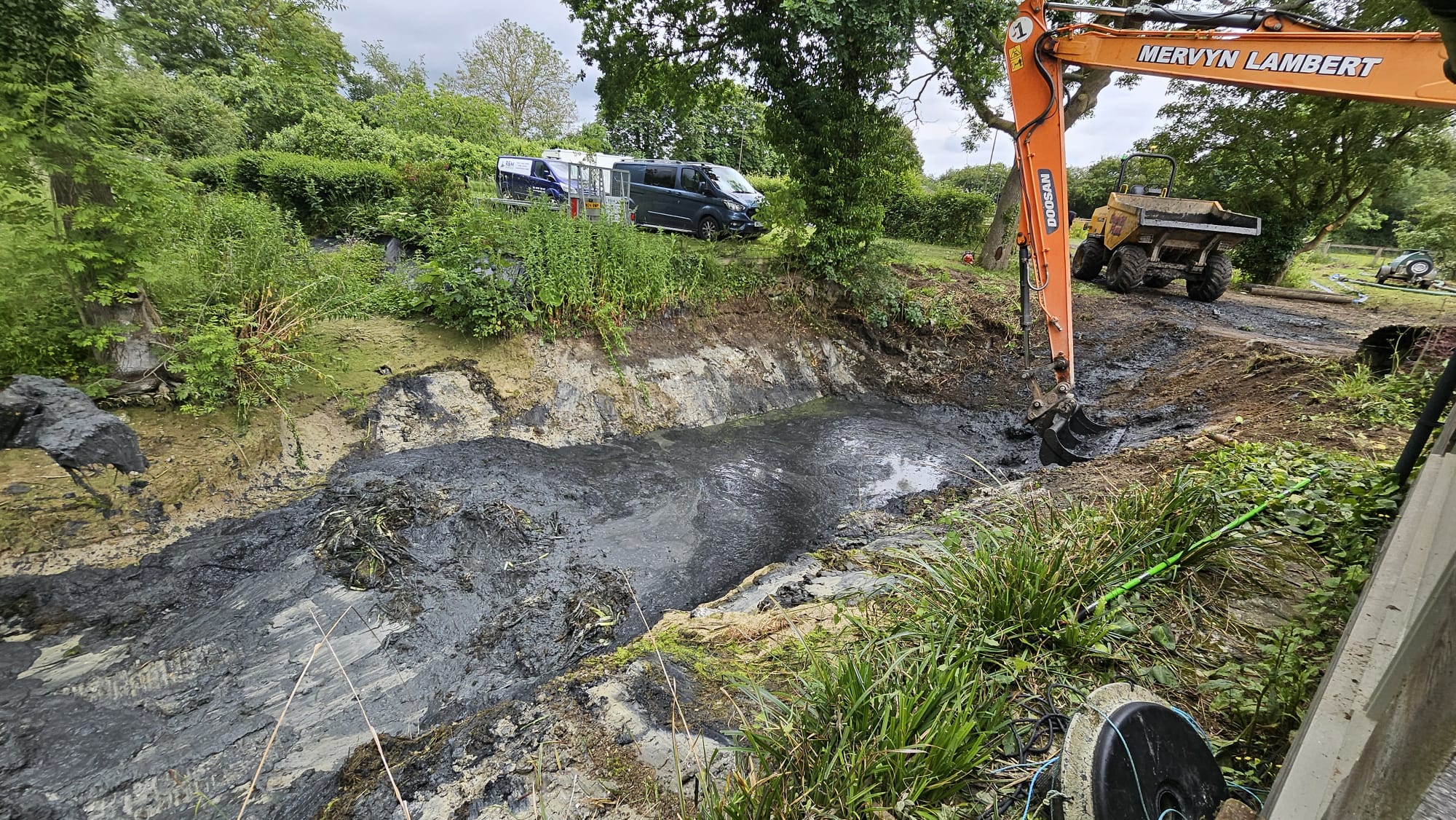
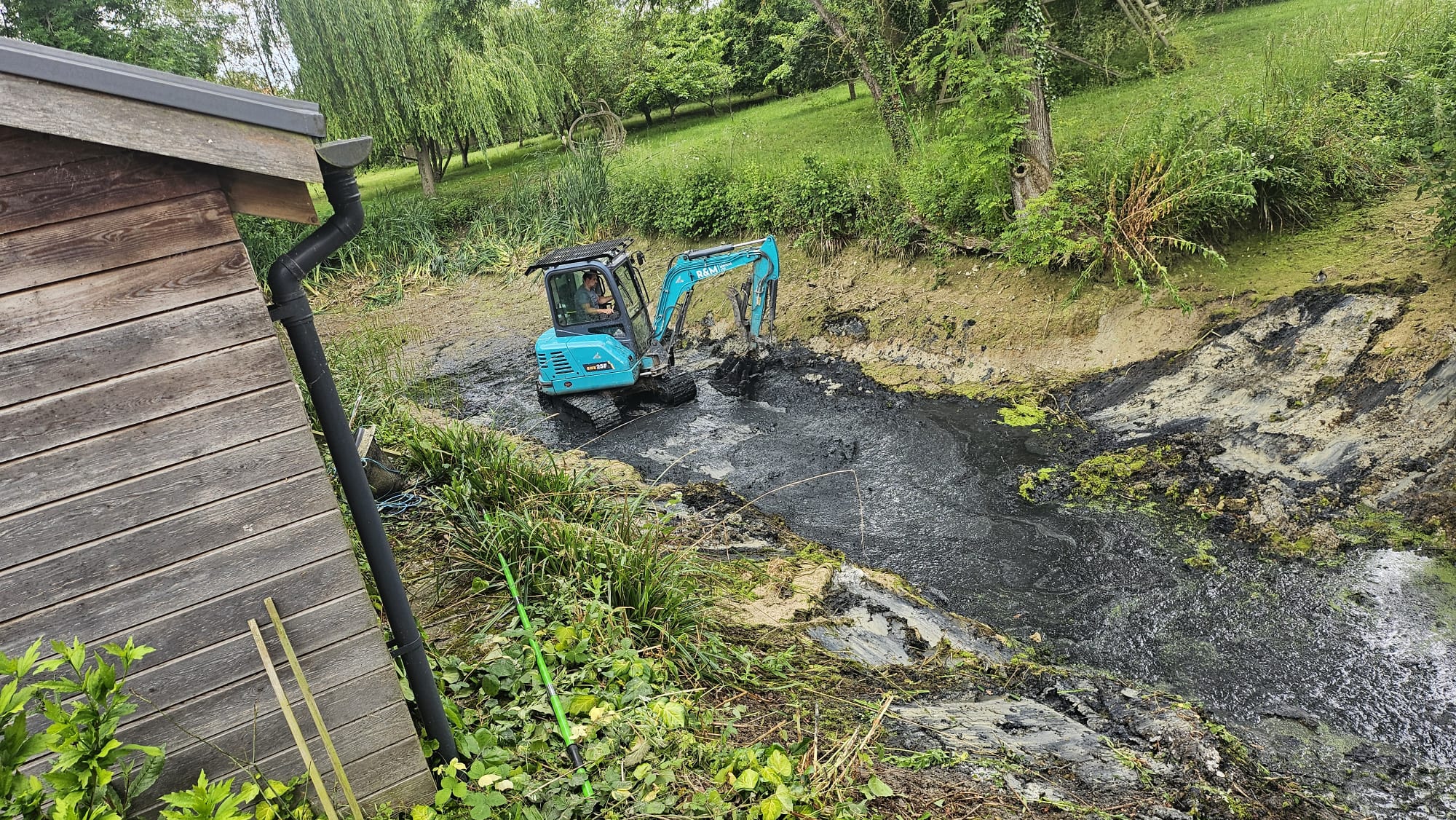
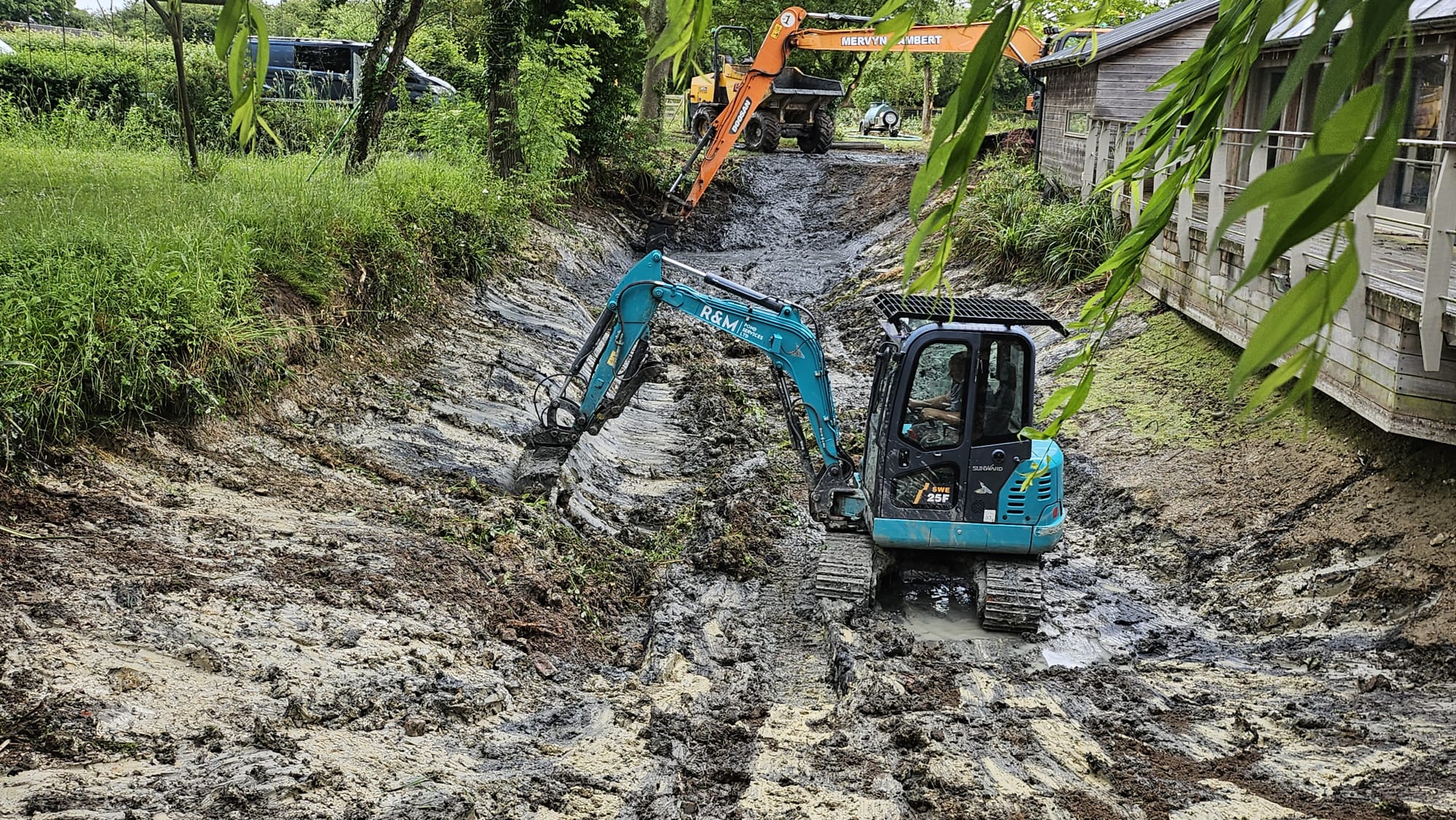
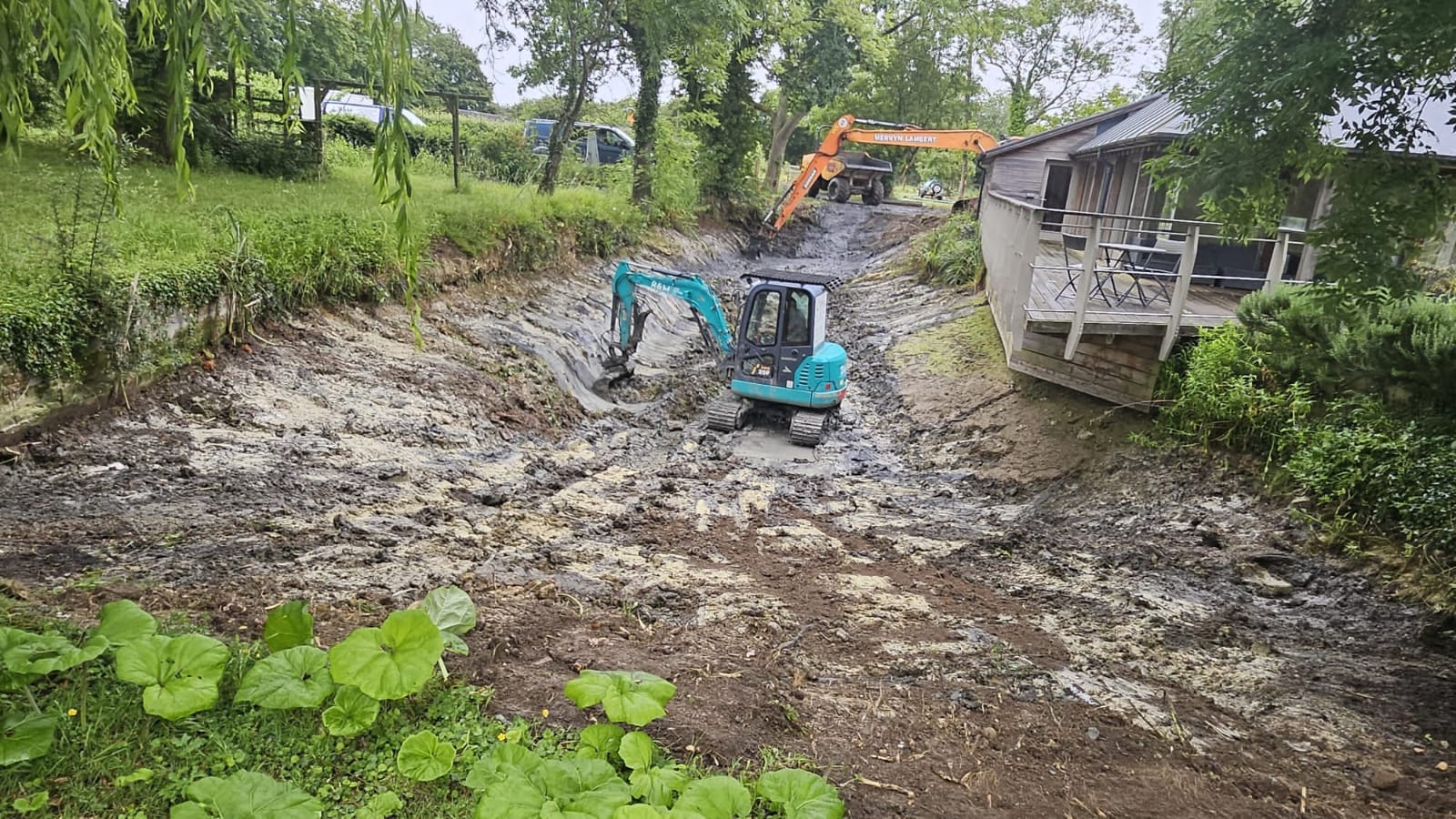
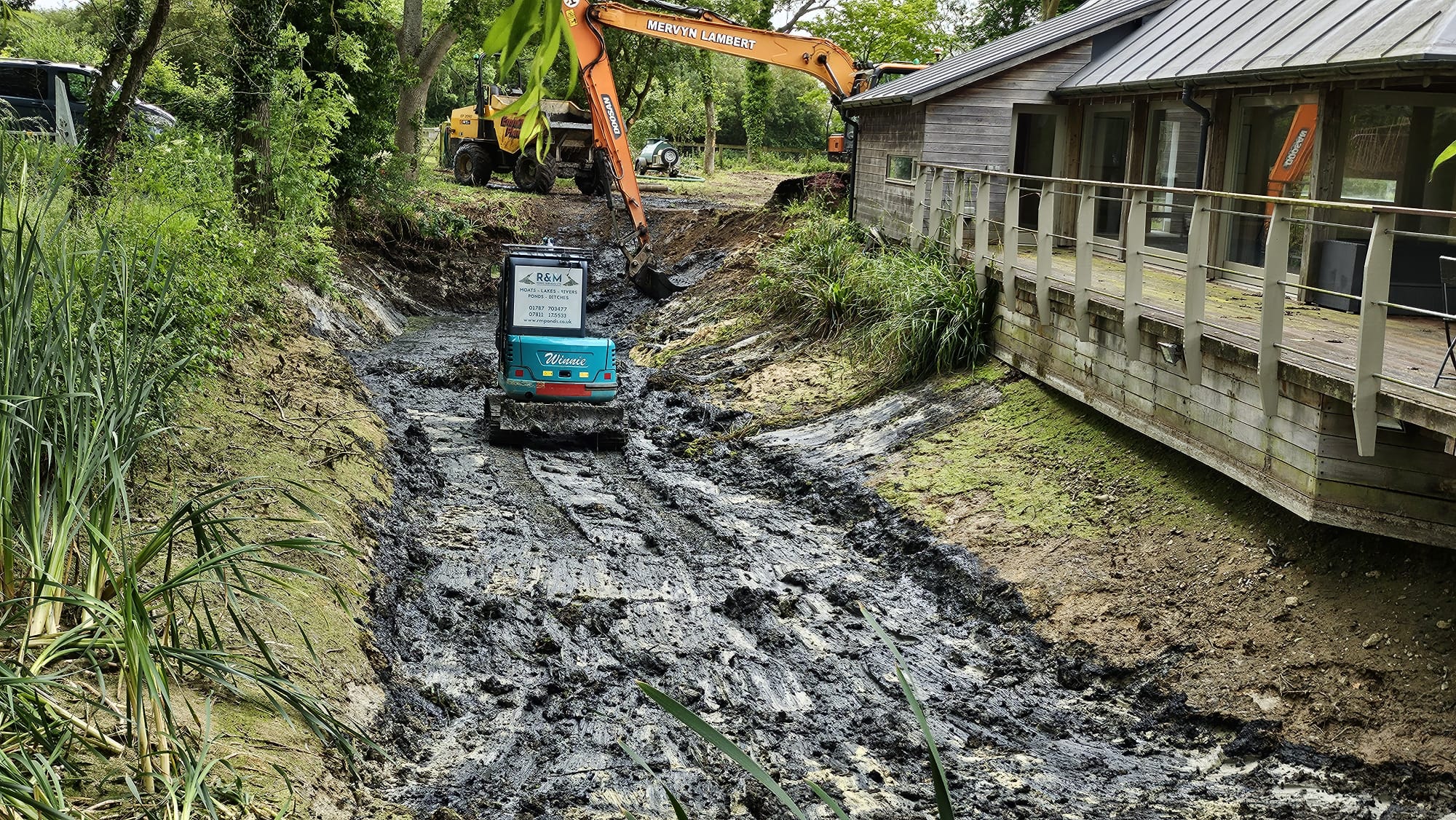
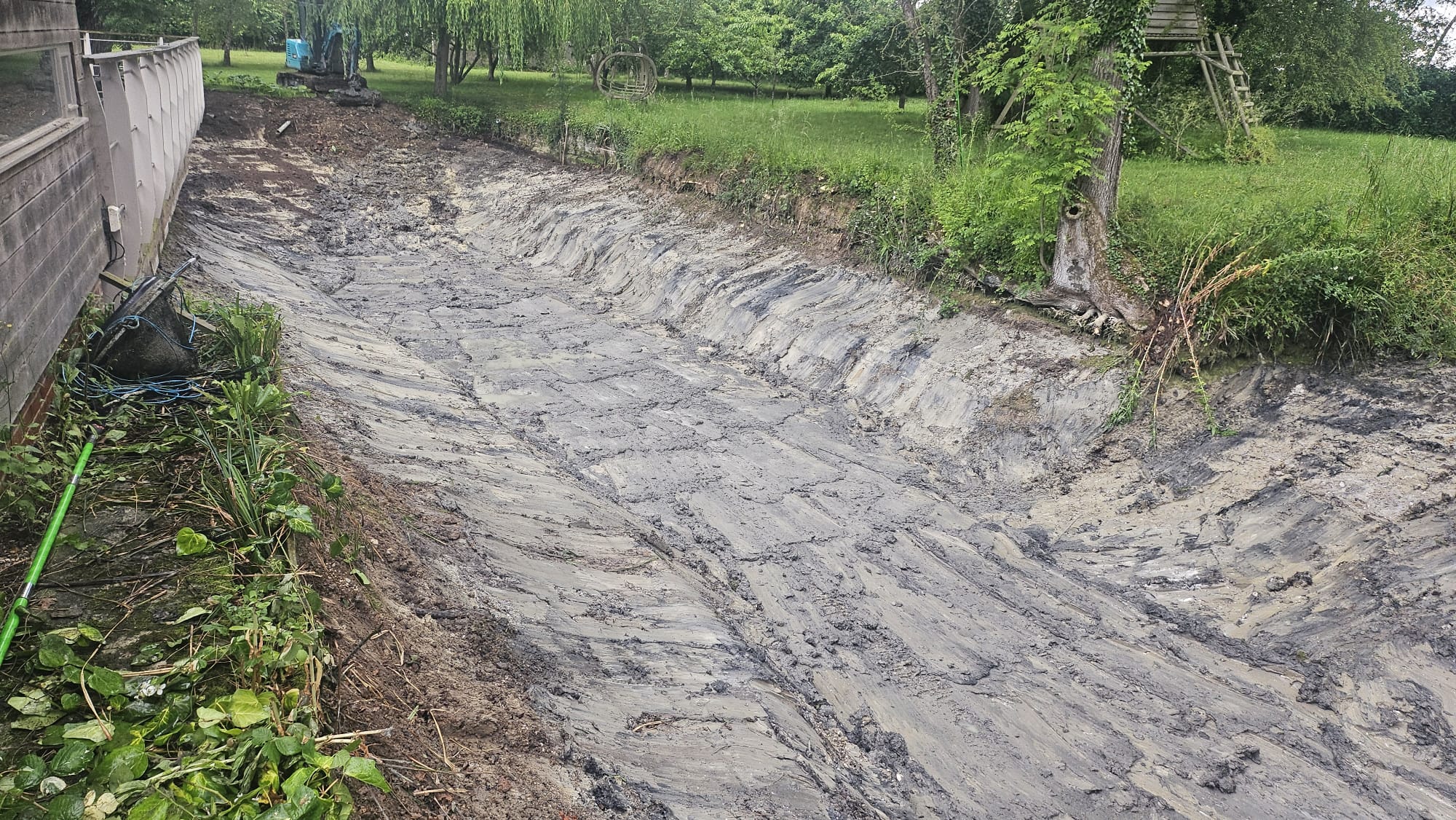
Before dredging began, a fish ornament and pump were carefully removed from the moat and placed safely out of the working area. The long-reach excavator was then positioned beside the moat and used to remove silt, reeds and debris. Material was loaded into the dumpers, transported across the site and tipped into the prepared bunded area.
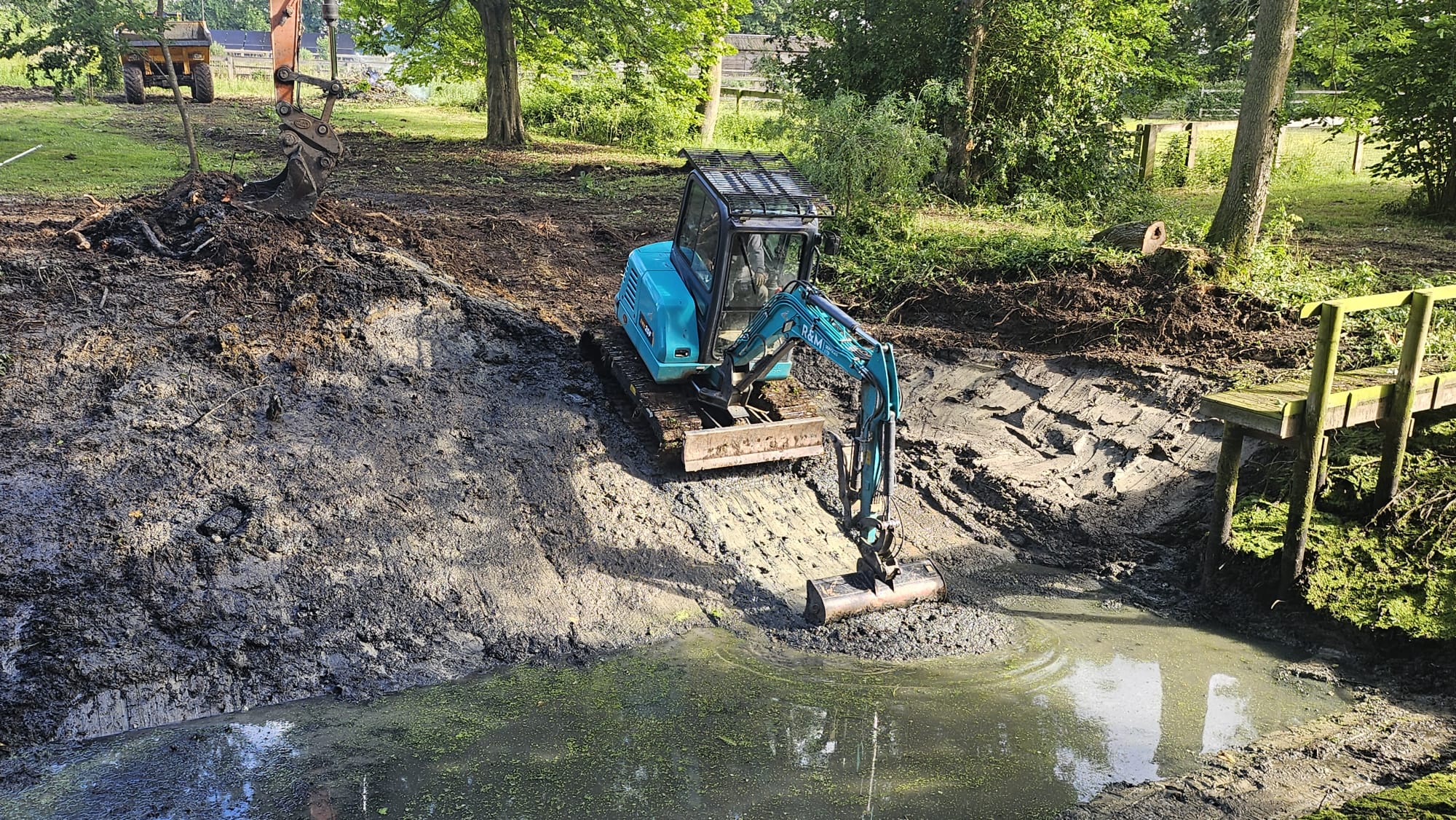
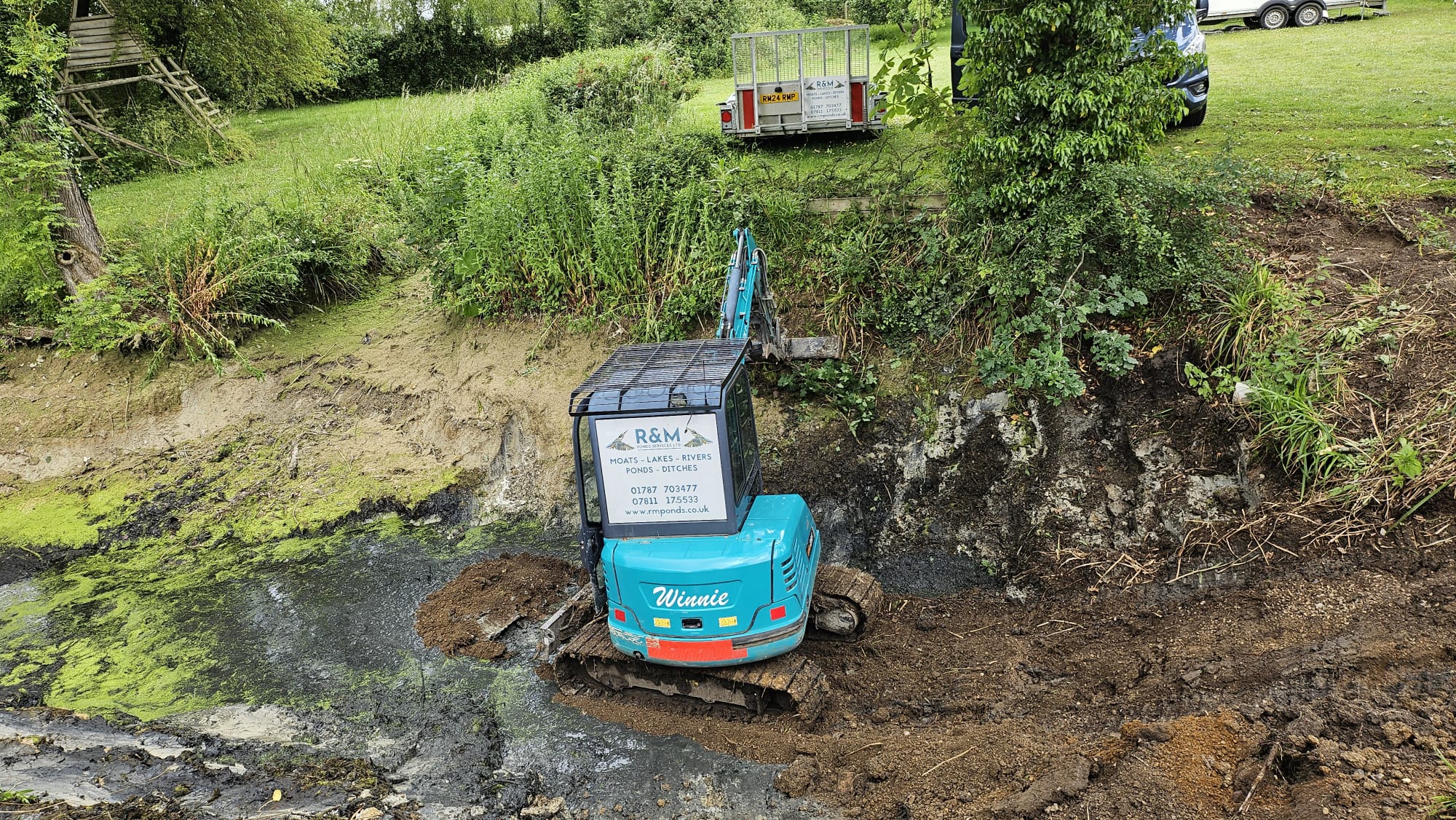
Where the long-reach excavator reached the limit of its working range, a temporary ramp was formed so the smaller excavator could enter the moat. From the moat bed, the smaller machine pushed material towards the long-reach excavator, allowing the loading and removal operation to continue efficiently.
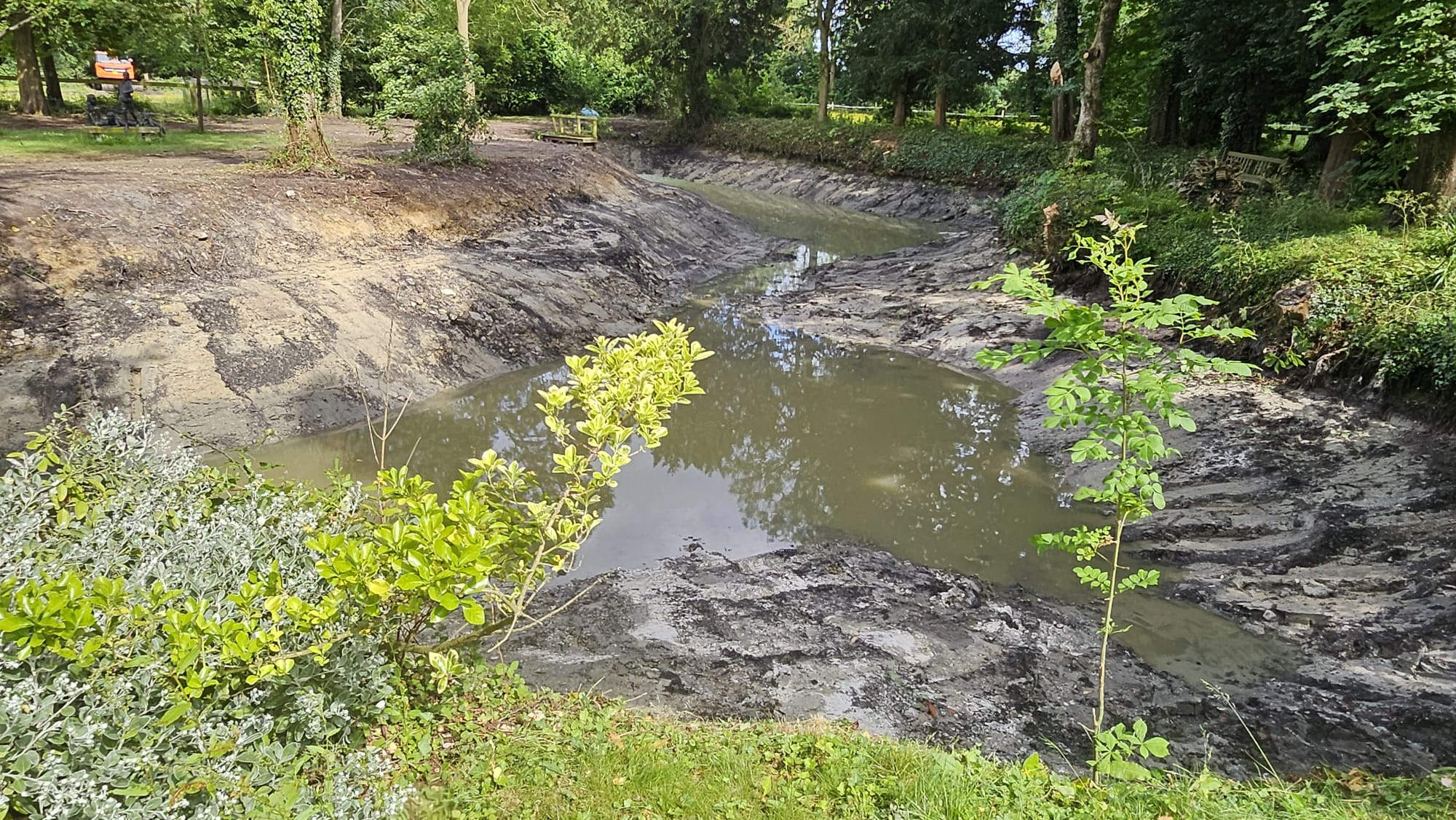
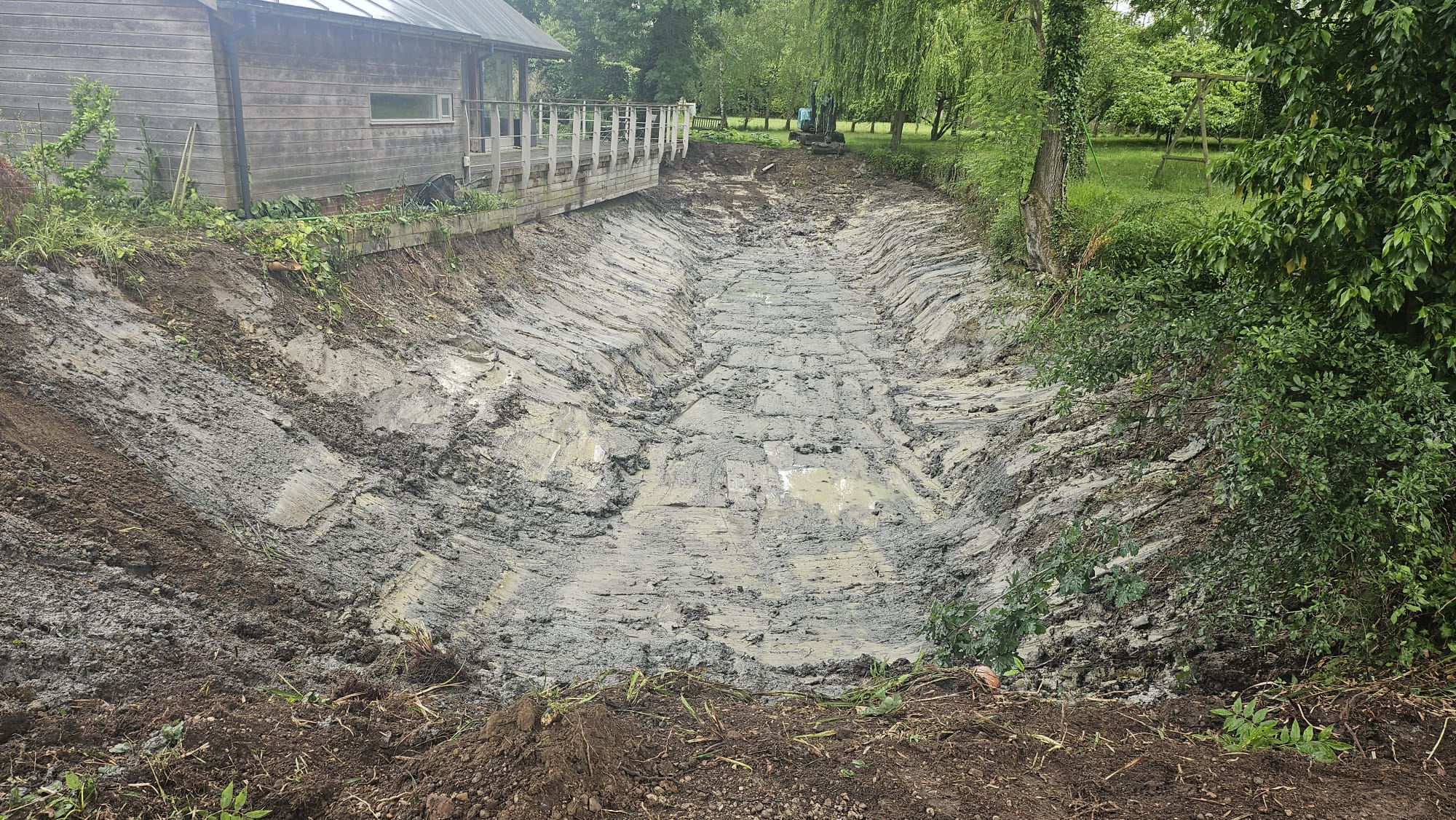
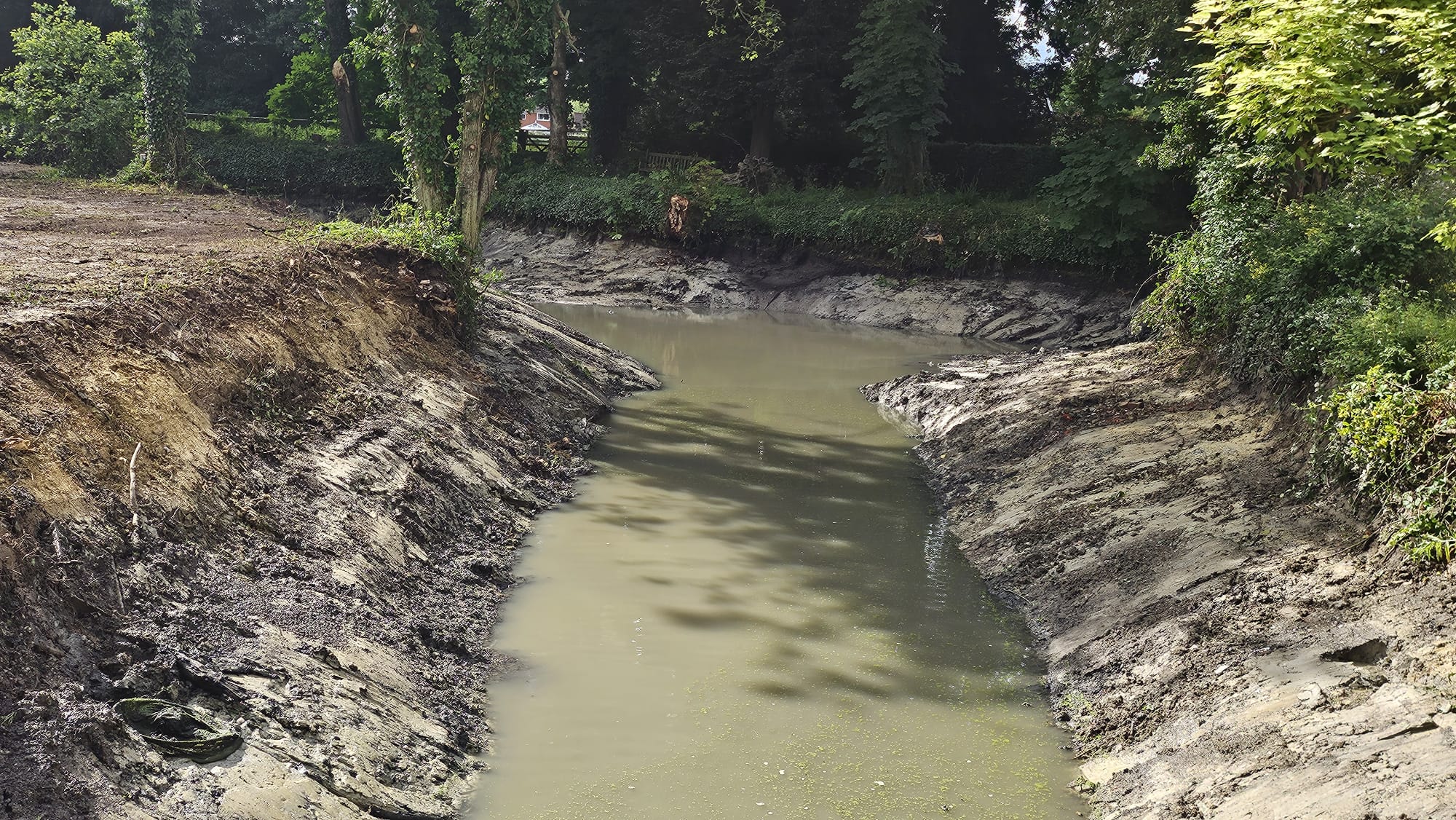
Once dredging was complete, the smaller excavator exited the moat, the temporary ramp was dismantled and the banks were reshaped to leave a clean, finished profile.
Water Circulation Improvements
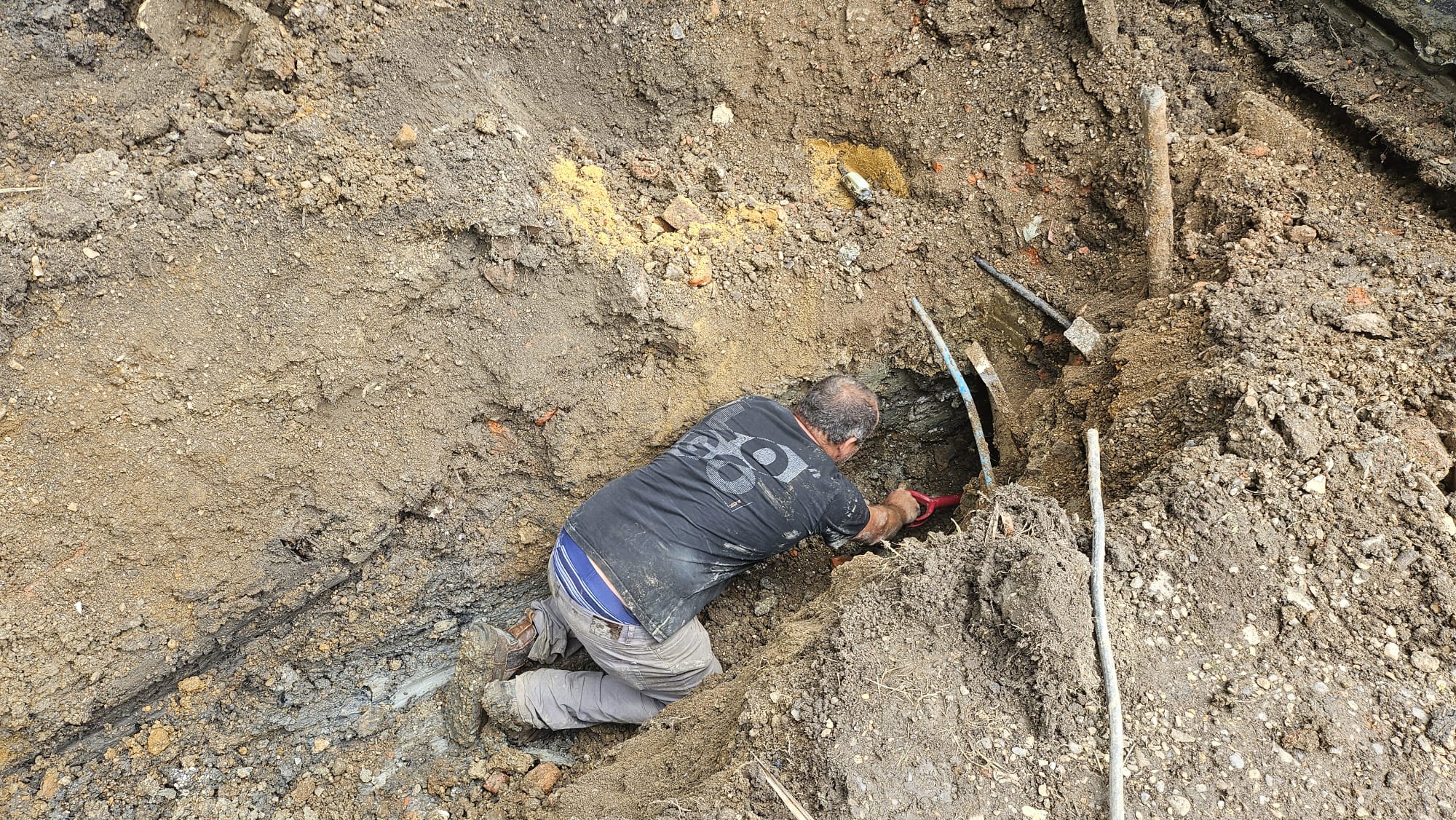
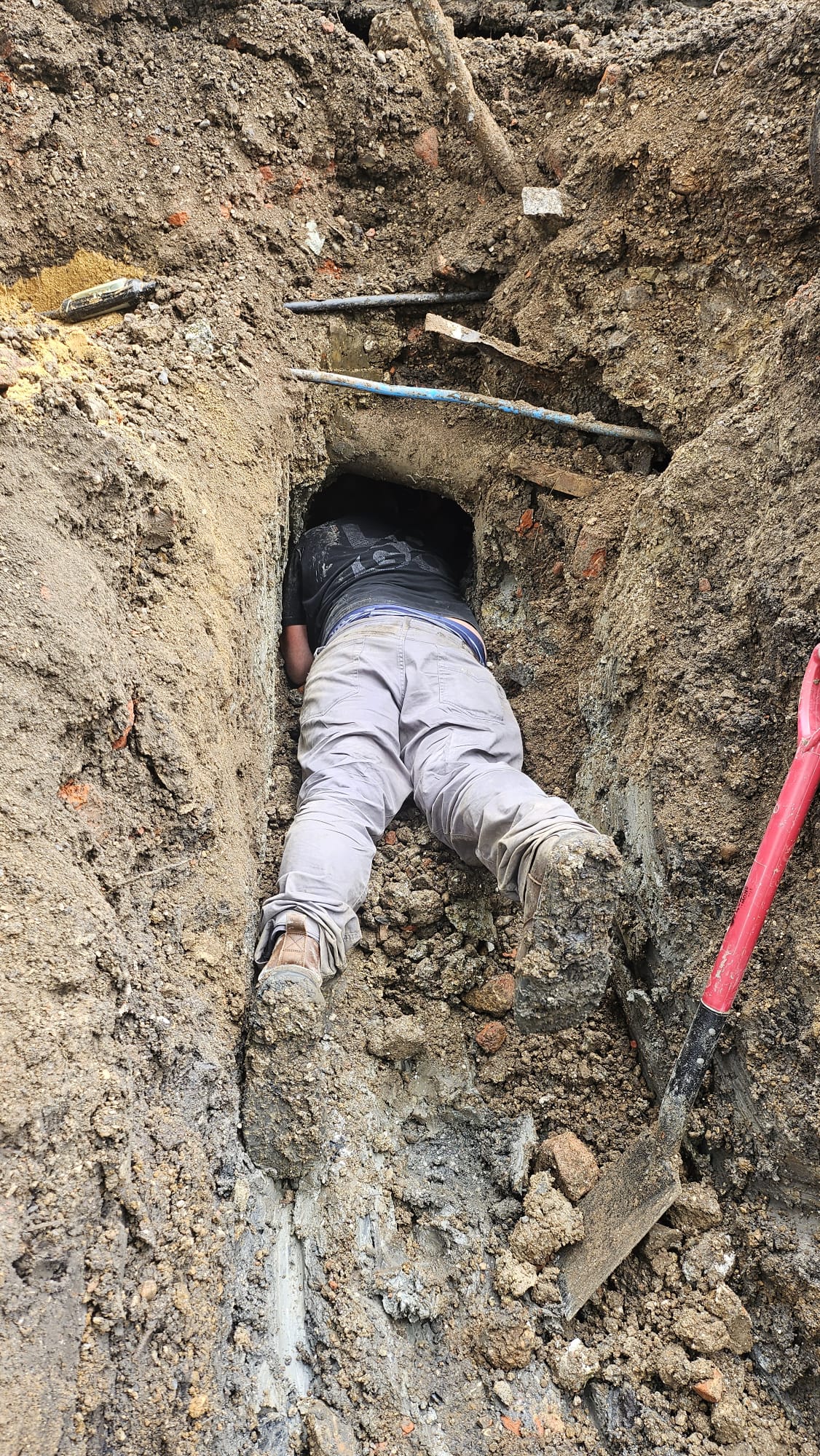
The next objective was to improve water movement between the two sections of the moat. To achieve this, the team supplied and installed a 40,000-litre circulation pump, together with approximately 70 metres of pipework routed through an existing piped tunnel. This enabled constant movement of water between both sections of the moat.
Bridge Safety Rails
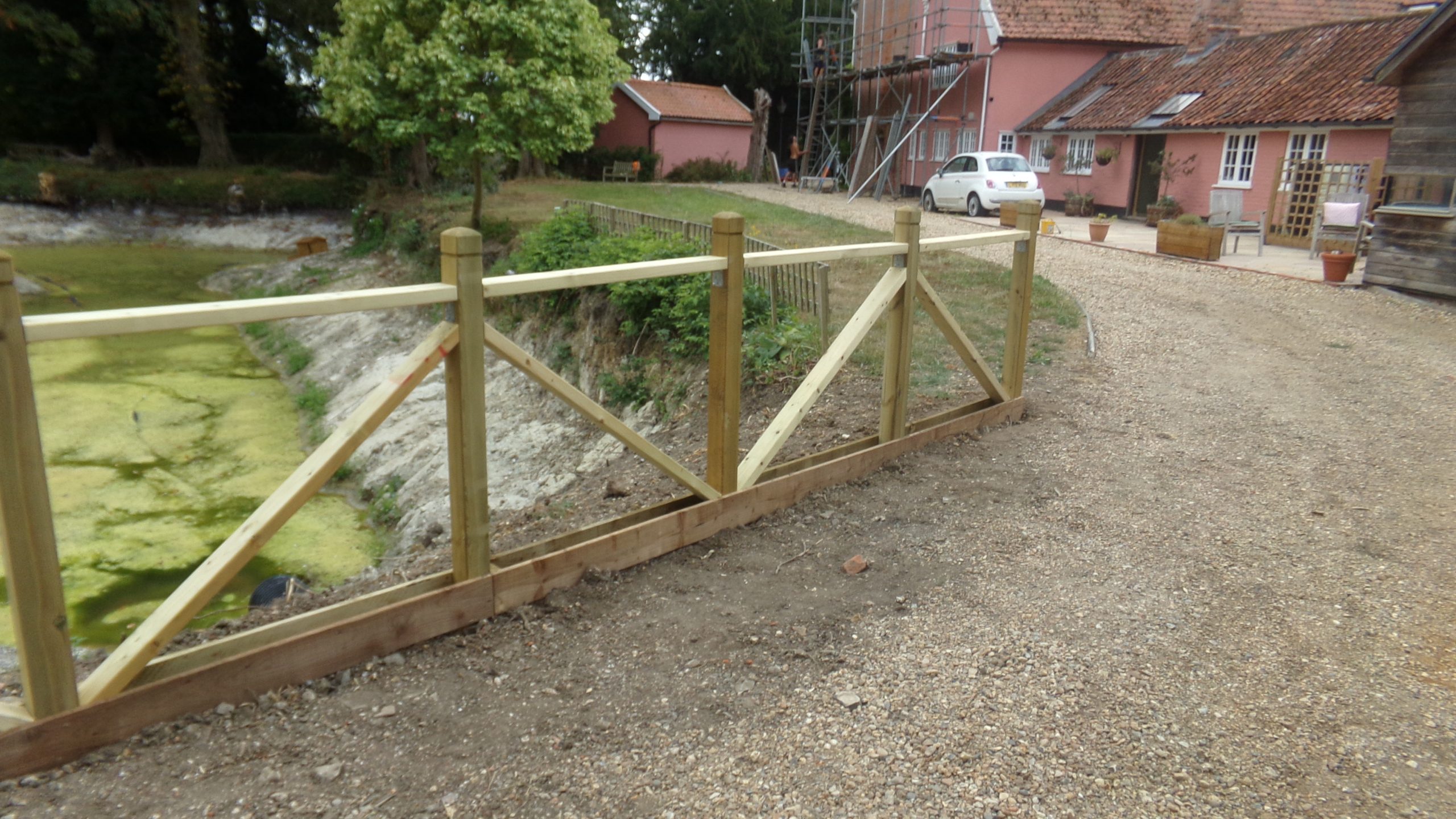
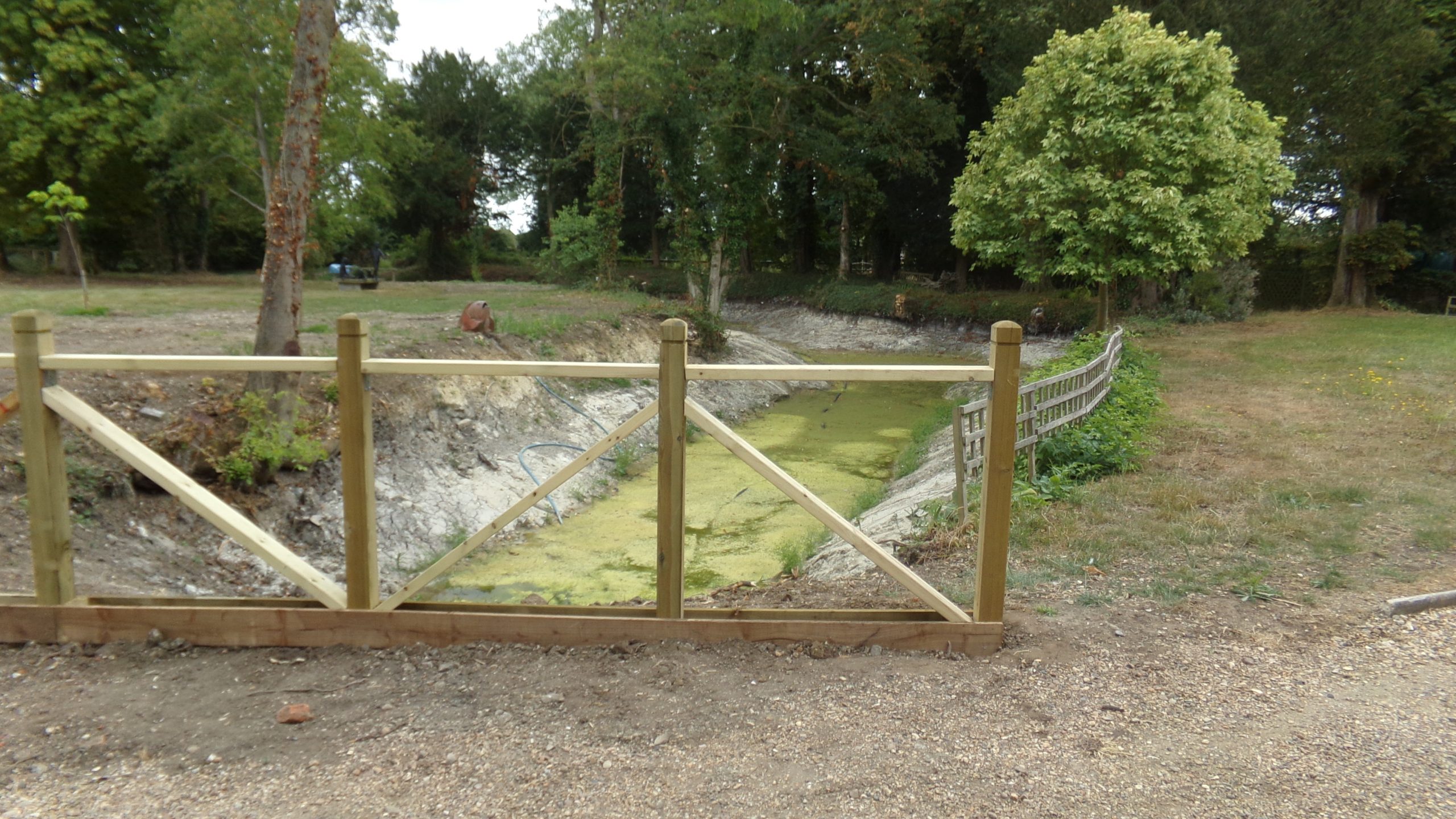
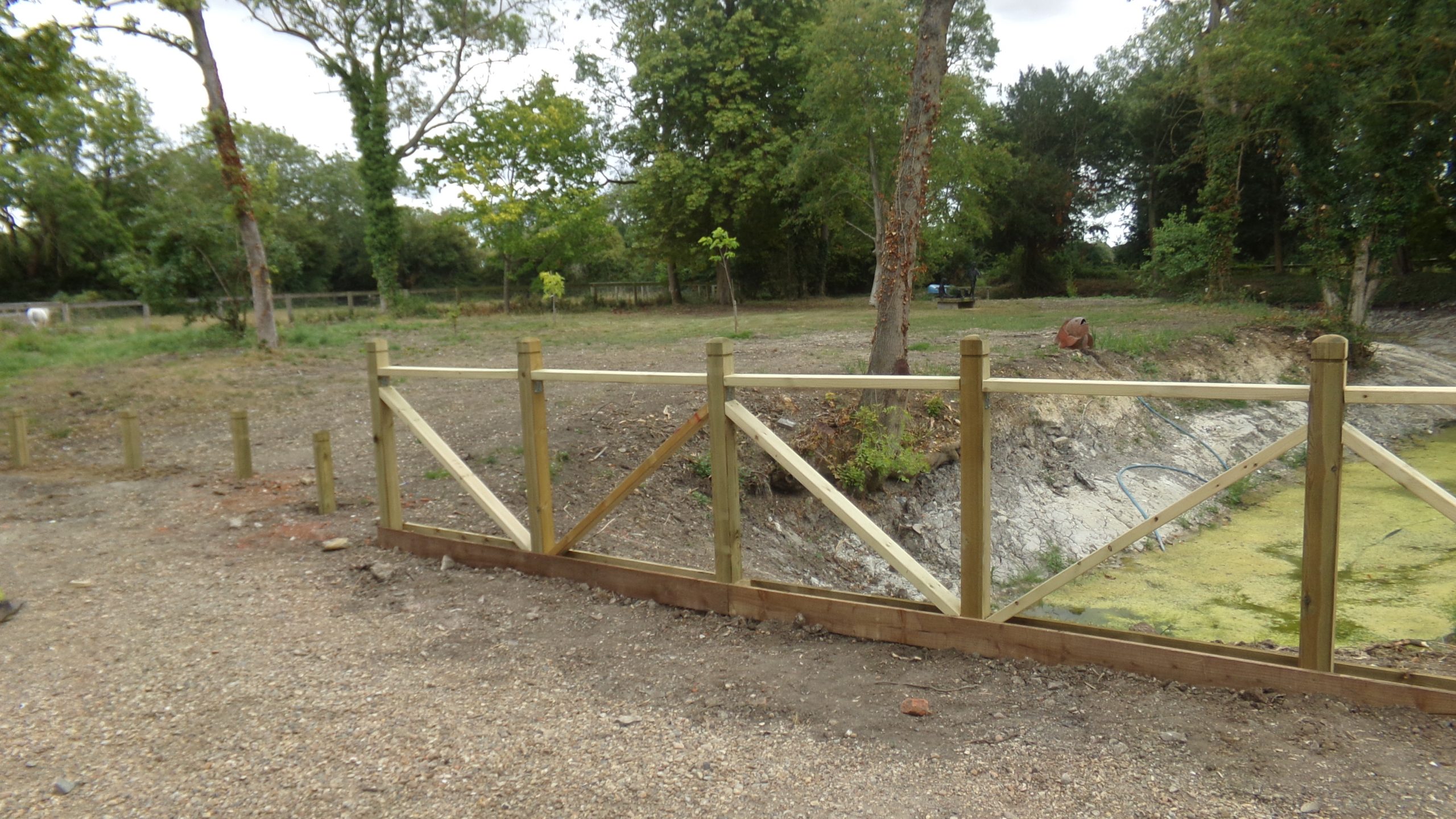
As a final stage, RM Ponds supplied and installed new timber safety rails for the bridge. The timber was sawn and planed to shape, then the post positions were measured and marked so each post sat accurately opposite its corresponding partner.
Using a hydraulic auger fitted to our excavator, the team carefully bored the holes for the supporting posts. Each post was levelled and concreted into place before the top rails were fixed. Diagonal struts were then cut, shaped and installed to strengthen the railings and improve the overall appearance of the bridge.
Outcome
The works restored the moat by removing built-up silt, reeds and debris, improving access around the watercourse and creating reliable circulation between both sections. The installation of bridge safety rails added a practical safety improvement while complementing the character of the site.
Key Works Completed
- Vegetation clearance and preparation of access routes for plant and machinery
- Pumping down of the moat ahead of dredging works
- Creation of a bunded containment area for dredged material
- Removal and relocation of silt, reeds and debris from the moat
- Reshaping of moat banks following completion of dredging
- Installation of a 40,000-litre circulation pump and approximately 70 metres of pipework
- Construction and installation of timber bridge safety rails with diagonal strengthening struts
- http://MERVYNLAMBERTPLANT.CO.UK