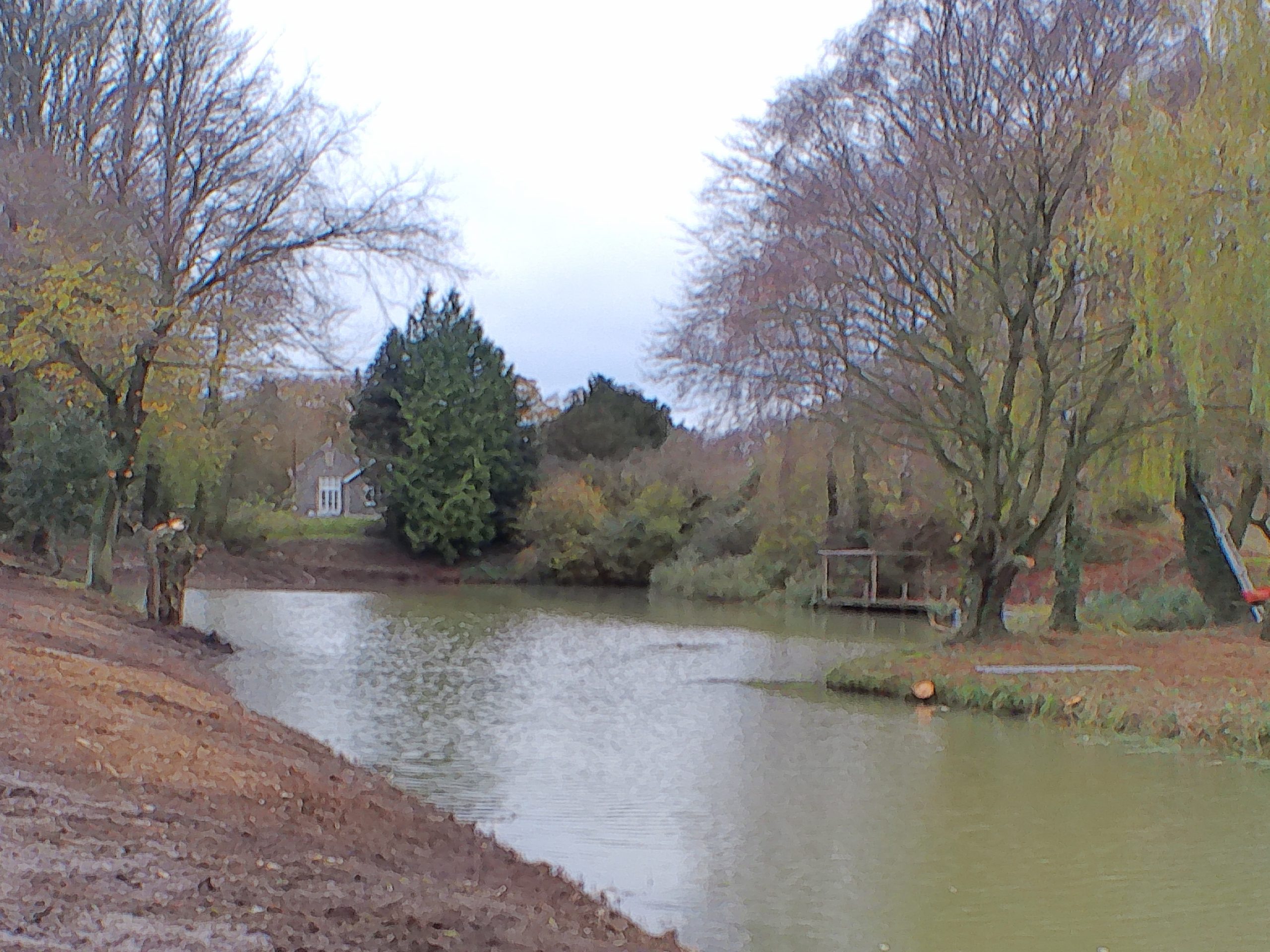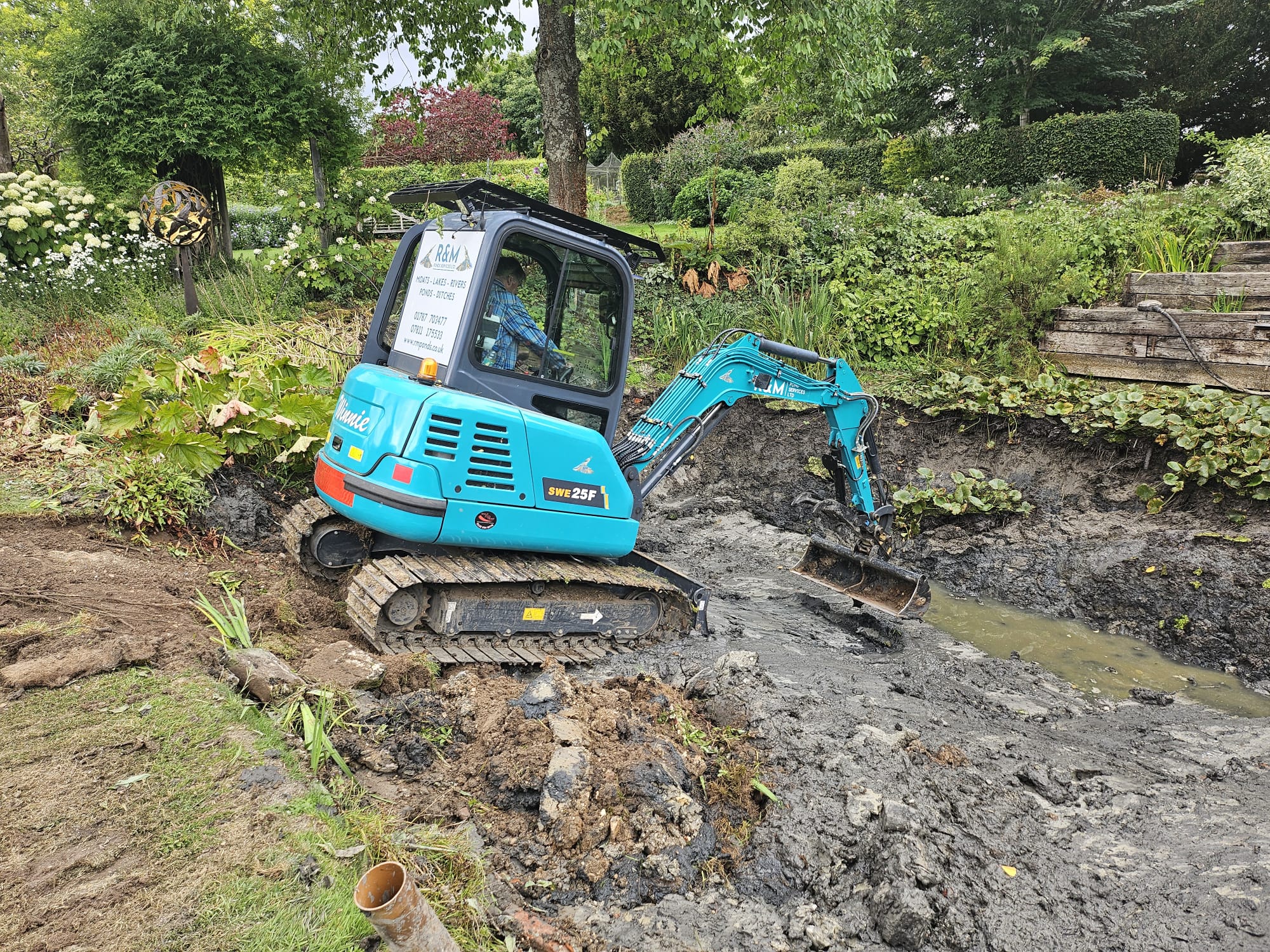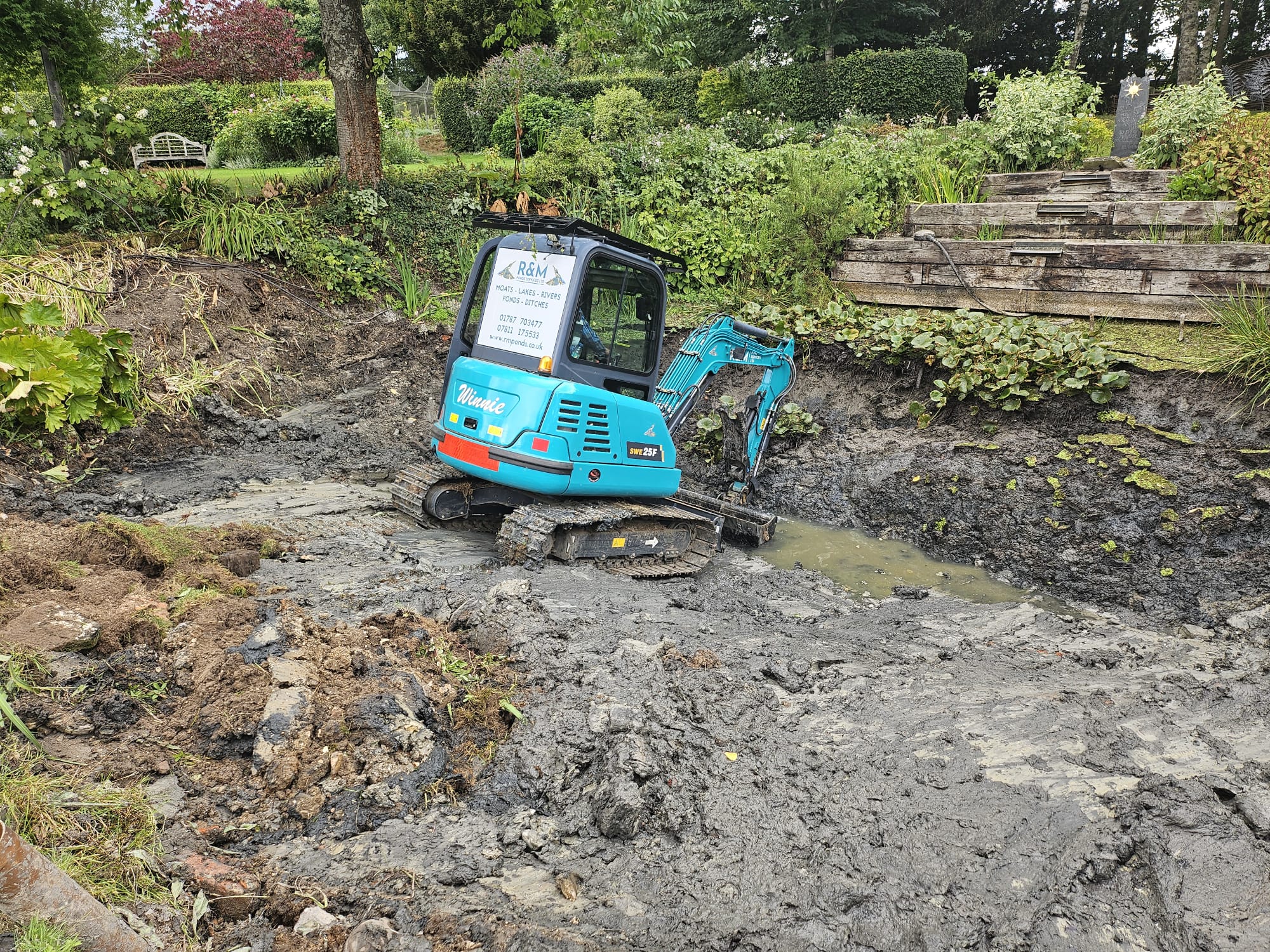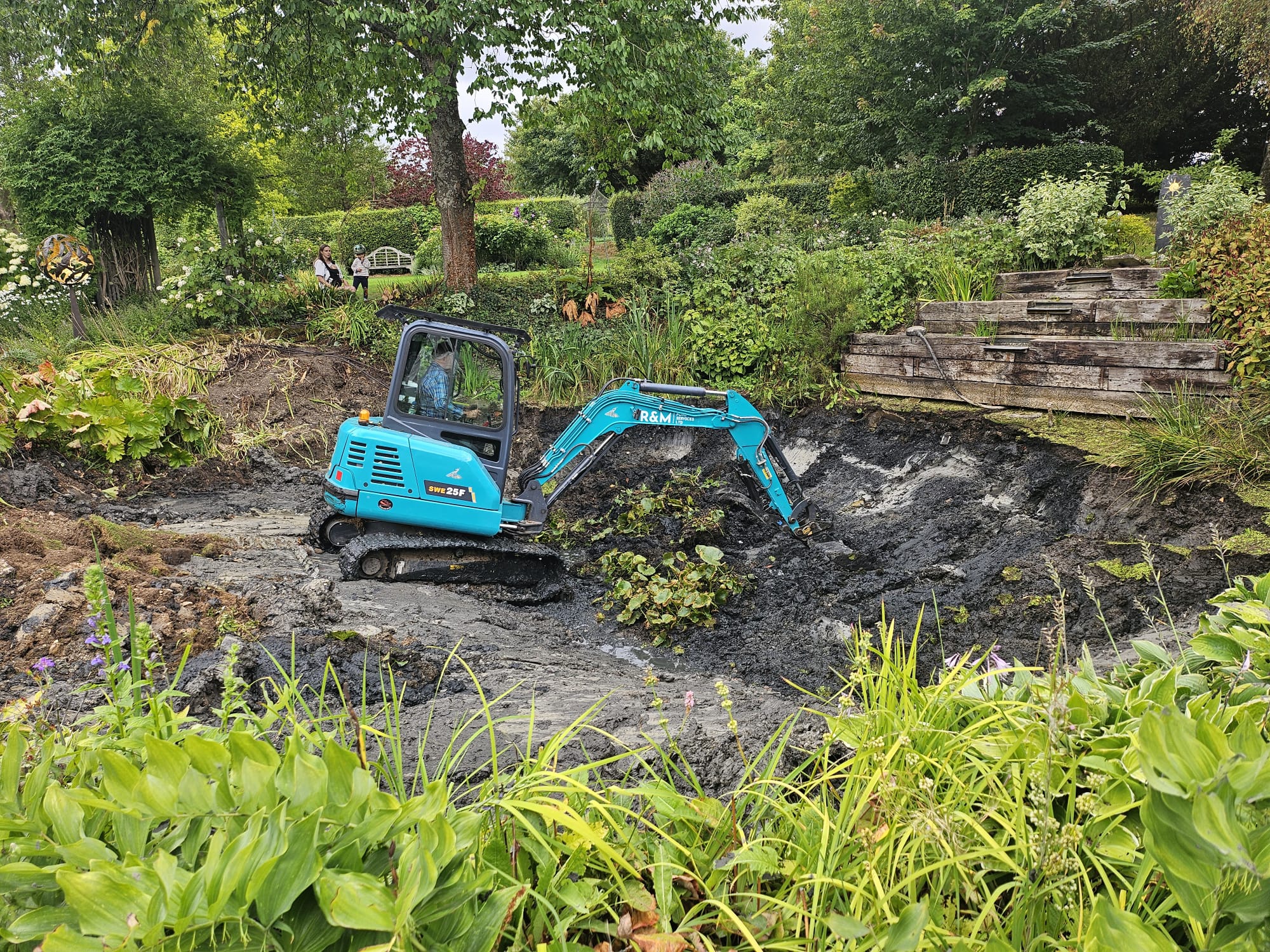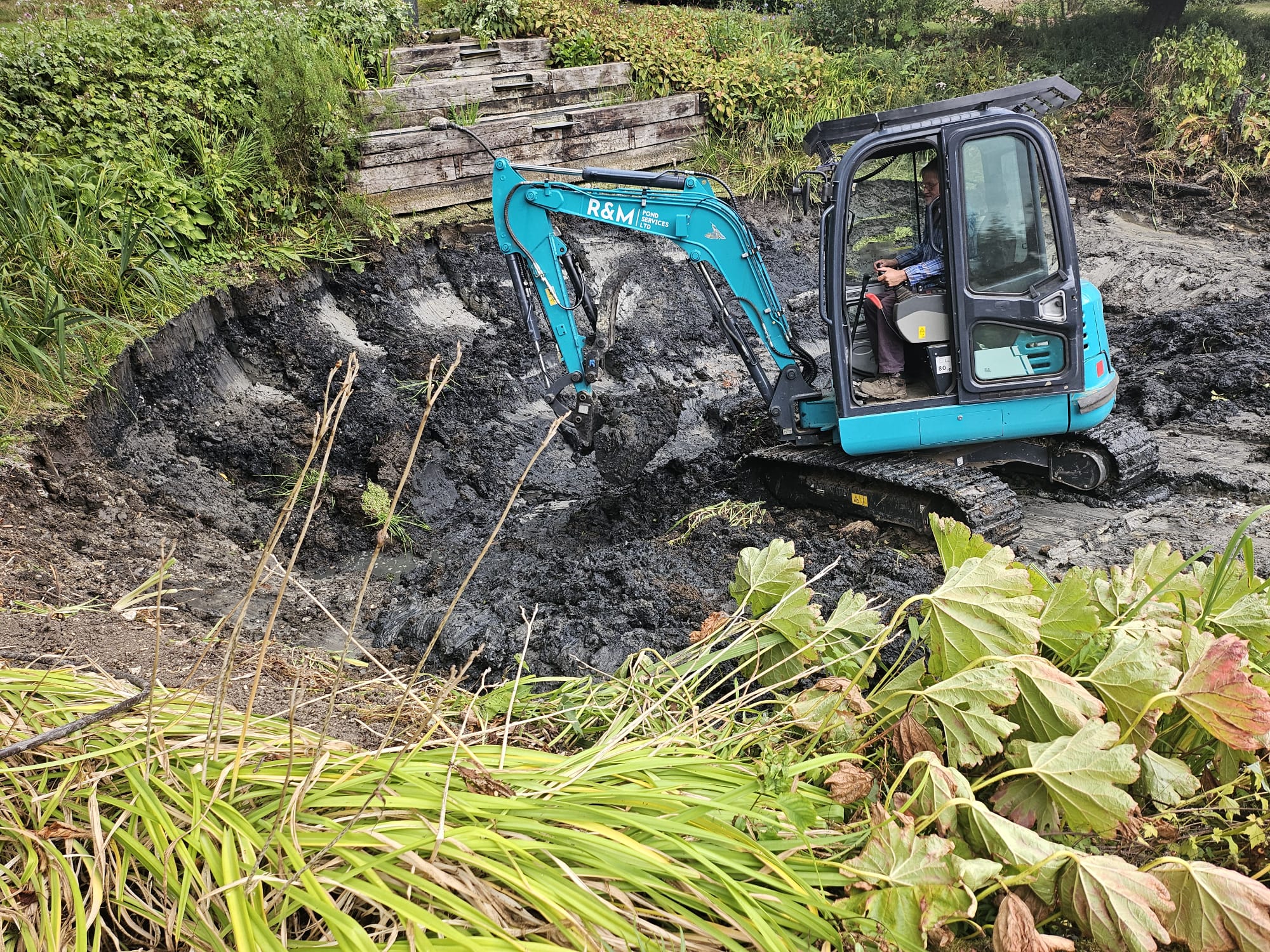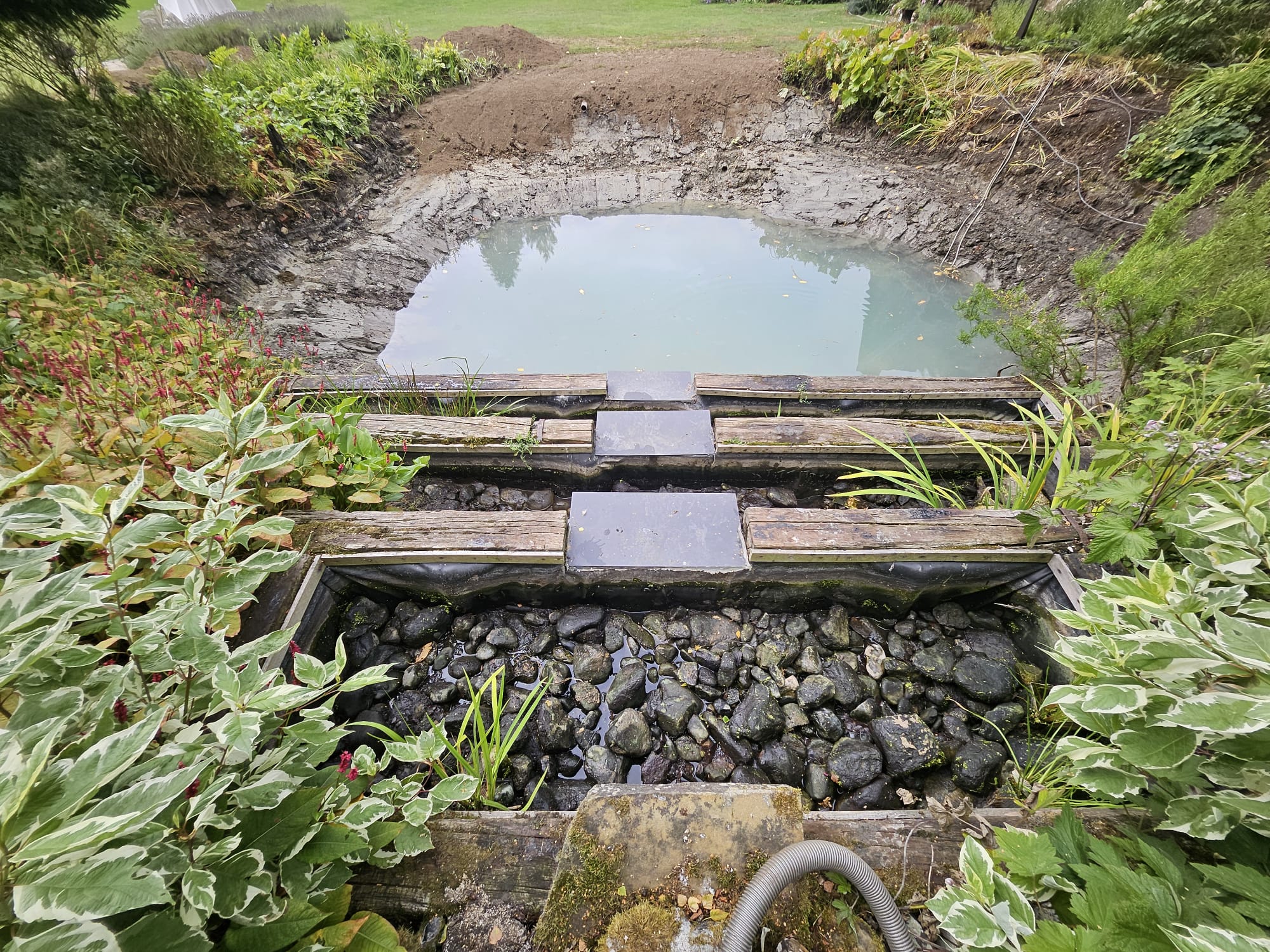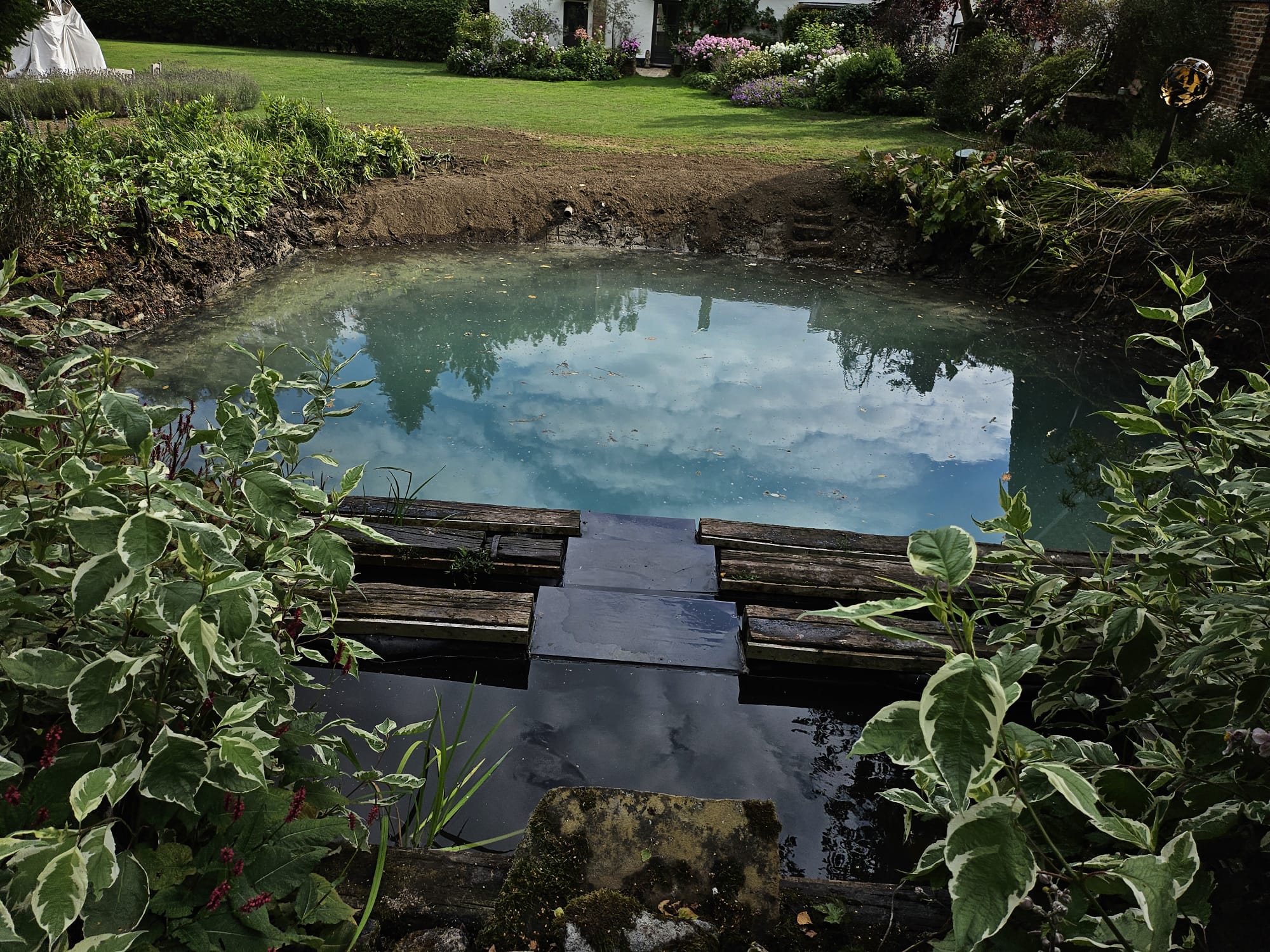
This report outlines the extensive restoration works carried out on an extremely large watercourse that had become severely obstructed by reeds and compromised by an overgrowth of trees along its banks. The site also featured an island, which had all but disappeared beneath unruly vegetation. The restoration required a coordinated effort, specialised machinery, and careful management to restore the watercourse to a safe and functional condition.
Given the scale of the project, the team transported a welfare unit to the site to ensure the crew’s comfort over the extended period required for completion. Necessary equipment, including chainsaws, pole saws, and hedge cutting tools, was delivered to facilitate the clearance and maintenance tasks.
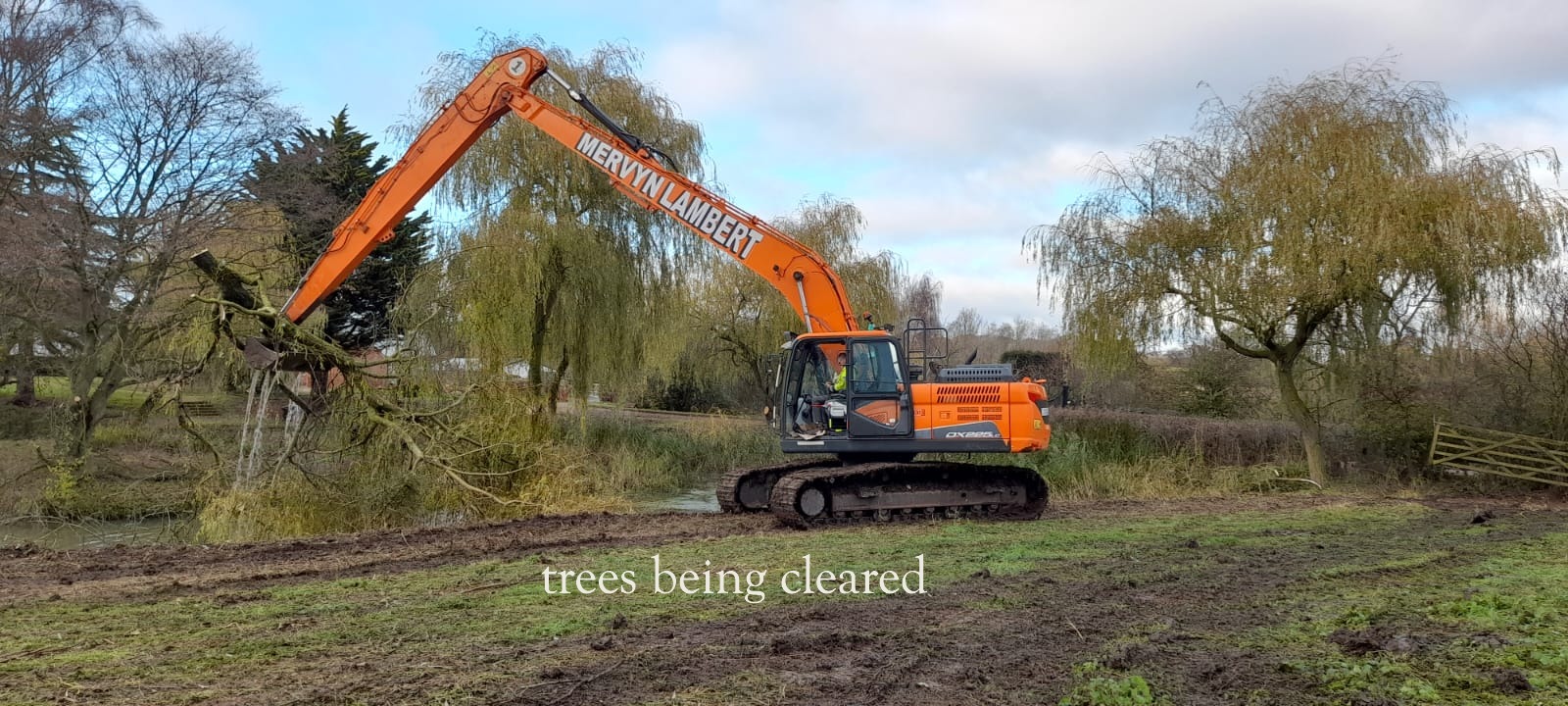
The restoration began with targeted tree management. The lower branches of an Indian bean tree were trimmed back to improve visibility and access. A split bough on a cedar tree near the drive was removed to prevent further damage, and the lower branches were tidied to enhance the site’s appearance and safety.
Attention then shifted to the island, which required significant clearing. The team, including a skilled arborist, commenced by removing lower branches from the willow trees, effectively lifting the canopy and allowing light to penetrate. All branches and debris were manually carried across a bridge and loaded into a dumper for transportation to a designated bonfire area in the large meadow.
An area on the island was cleared to create a safe bonfire site. The accumulated debris and branches were safely burnt, reducing the risk of obstruction and improving the island’s visibility.
The team then proceeded to strim the banks of the island, focusing on removing reeds and other accessible vegetation. All material was again transported across the bridge, loaded into the dumper, and taken to the bonfire area in the meadow for safe disposal. The strimming extended to the banks surrounding the watercourse, ensuring thorough removal of reeds and unwanted growth.
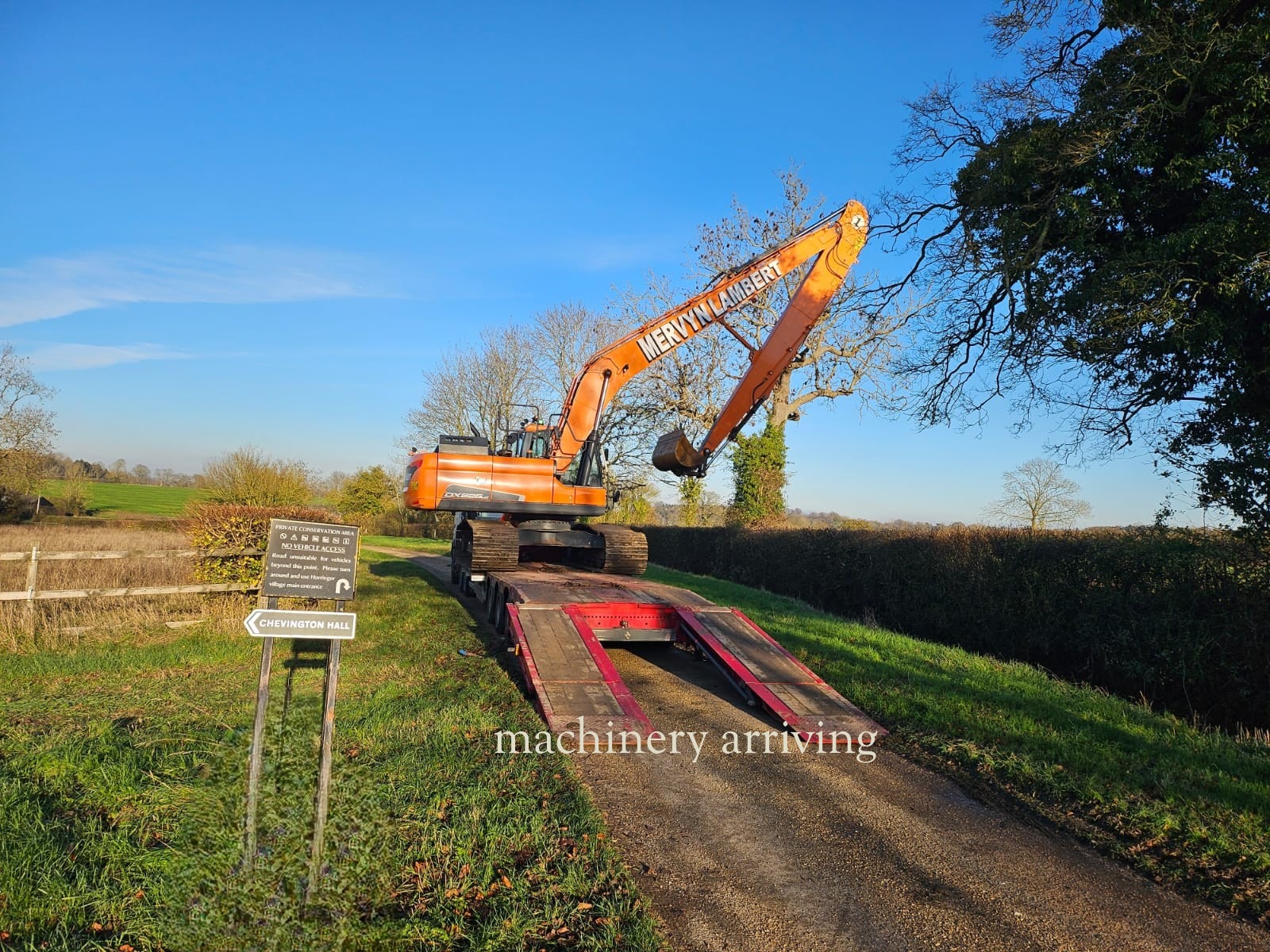
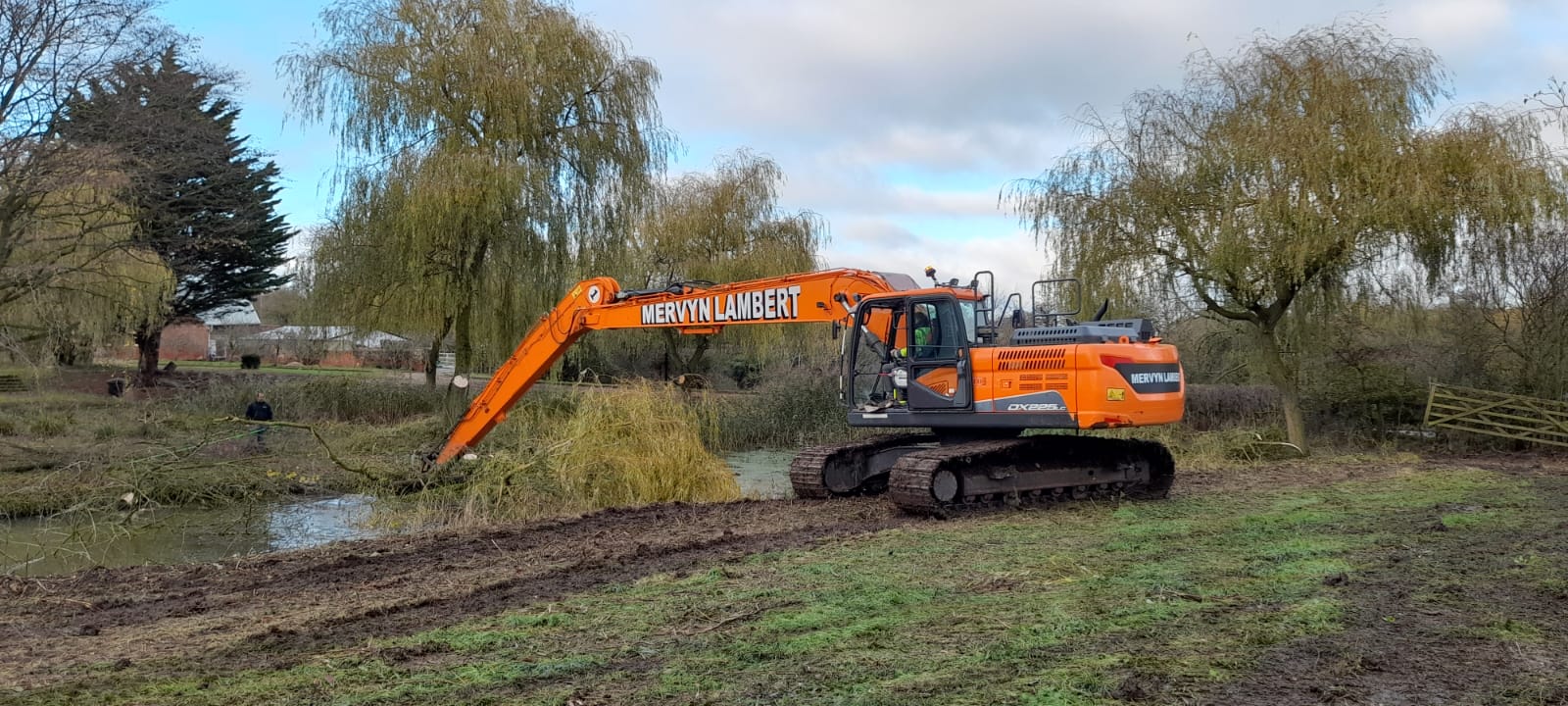
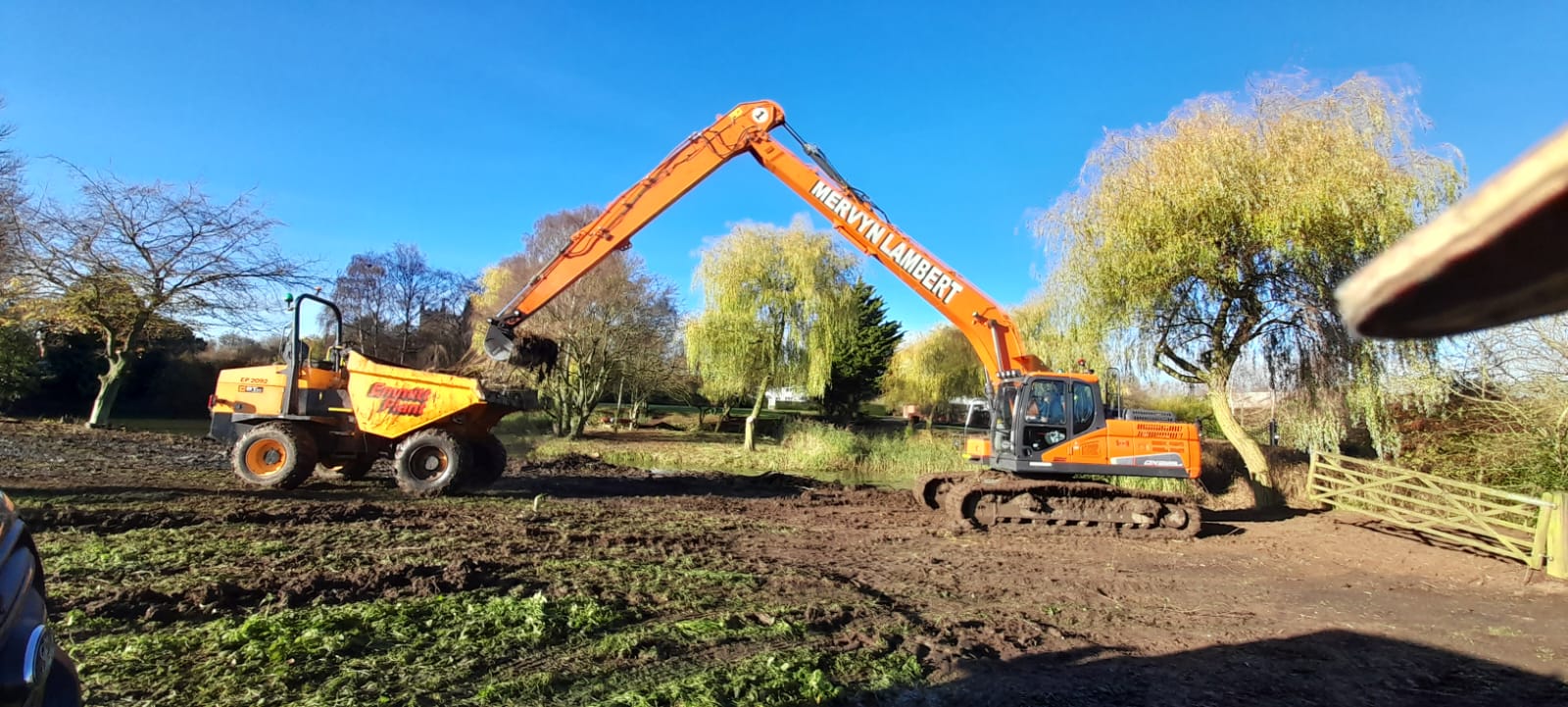
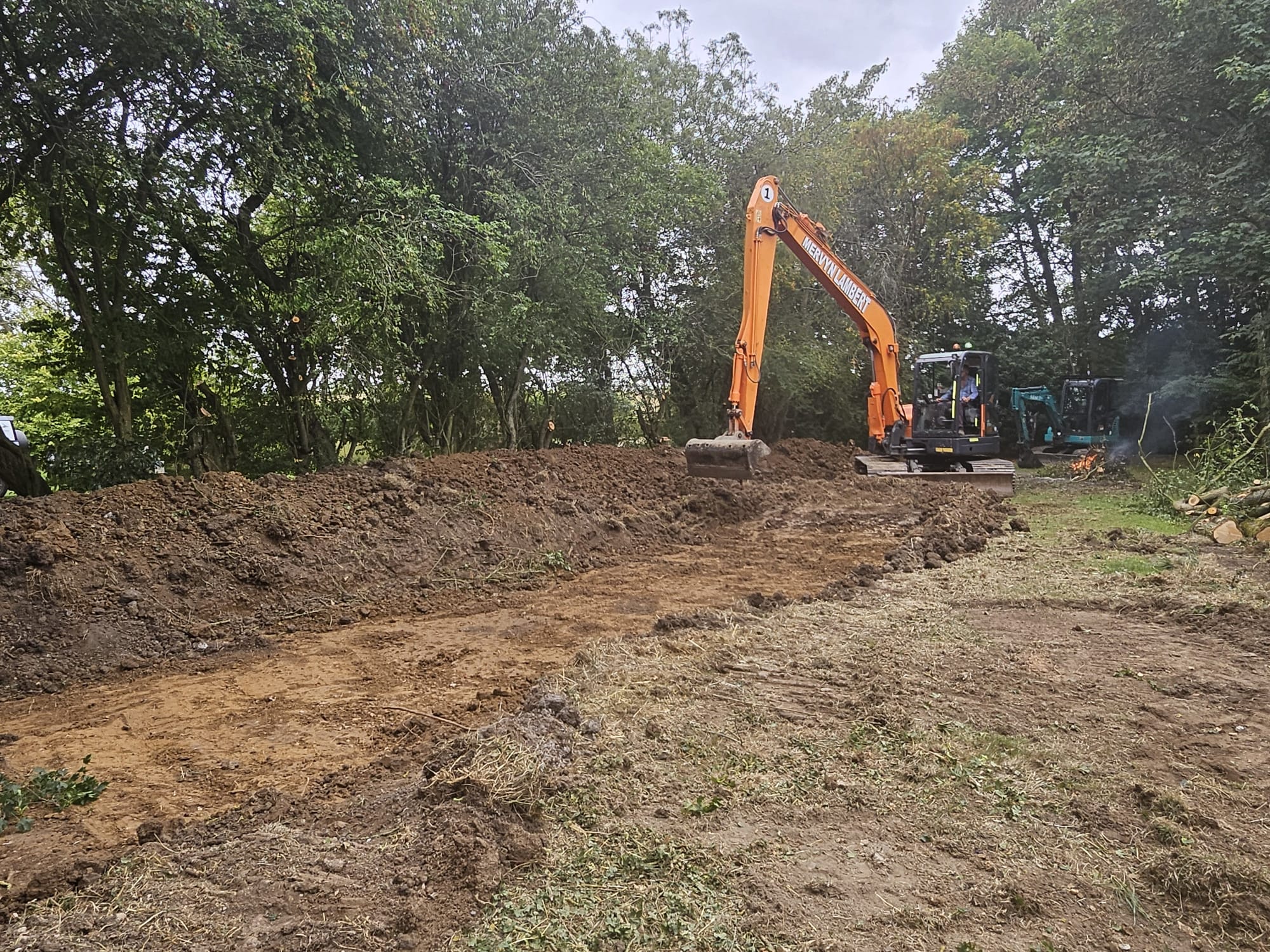
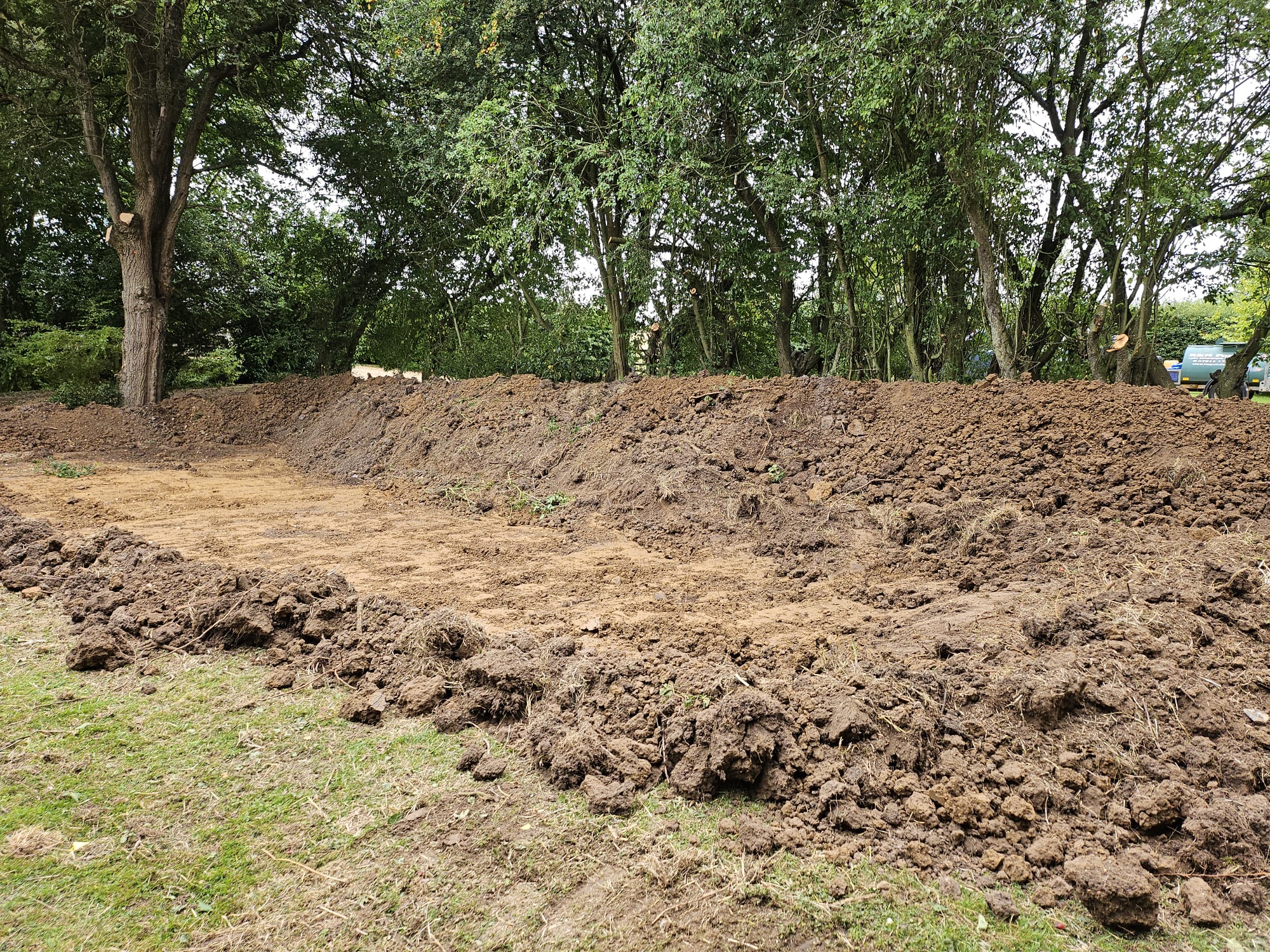
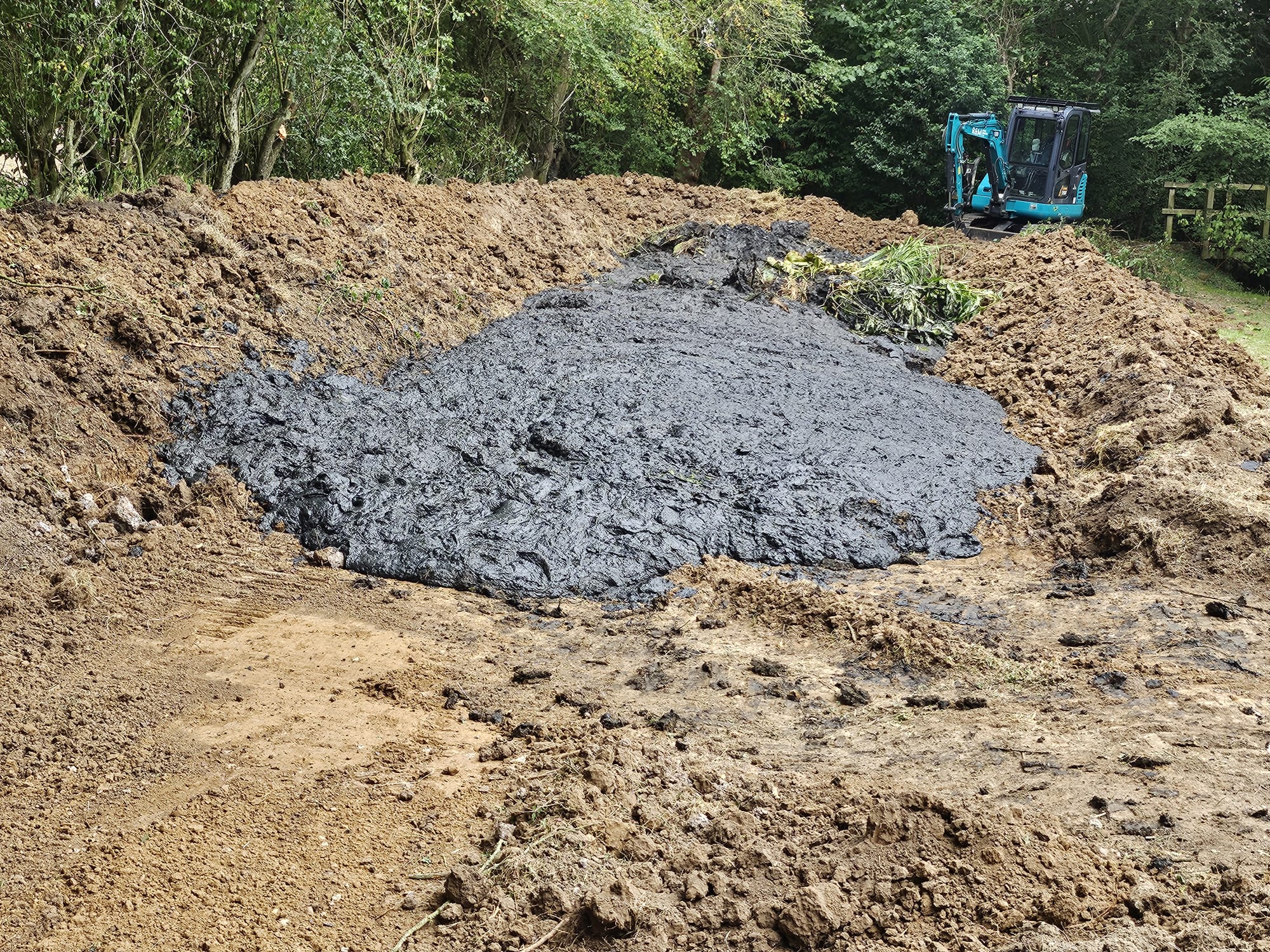
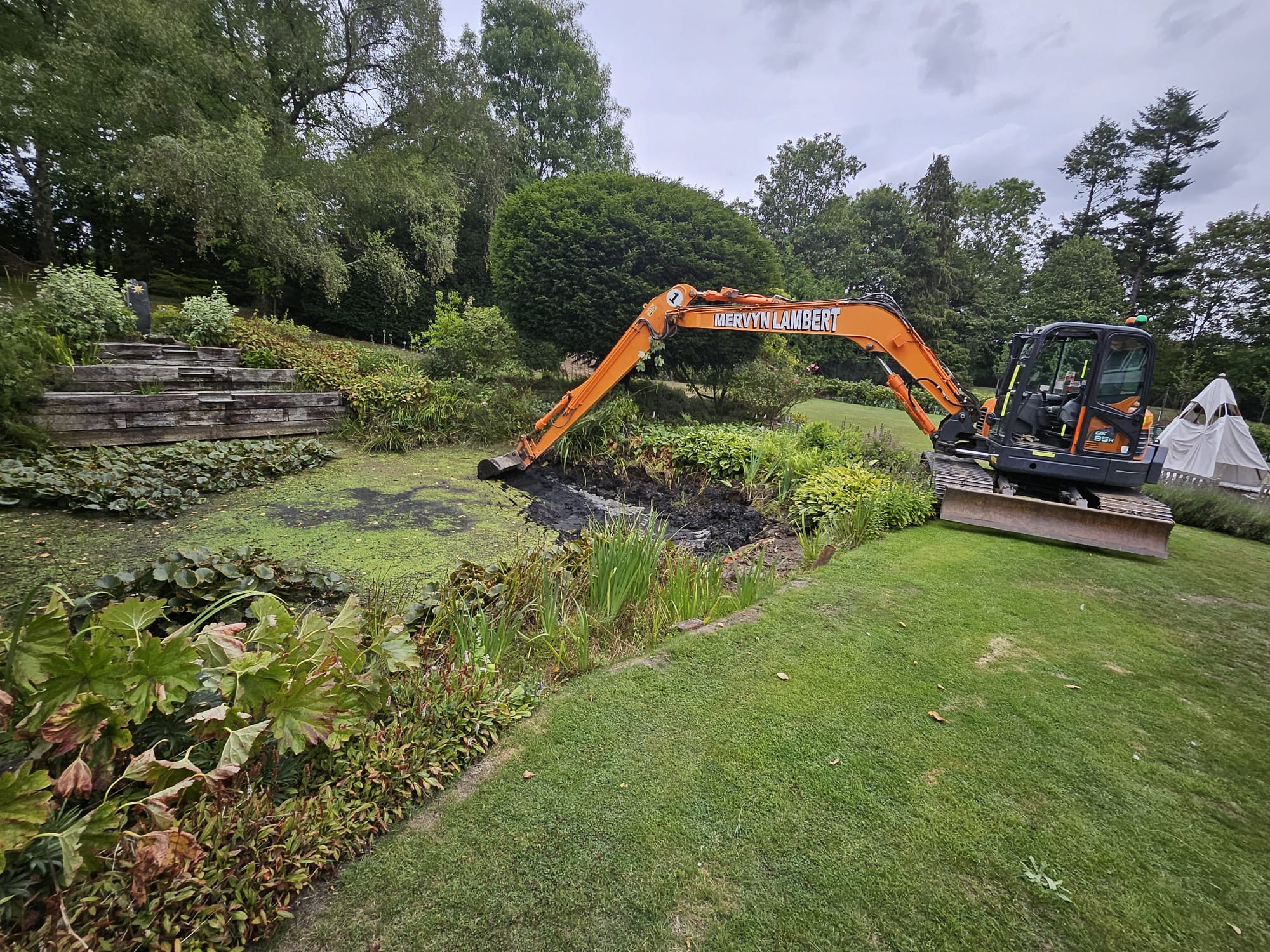
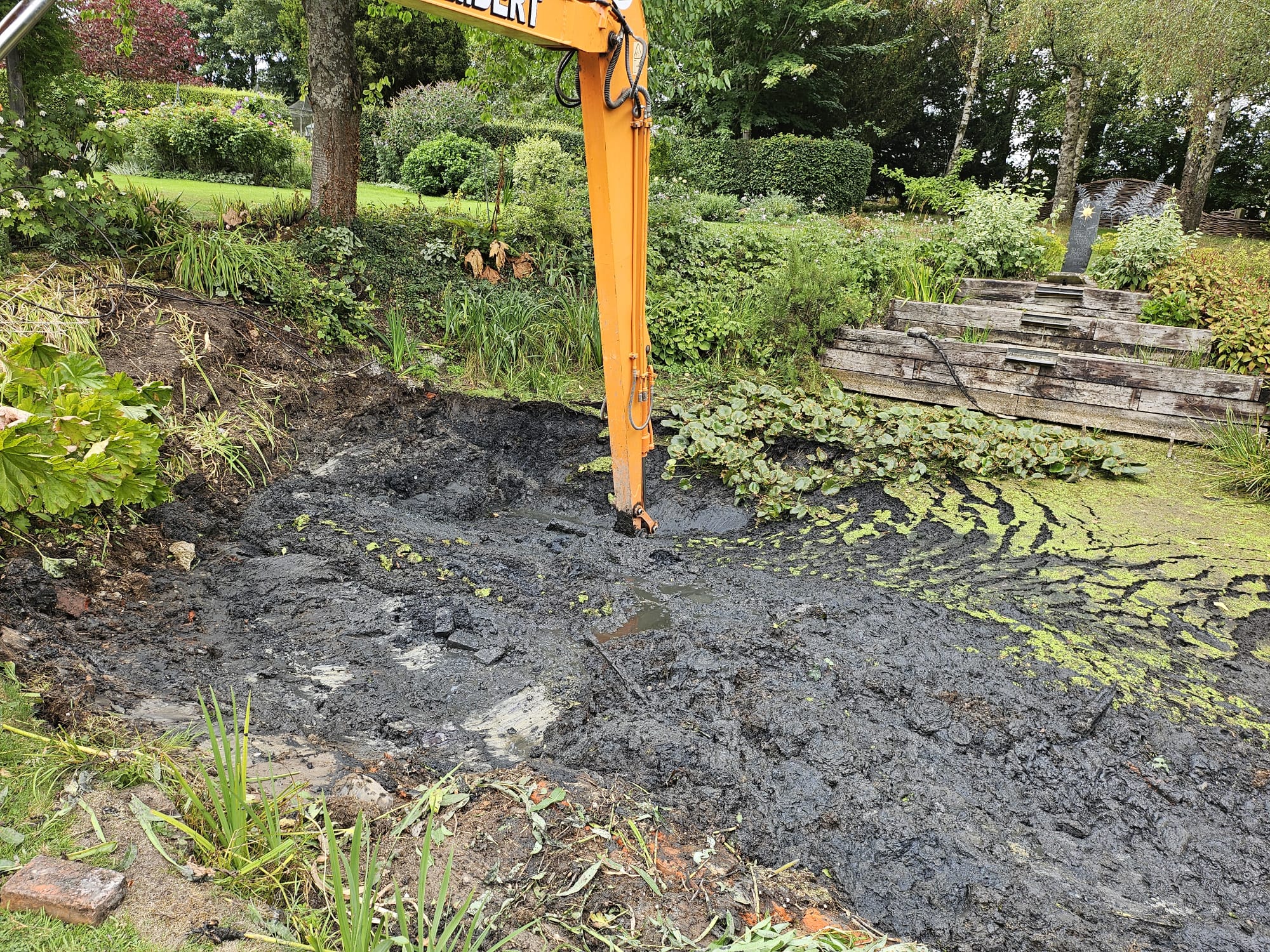
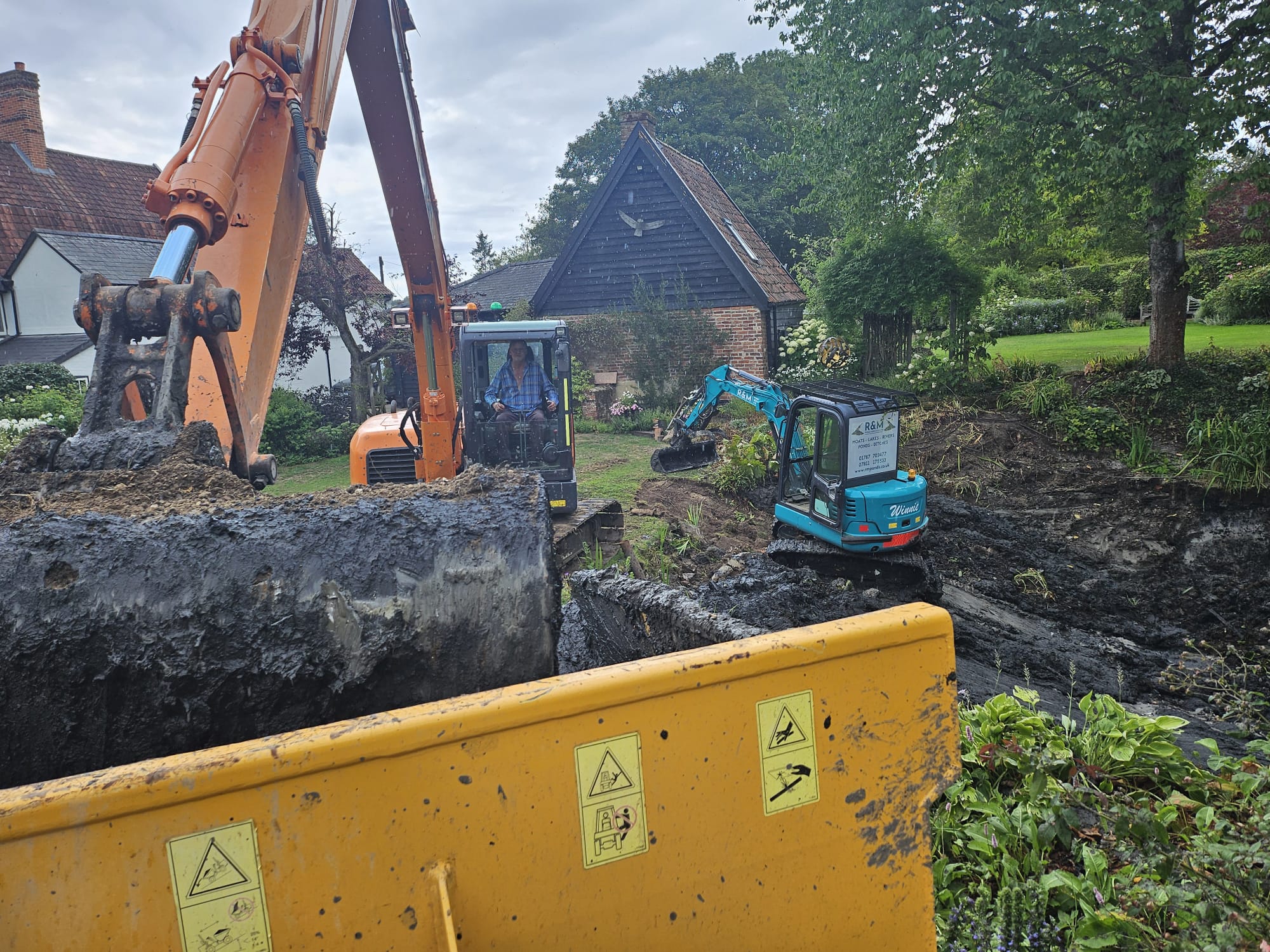
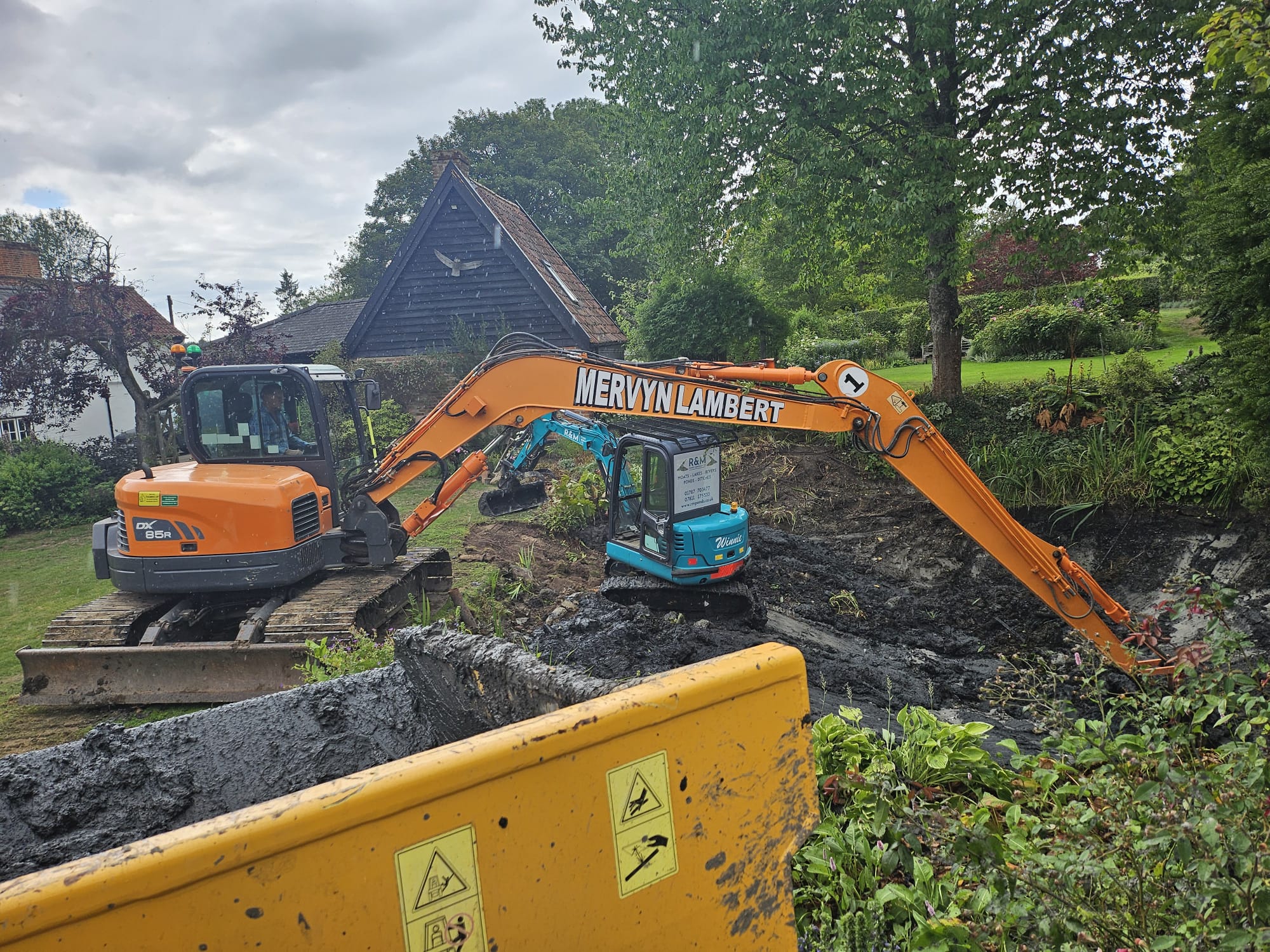
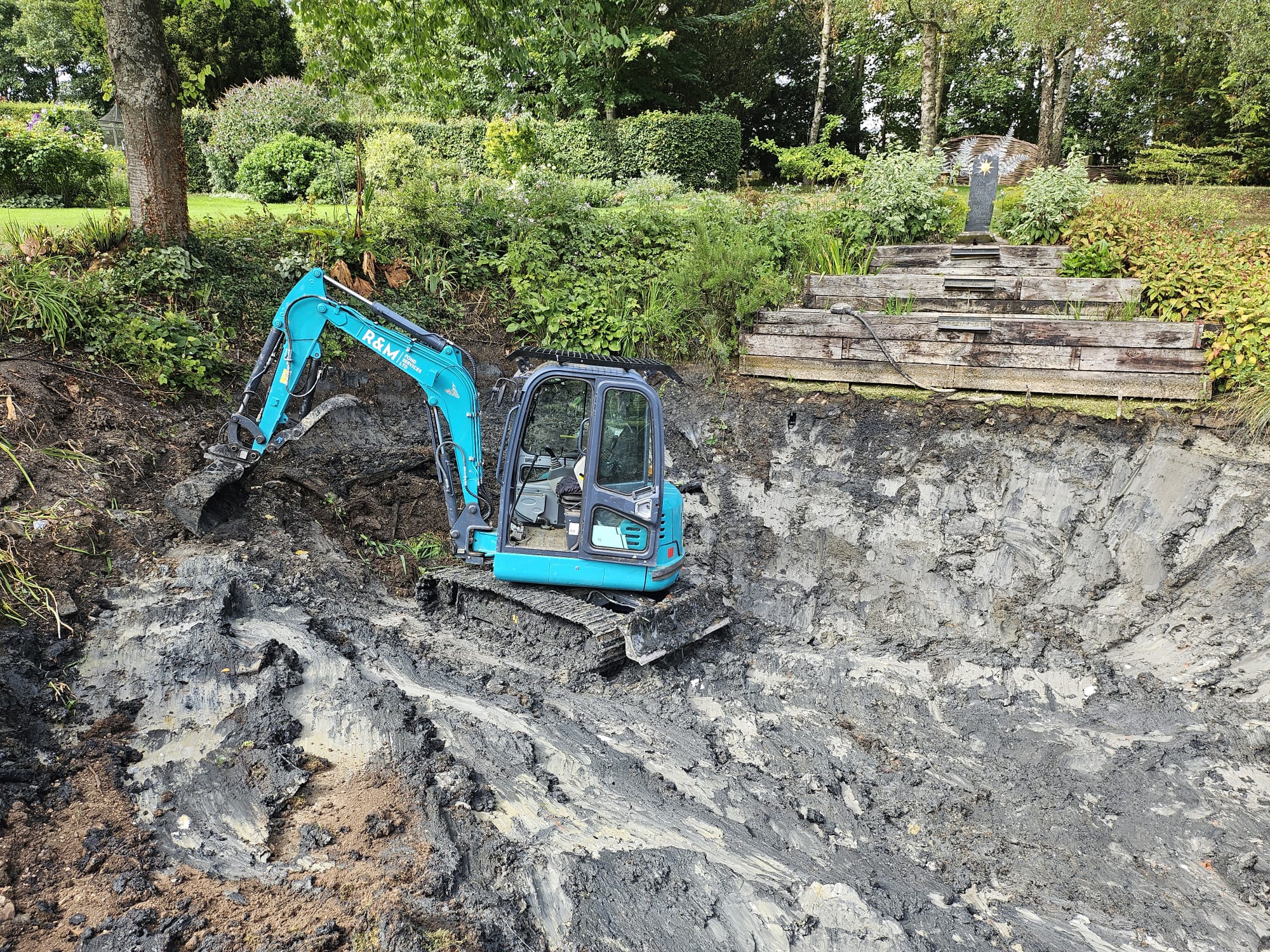
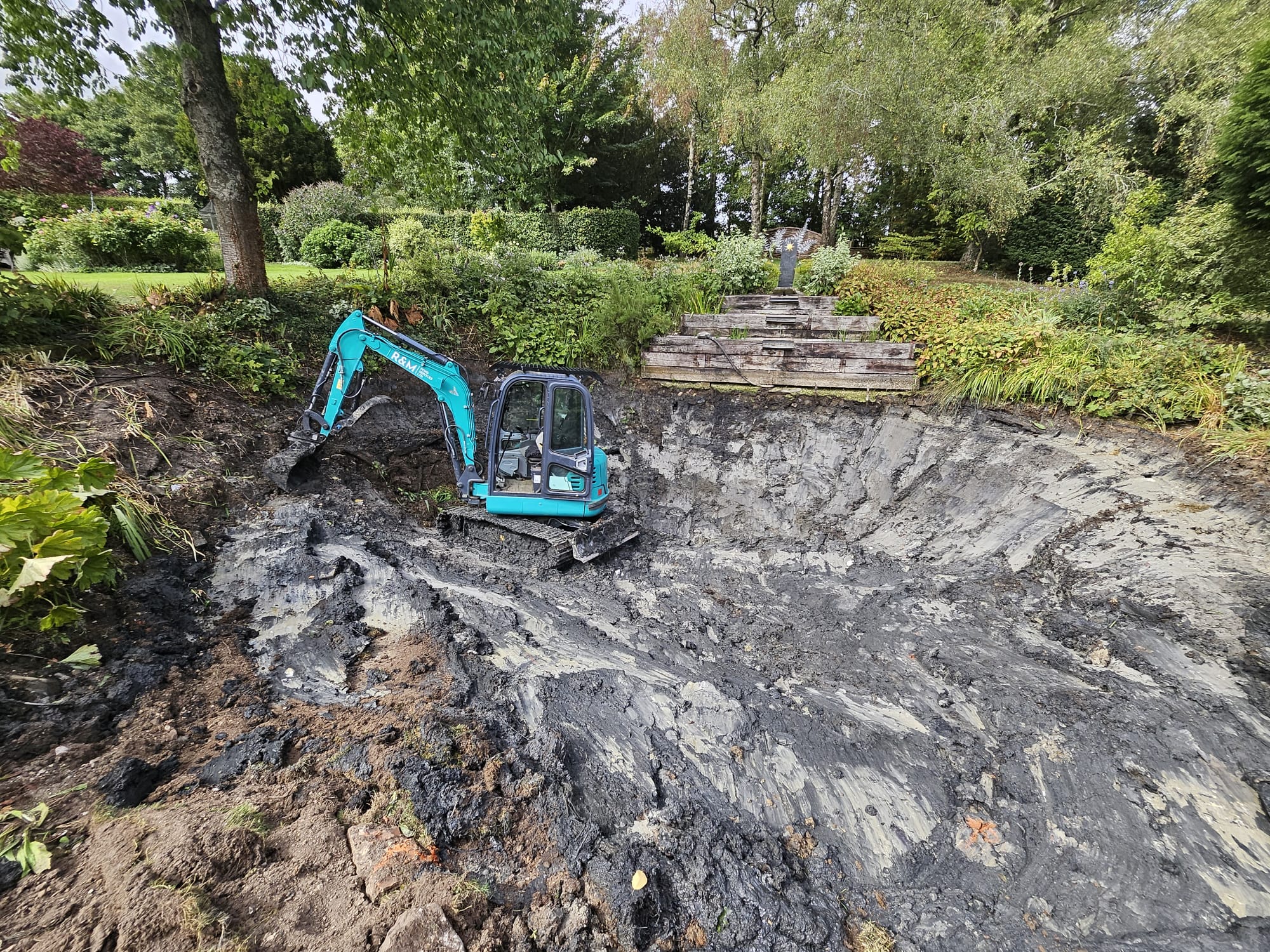
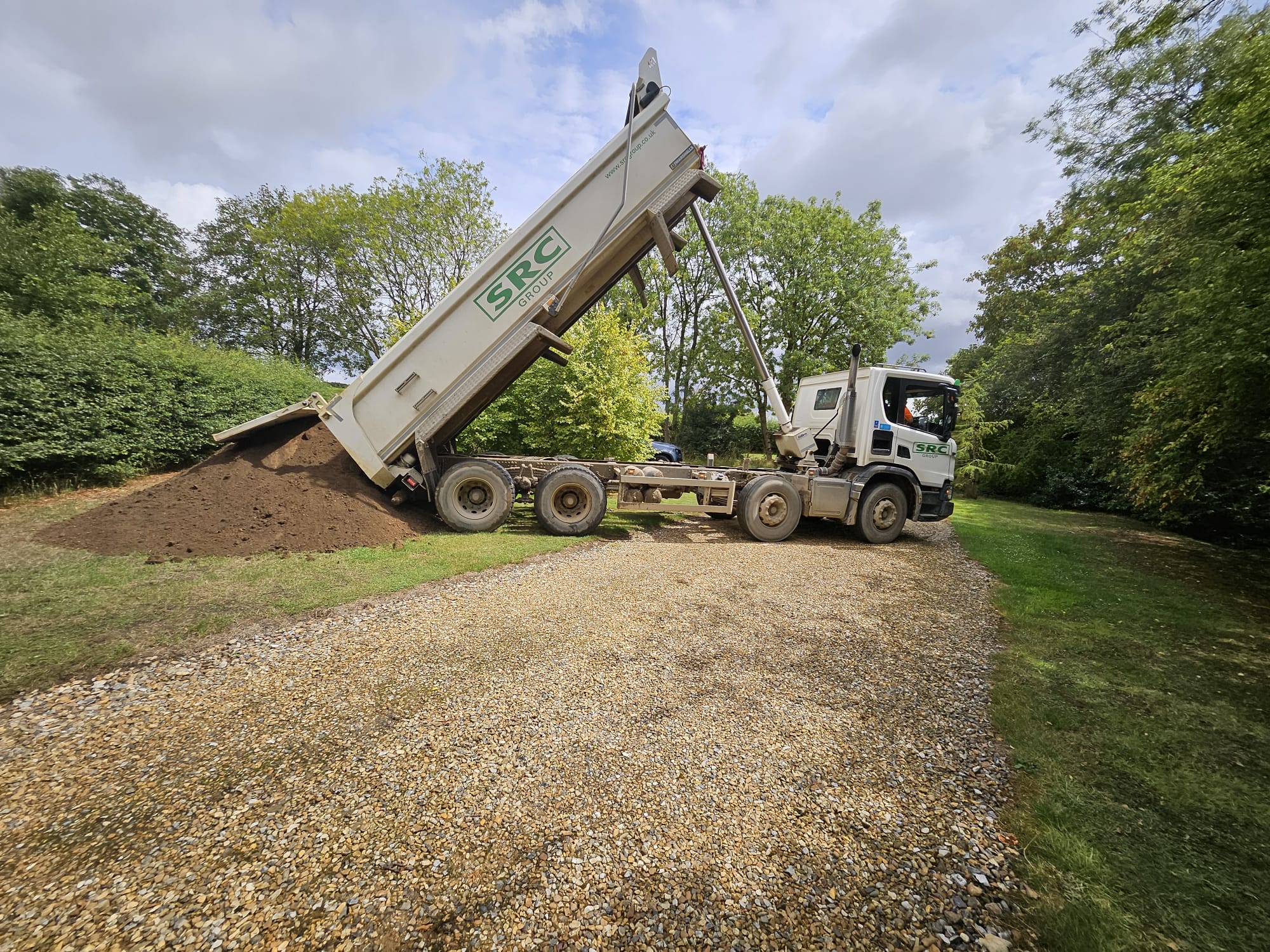
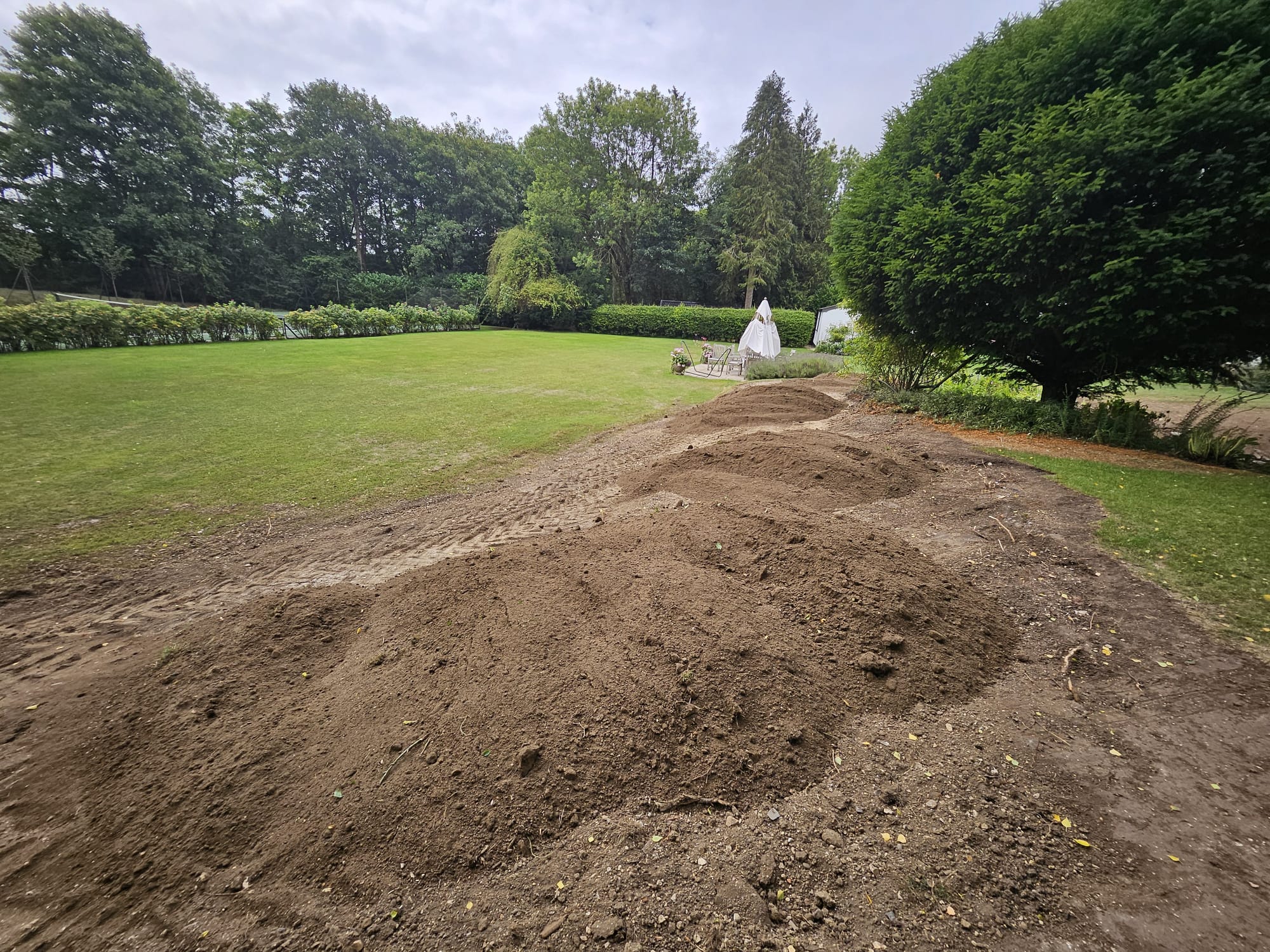
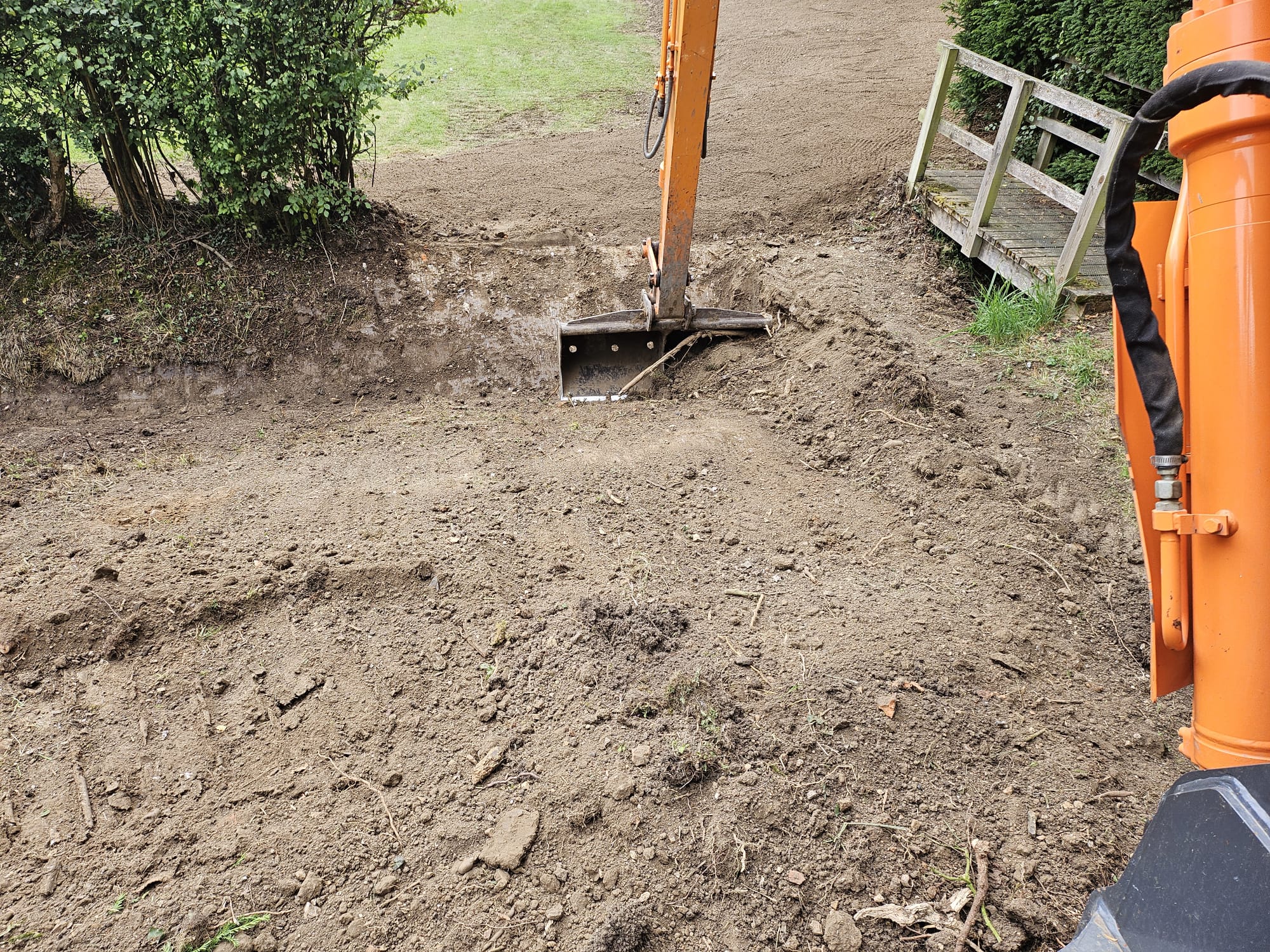
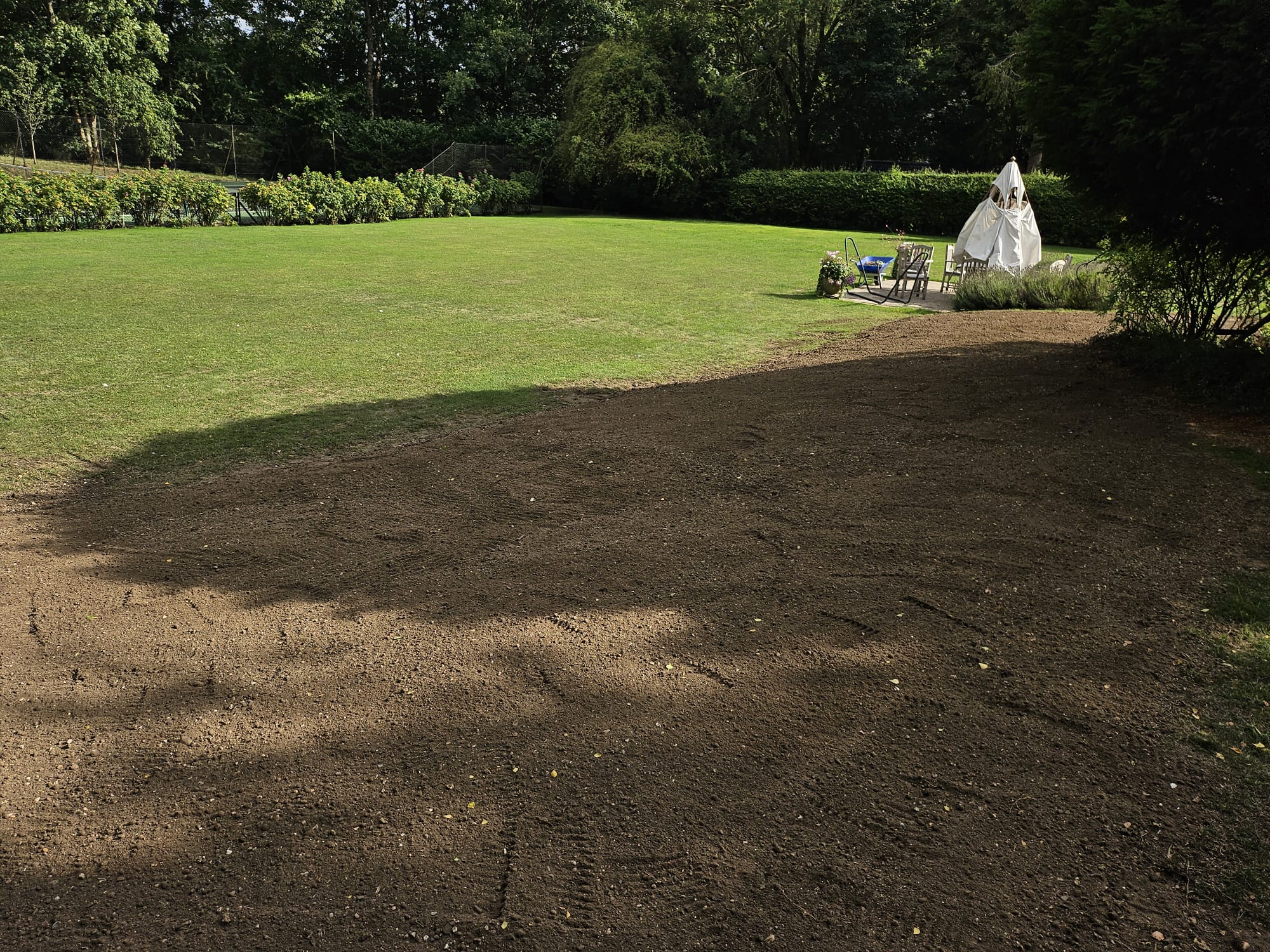
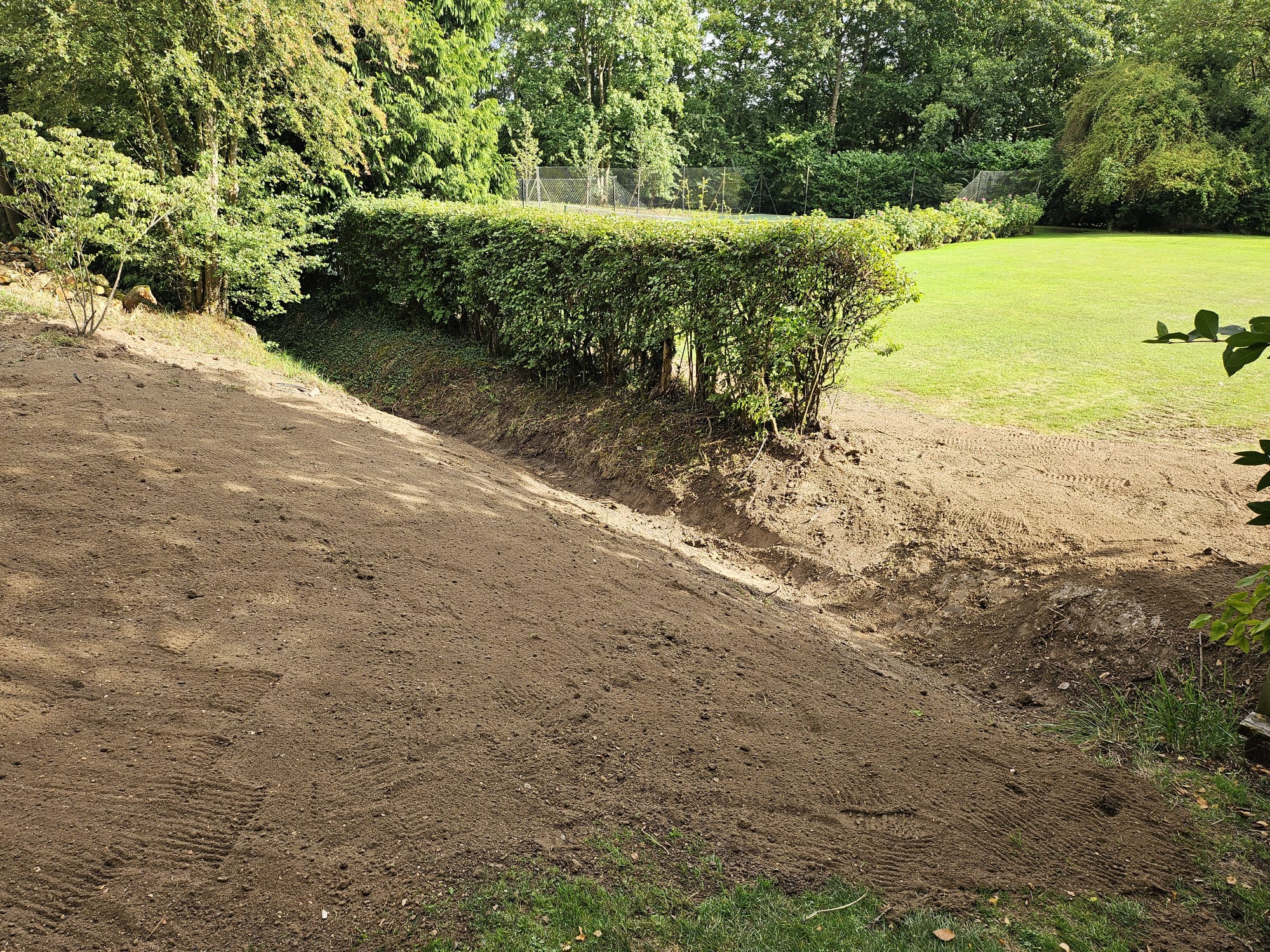
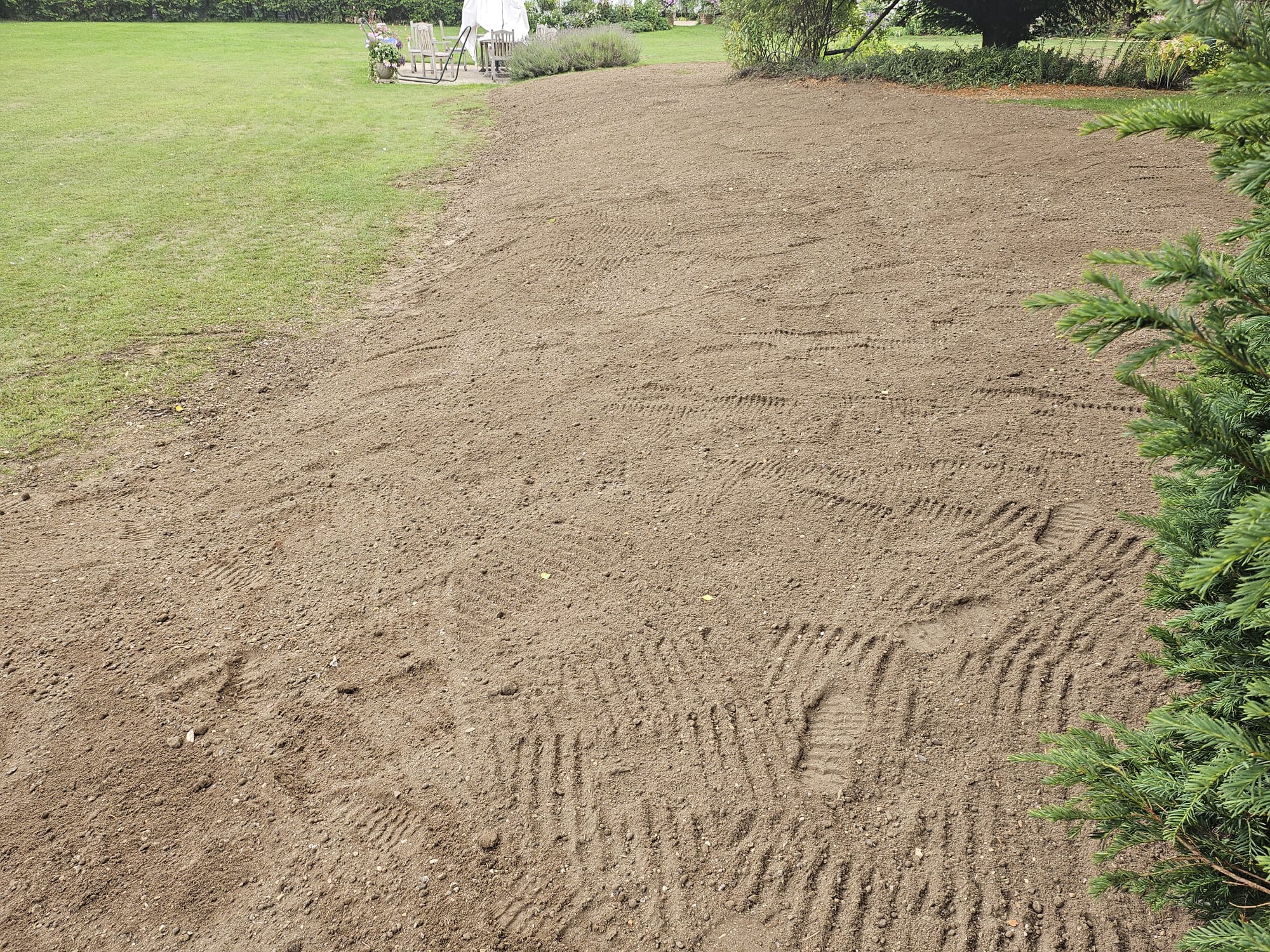
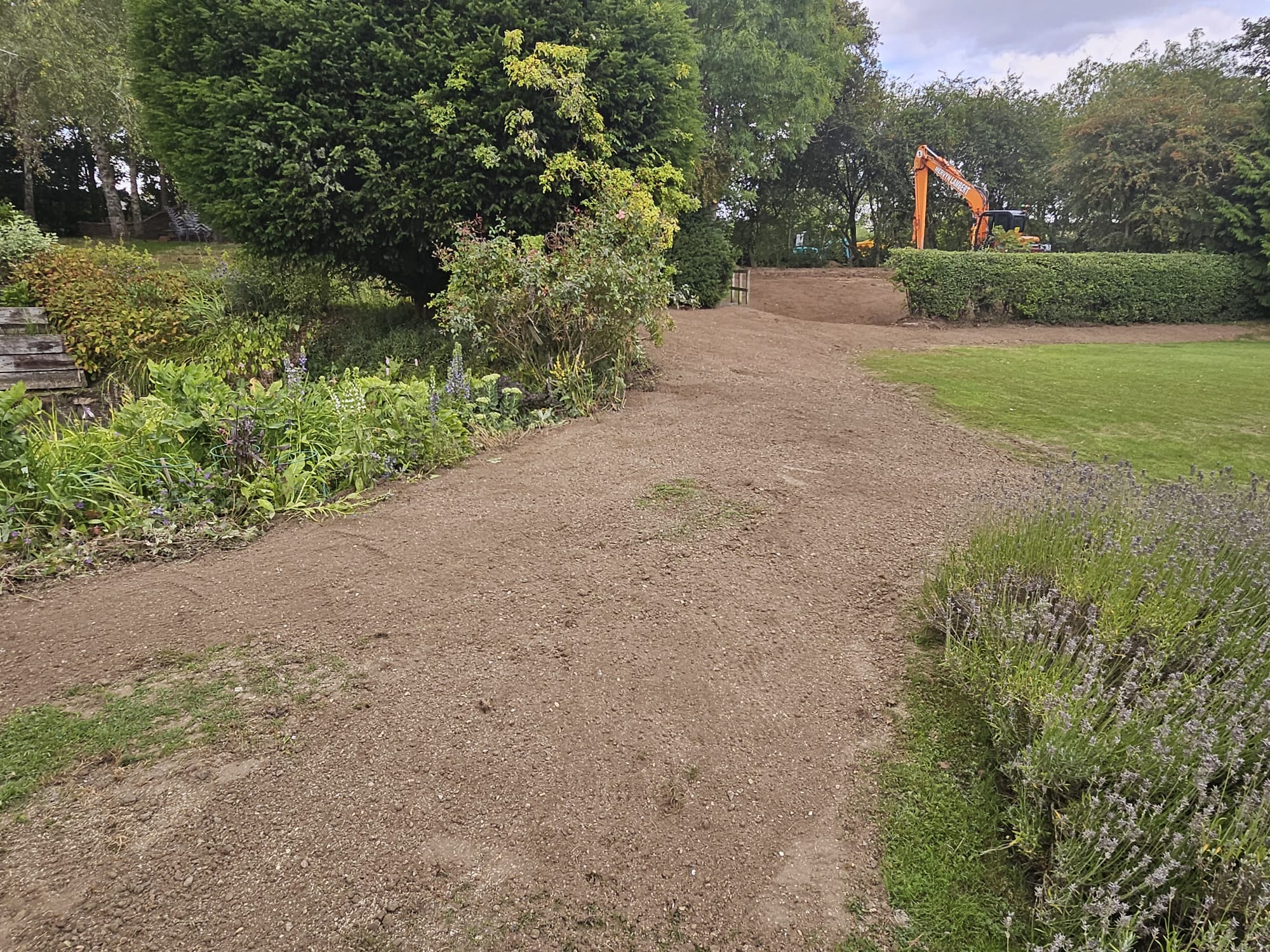
To tackle the extensive reeds and silt along the water’s edge, a 22.5-tonne long reach excavator was brought to site and tracked into position in the large meadow. The team constructed a bund at the far end of the meadow to contain excavated silt and reeds, preventing them from re-entering the watercourse and aiding future site management.
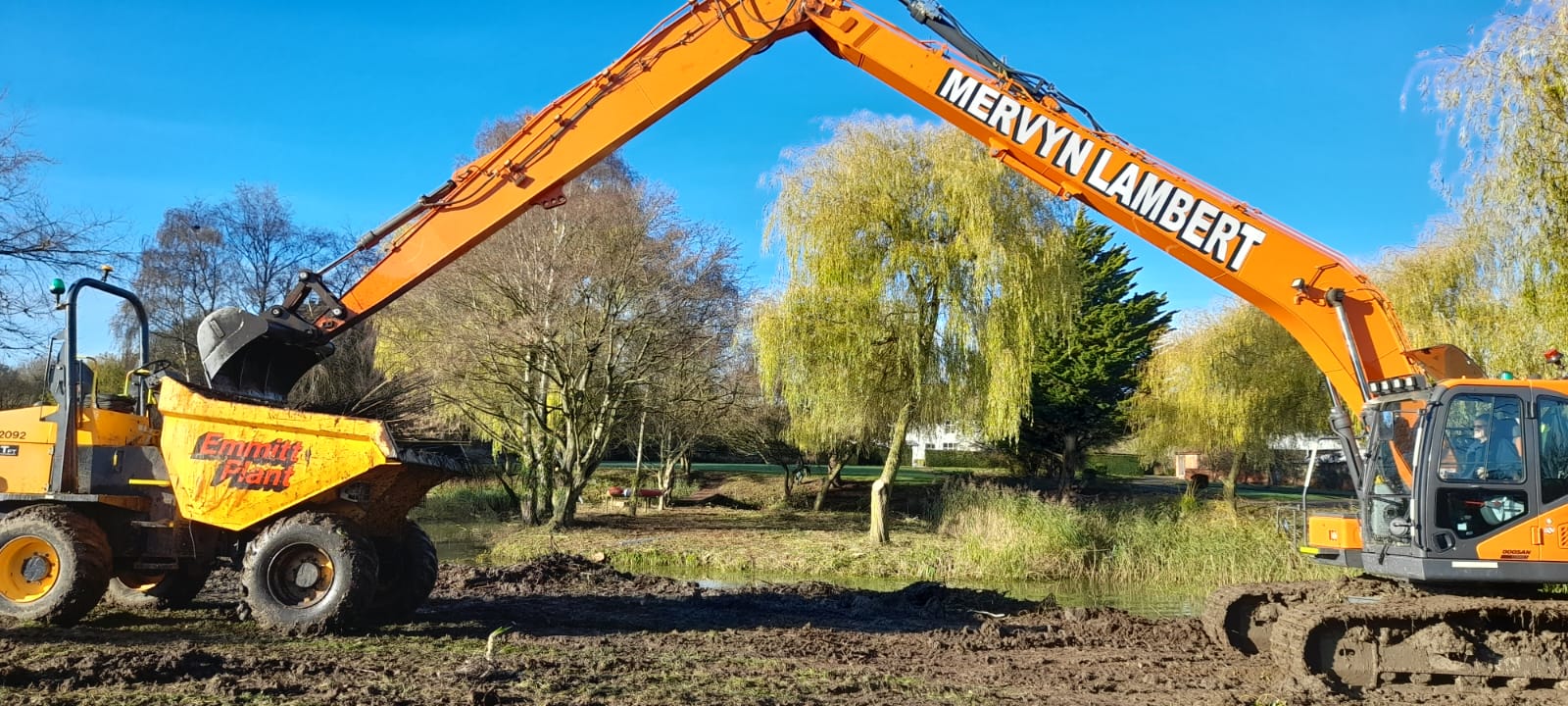
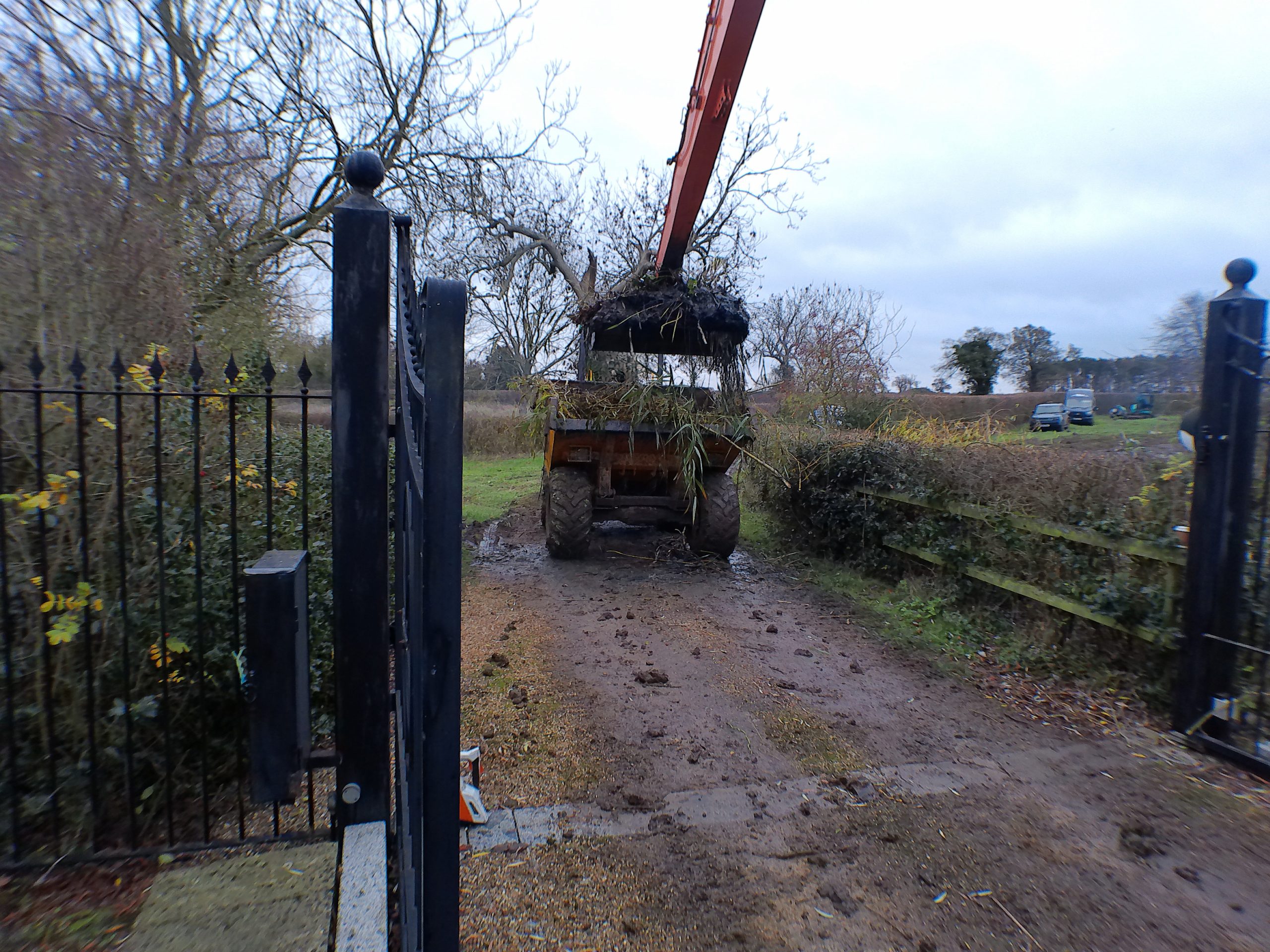
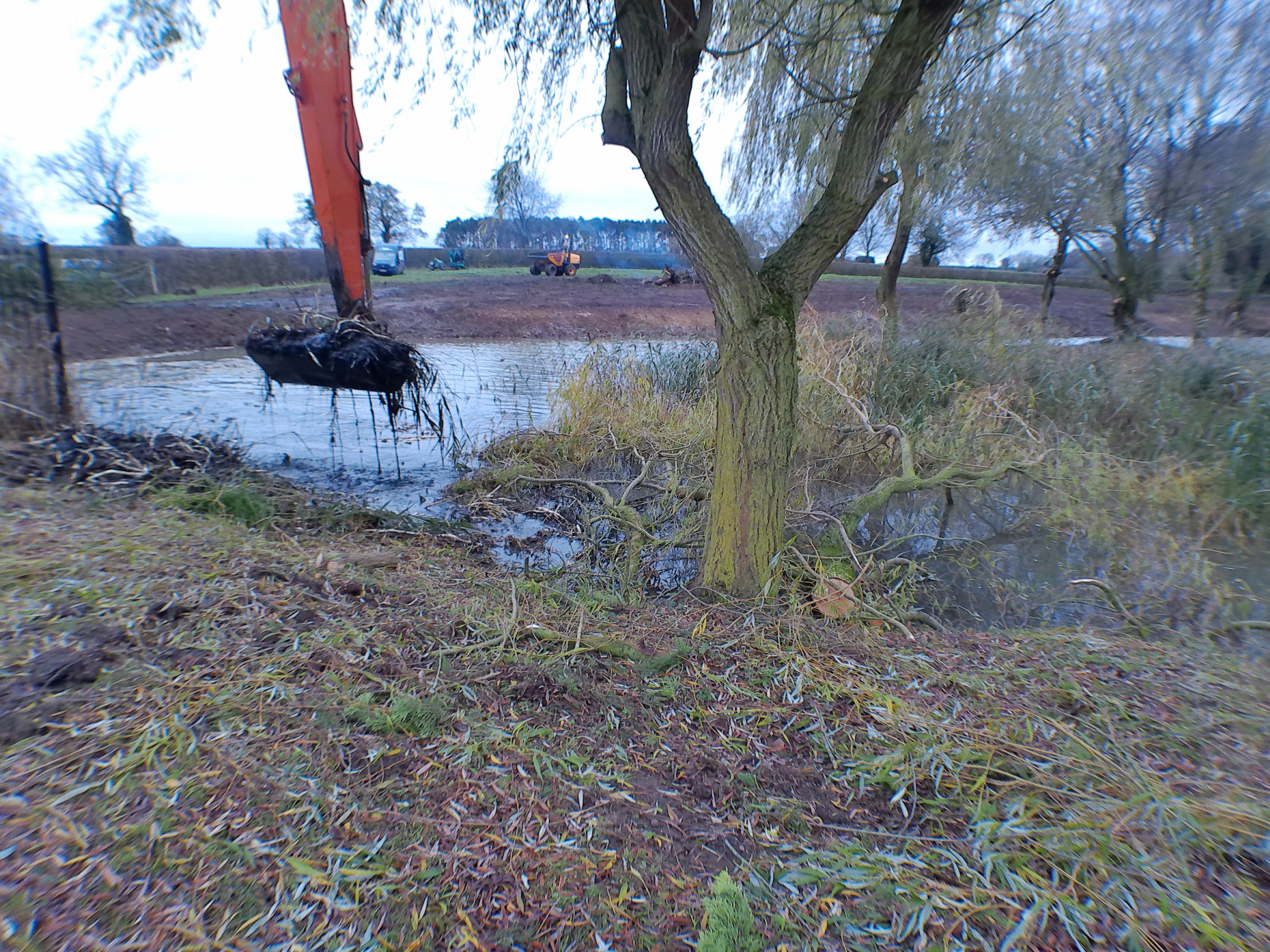
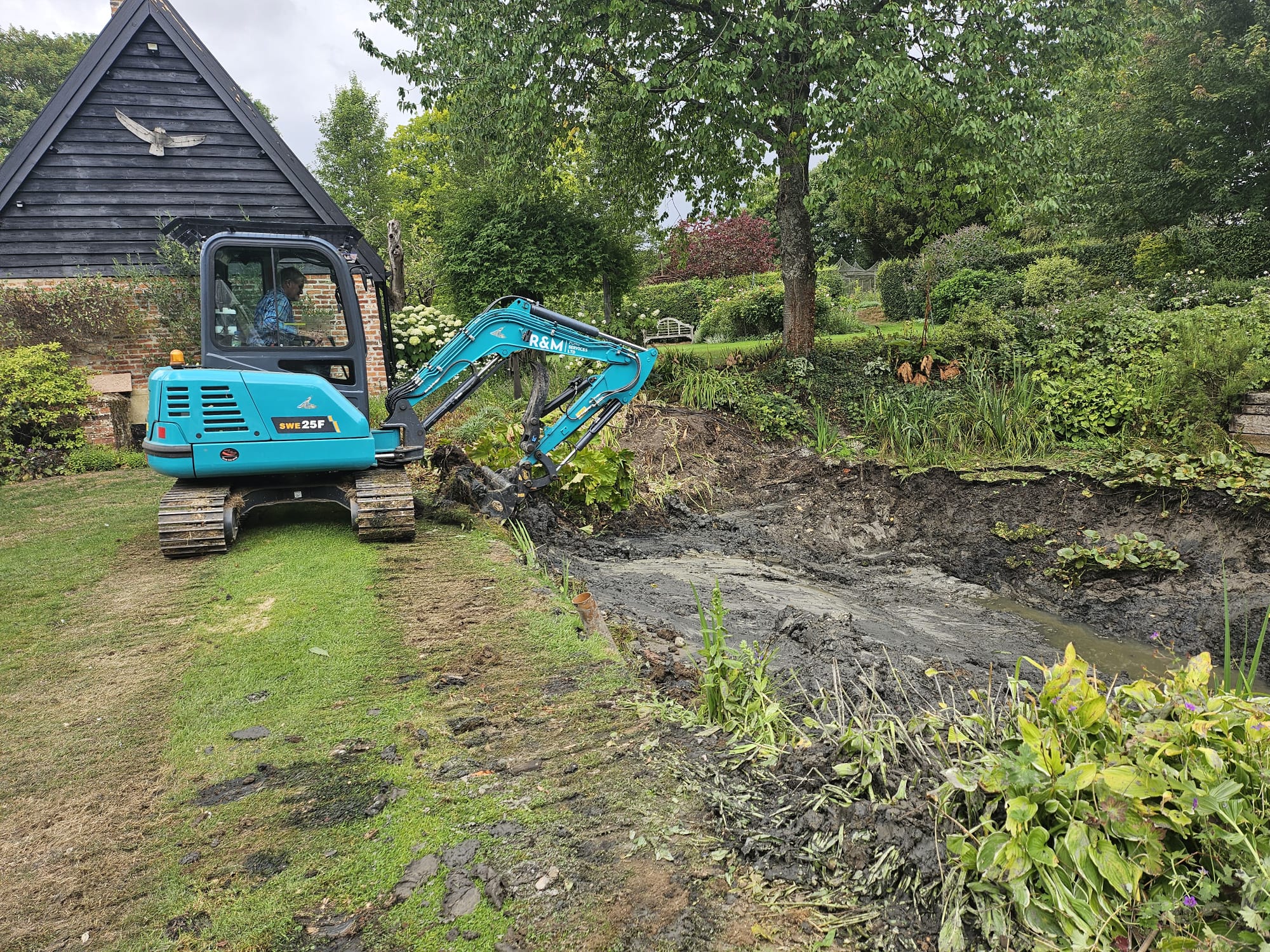
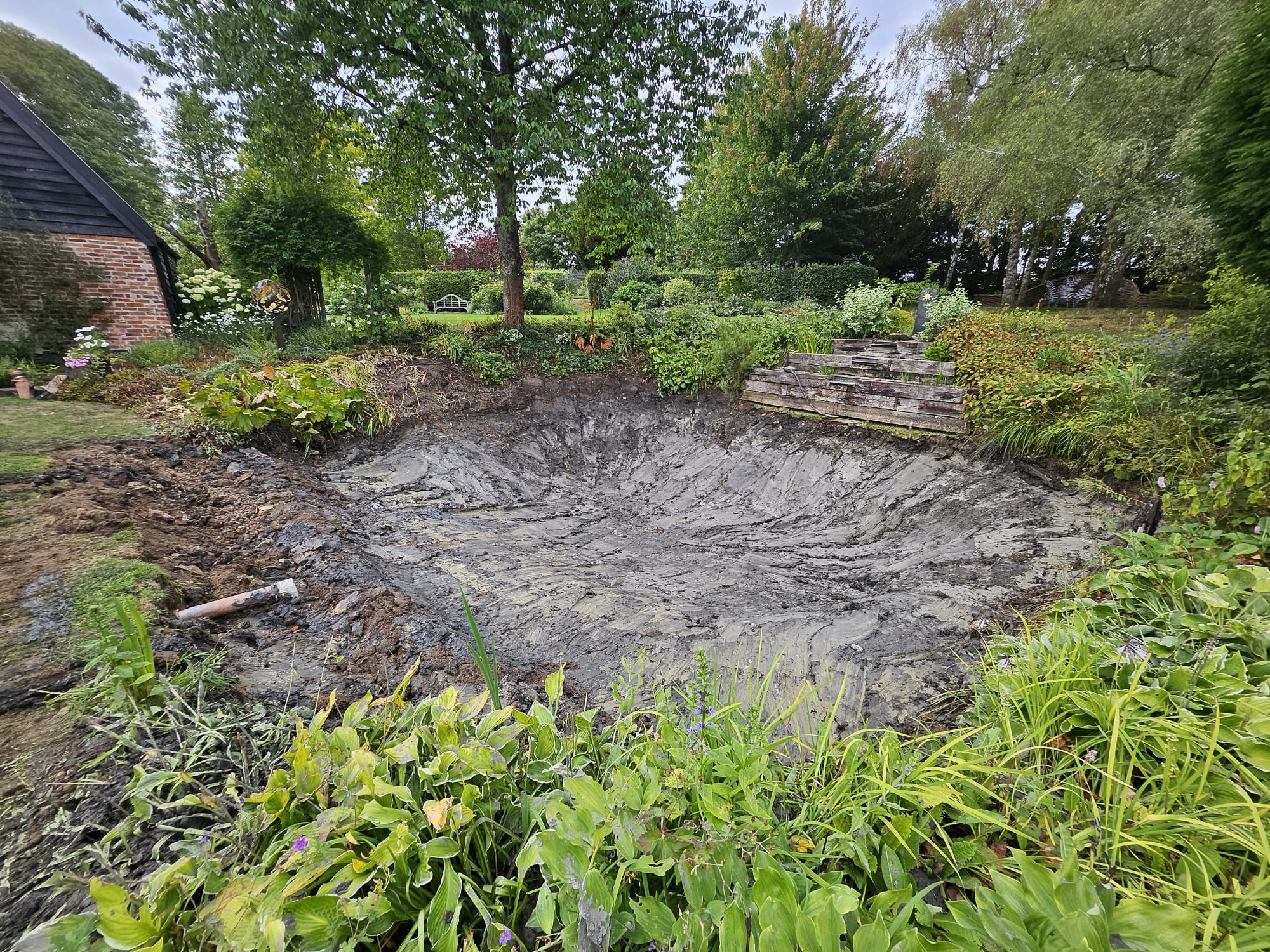
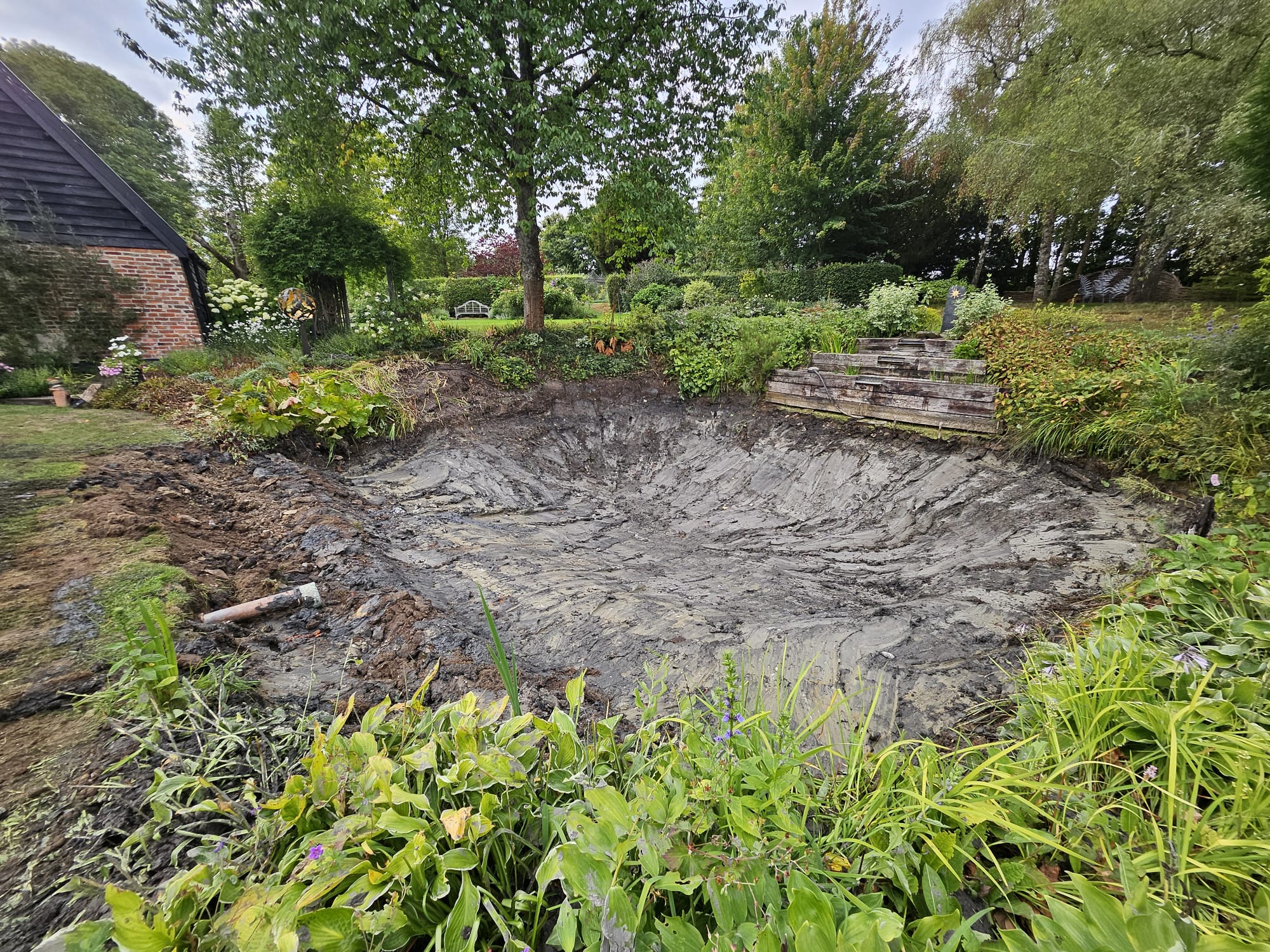
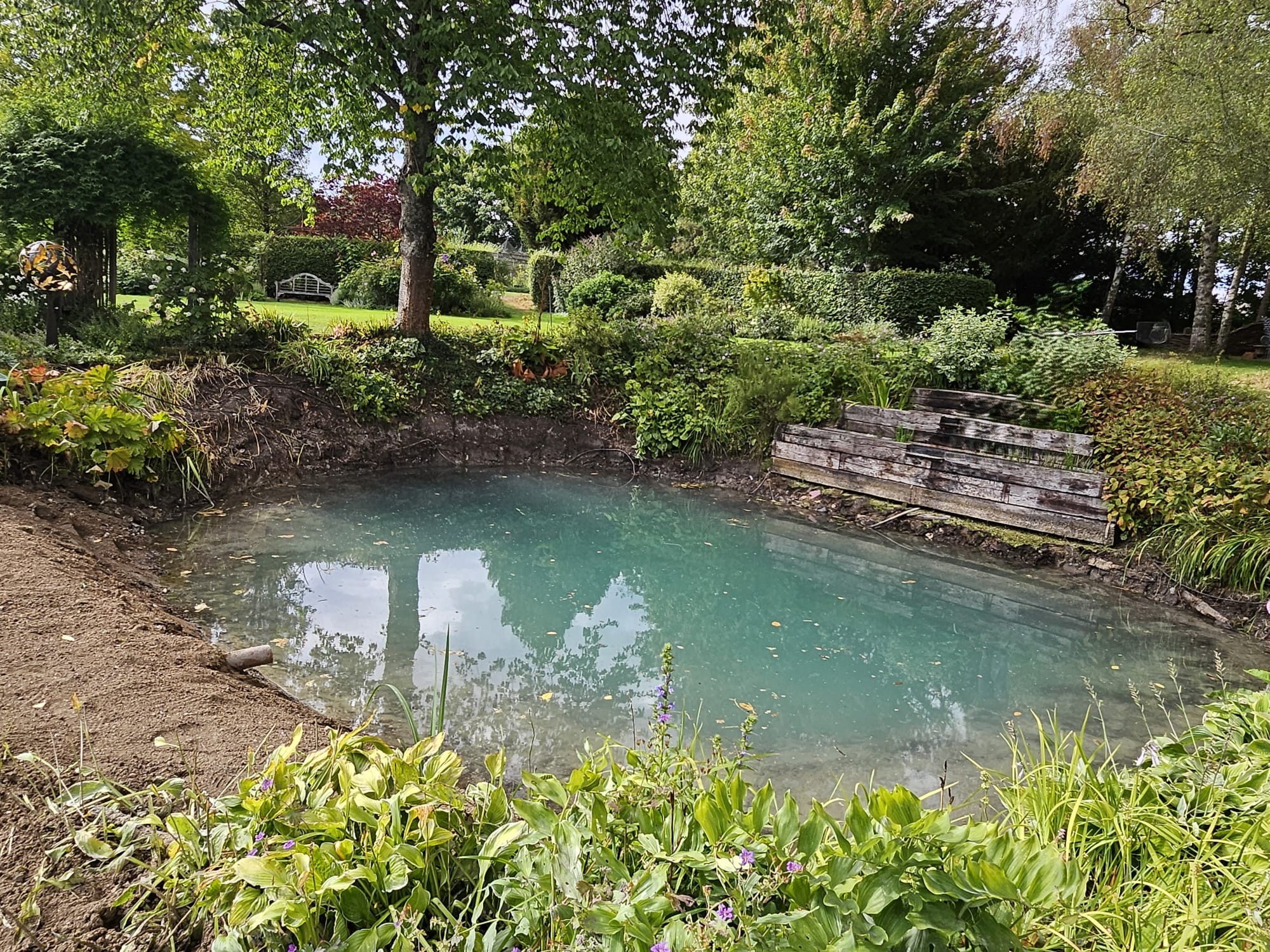
With improved access, the excavator was used to remove reeds and silt from the watercourse, which were then loaded into the dumper and deposited in the prepared bunded area. Fallen trees within the watercourse were also excavated, further clearing the channel for improved water flow.
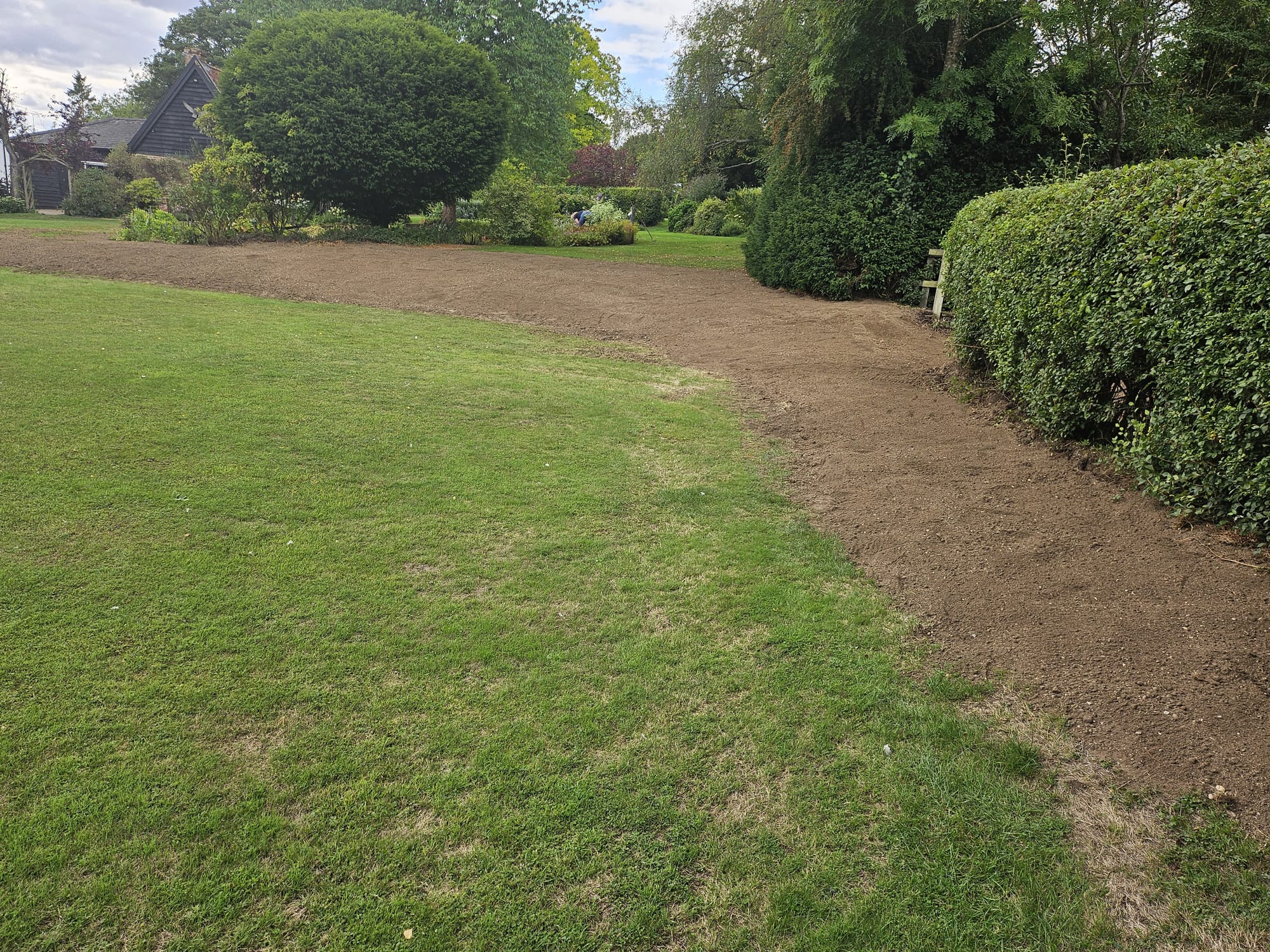
With the bulk of the reeds and silt removed and the bund levelled, the team turned their attention to the nettle-covered meadow adjacent to the watercourse. Skilled work by Richard involved skimming the meadow, making it ready for future rotavation and enhanced land use.
Upon completion of the major works, all plant and equipment were collected. The team ensured the immediate work area was left in a clean and tidy condition, reflecting the professionalism and thoroughness of the restoration effort.
The restoration of the large watercourse was a multi-faceted operation requiring expert arboricultural skills, heavy machinery, and careful site management. The removal of obstructive reeds, pruning of overhanging trees, and clearance of the island and meadow have significantly improved the site’s appearance and functionality, paving the way for further improvements and maintenance in future.